When to Replace Brake Drums
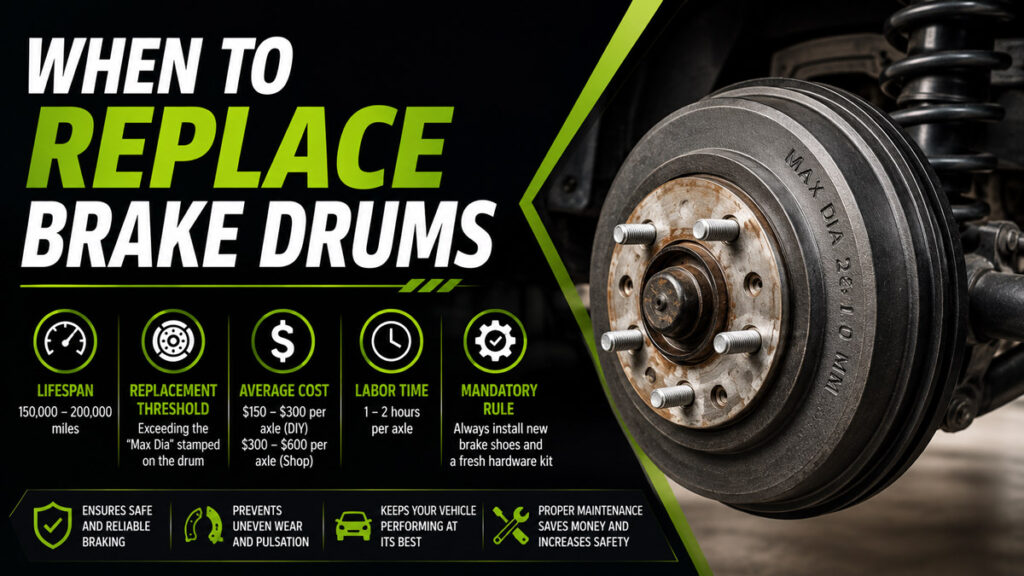
You should replace brake drums when they reach their maximum stamped diameter, show severe scoring or heat cracks, or when you experience a pulsating brake pedal and metal-on-metal scraping. While typical lifespans range from 150,000 to 200,000 miles, environmental corrosion or heavily worn brake shoes can force premature replacement long before you hit that mileage. […]
What Can Cause a Car Not to Start?

A car failing to start is most commonly caused by electrical issues like a dead 12-volt battery, a failing starter motor, or a bad alternator. If the engine cranks but will not fire, the cause shifts to fuel delivery failures, ignition system faults, or damaged sensors preventing the combustion cycle. Key Facts / At a […]
Why Are Alternators So Expensive? A Complete Cost and Mechanics Breakdown
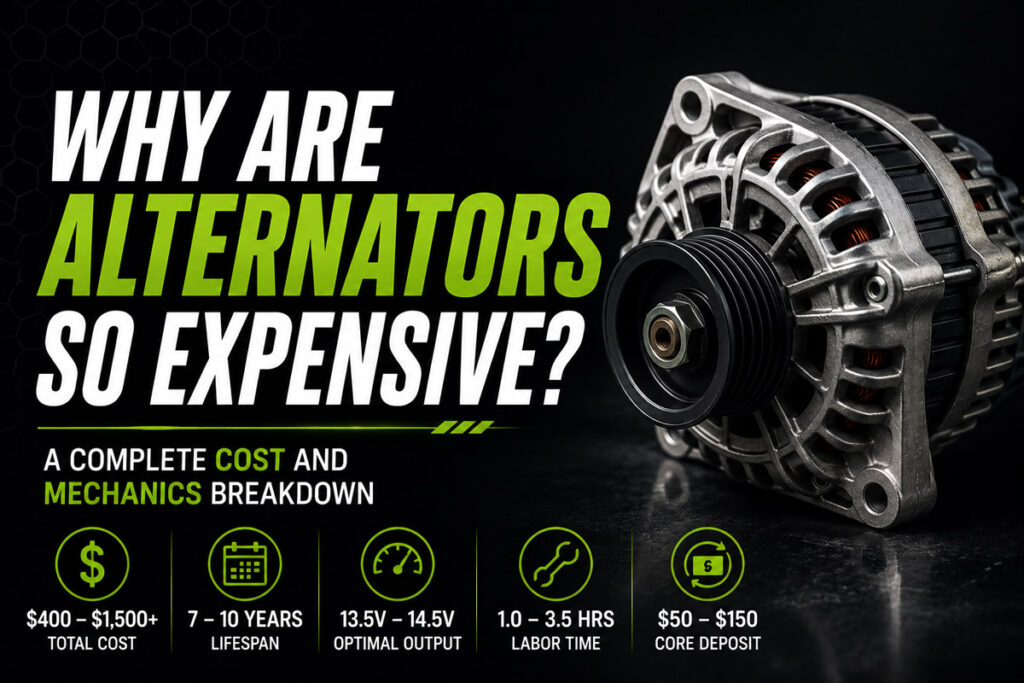
Alternators are expensive because they are no longer simple mechanical generators; modern units are complex electromechanical devices packed with dense copper windings, precision bearings, and solid-state electronics. Furthermore, the tight packaging of modern engine bays has drastically increased the professional labor hours required to replace them, pushing total repair bills higher. Key Facts / At […]
How to Test an Alternator on a Car
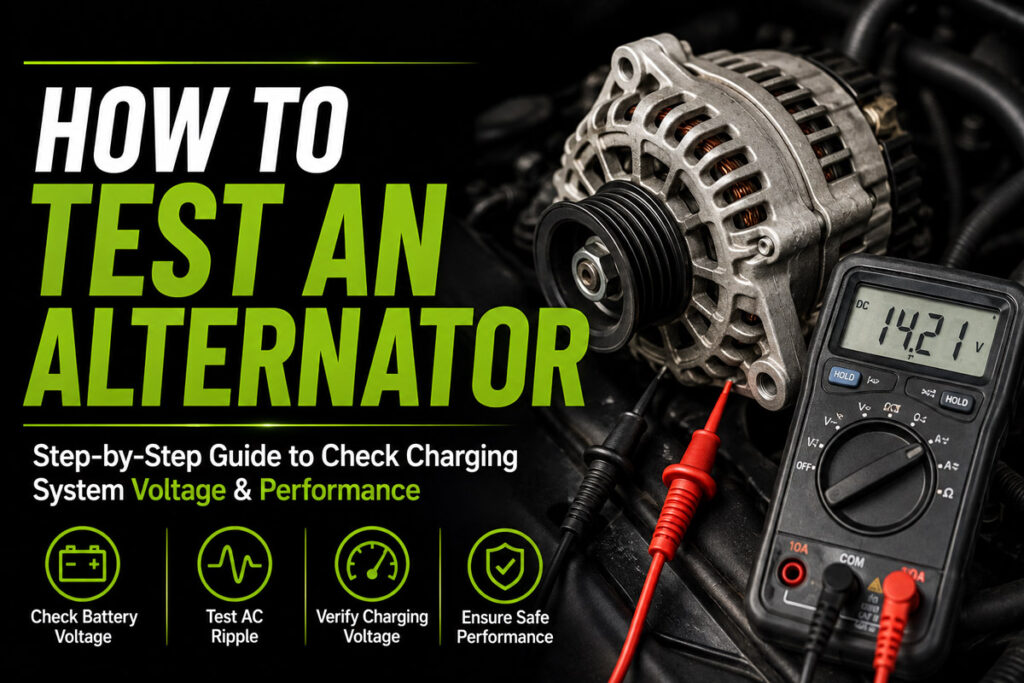
To test a car alternator, use a digital multimeter to measure the battery voltage while the engine is off (aiming for 12.6V), then with the engine idling (13.8V to 14.7V), and finally under a heavy electrical load at 2,000 RPM. A healthy alternator maintains at least 13.5V under load and blocks AC voltage from leaking […]