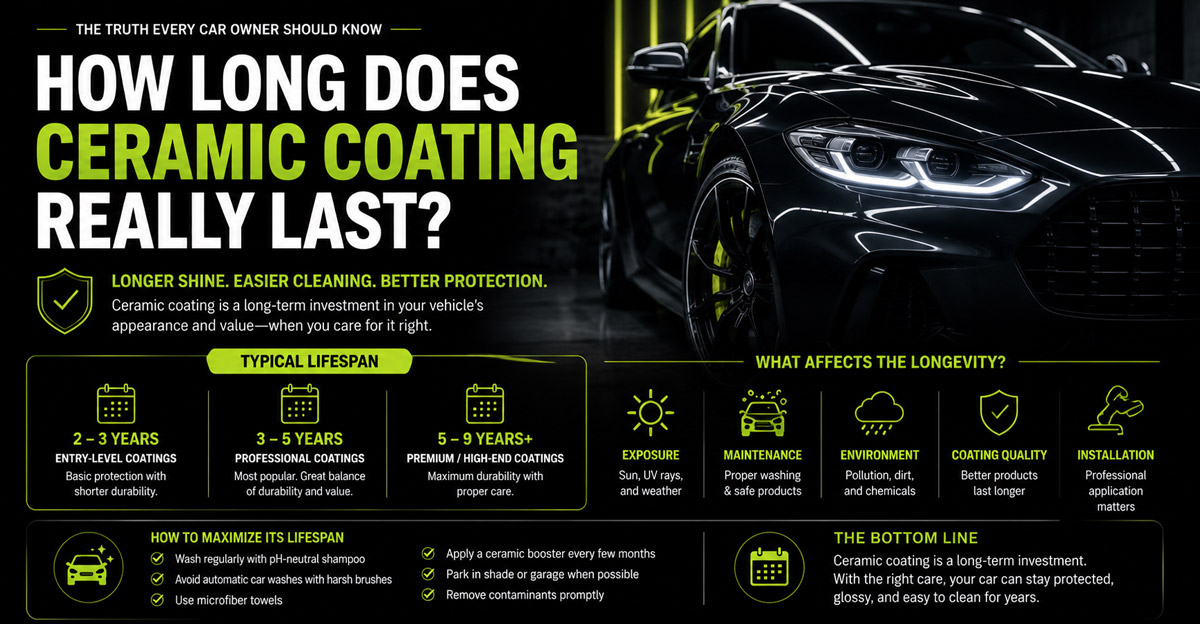
Ceramic coatings have completely transformed the automotive detailing industry by offering unmatched gloss, hydrophobic behavior, and protection against chemical contaminants. However, the question every car owner asks before making an investment remains constant: How long does ceramic coating really last?
The short answer is that a ceramic coating lasts anywhere between 6 months and 10 years, depending on product formulation, installation technique, surface preparation, and ongoing care. A cheap spray-on sealant may degrade in a few months, while a professionally installed, multi-layered nano ceramic coating can shield your vehicle for up to a decade.
This comprehensive guide unpacks the science behind ceramic coating lifespan, breaks down real world durability across different product categories, and outlines actionable steps to maximize your vehicle’s protection.
Ceramic Coating Lifespan Breakdown: Product Categories
To understand true durability, it helps to distinguish between consumer grade DIY products and certified professional installations. Not all coatings utilize the same concentration of Silicon Dioxide (SiO2) or Silicon Carbide (SiC).
1. Ceramic Sprays and Sealants (3 to 6 Months)
Ceramic spray sealants are liquid formulas designed for easy application. They contain low percentages of active SiO2 resins. They provide immediate slickness and water beading, but they sit on top of the clear coat rather than establishing deep molecular bonds. They are ideal as maintenance toppers or temporary surface enhancers.
2. Entry Level DIY Liquid Coating Kits (1 to 2 Years)
DIY ceramic kits available to retail consumers contain higher concentrations of SiO2 resin than sprays. When applied to properly prepped paint, these true liquid coatings bond to the clear coat and form a hard sacrificial layer. They offer solid protection against light chemical etched marks and water spots for up to two years under normal driving conditions.
3. Mid-Tier Professional Ceramic Coatings (3 to 5 Years)
Mid-tier professional coatings require specialized environment controls, paint correction, and application expertise. These formulas achieve higher pencil hardness ratings (up to 9H) and higher chemical resistance. Certified detailers use these systems to deliver high optical clarity and strong protection that withstands harsh weather.
4. High-End Multi-Layered Professional Systems (5 to 10+ Years)
Premium professional coatings utilize multi-layered system architectures or hybrid SiC/SiO2 chemistry. They are installed exclusively by factory-trained detailers in climate-controlled clean rooms and cured using specialized infrared lamps. When backed by mandatory annual maintenance checks, these heavy duty systems protect paint for seven to ten years.
Comparison Table: Ceramic Coating Types & Performance Metrics
Below is a comparative visual matrix summarizing expectations across product tiers.
4 Essential Factors That Determine Ceramic Coating Durability
Understanding nano ceramic coating longevity requires examining the primary conditions that influence the chemical bond formed with the paint layer.
1. Surface Preparation and Paint Decontamination
A ceramic coating requires a completely clean surface to form a permanent covalent bond with the factory clear coat. If applied over wax residues, oxidation, embedded iron particles, or silicone oils, the bond will fail prematurely.
Proper surface preparation requires:
- Full chemical decontamination using iron remover and tar dissolvers.
- Mechanical decontamination with a clay bar to strip embedded grit.
- Surface wiping with an Isopropyl Alcohol (IPA) panel prep spray to eliminate polishing oils.
- Machine paint correction to eliminate defects and refine the surface profile.
2. Environmental Exposure and Climate Conditions
Vehicles parked outdoors daily in intense sunlight suffer accelerated degradation due to UV radiation. UV rays break down the binder molecules within lower grade coatings. Extreme cold, heavy snowfall, and chemical road salt treatments also wear down sacrificial layers faster than mild climates.
3. Washing Techniques and Chemical Exposure
Improper washing is the leading cause of premature ceramic coating failure.
- Automatic Brush Car Washes: Heavy nylon bristles act like coarse sanders, introducing swirl marks and physically gouging the coating surface.
- Harsh Chemicals: Repeated exposure to high pH detergents (often used in touchless car washes) or acidic cleaning agents slowly degrades the hydrophobic top layer.
Pro Tip: The Two-Bucket Method
Always use the two-bucket wash method with grit guards and a dedicated pH-neutral shampoo. One bucket holds clean soapy water, while the second bucket serves strictly to rinse dirty microfibers. This minimizes micro-scratching and keeps the coating clear.
4. Storage Conditions
Vehicles stored inside climate-controlled garages enjoy extended coating longevity. Guarding the vehicle against daily dew cycles, acid rain, bird droppings, tree sap, and intense UV rays allows the nano-structure to remain intact past standard warranty periods.
Visualizing Lifespan: Product Type vs Environmental Impact
Expected Coating Lifespan Under Varying Conditions
How to Make Ceramic Coating Last Longer: Maintenance Guide
A ceramic coating is not a maintenance-free solution. It requires periodic care to keep its self-cleaning properties active and prevent contamination from clogging the nano-pores.
1. Maintain a Regular Wash Schedule
Wash your vehicle every two to three weeks. Allowing road grime, bug splatter, and environmental fallout to settle on the surface degrades the coating’s hydrophobic properties over time.
2. Apply a SiO2 Ceramic Maintenance Spray
Every three to four months, use a high quality ceramic booster spray after washing. These maintenance sprays deposit a thin layer of silica, refreshing top layer hydrophobic qualities and taking the brunt of direct environmental wear.
3. Conduct Annual Chemical Decontamination
Over time, microscopic mineral deposits and industrial fallout clog the microscopic valleys of the ceramic surface, making it look as though the coating has failed. Perform an annual chemical decontamination using a dedicated iron remover wash to clear these clogged pores without damaging the underlying ceramic structure.
Signs Your Ceramic Coating Is Wearing Off
Knowing when your coating is degrading helps you plan maintenance or reapplication before your clear coat is left unprotected.
- Loss of Hydrophobic Action: Water begins to pool or flatten on surface panels instead of forming tight, round beads that slide off easily.
- Reduced Optical Clarity: Paint gloss and depth fade, making the surface look dull.
- Rough Surface Texture: The paint loses its slick feel and traps environmental dirt during routine maintenance washes.
- Increased Water Spotting: Minerals in rainwater stick to the surface rather than sliding off.
Ceramic Coating Myth vs. Reality
Conclusion: Setting Realistic Expectations
How long does ceramic coating really last? The true answer depends on your chosen protection level, surface prep quality, and ongoing maintenance habits. While consumer ceramic sprays offer convenient boost protection for 3 to 6 months, professional grade multi-layered ceramic installations shield vehicle surfaces for 5 to 10 years when maintained properly.
By following proper two-bucket washing techniques, using pH-neutral shampoos, and applying periodic SiO2 maintenance toppers, you can maximize your investment and keep your paint looking fresh for years to come.
Take the Next Step for Your Vehicle
Ready to give your vehicle durable paint protection and long-lasting gloss?
- Explore Our Professional Coating Packages: Schedule a personalized paint inspection and consultation with our certified protection specialists.
- Download Our Free Maintenance Guide: Get our step-by-step ceramic care checklist to extend the life of your coating.
Contact our expert detailers today to book your consultation!