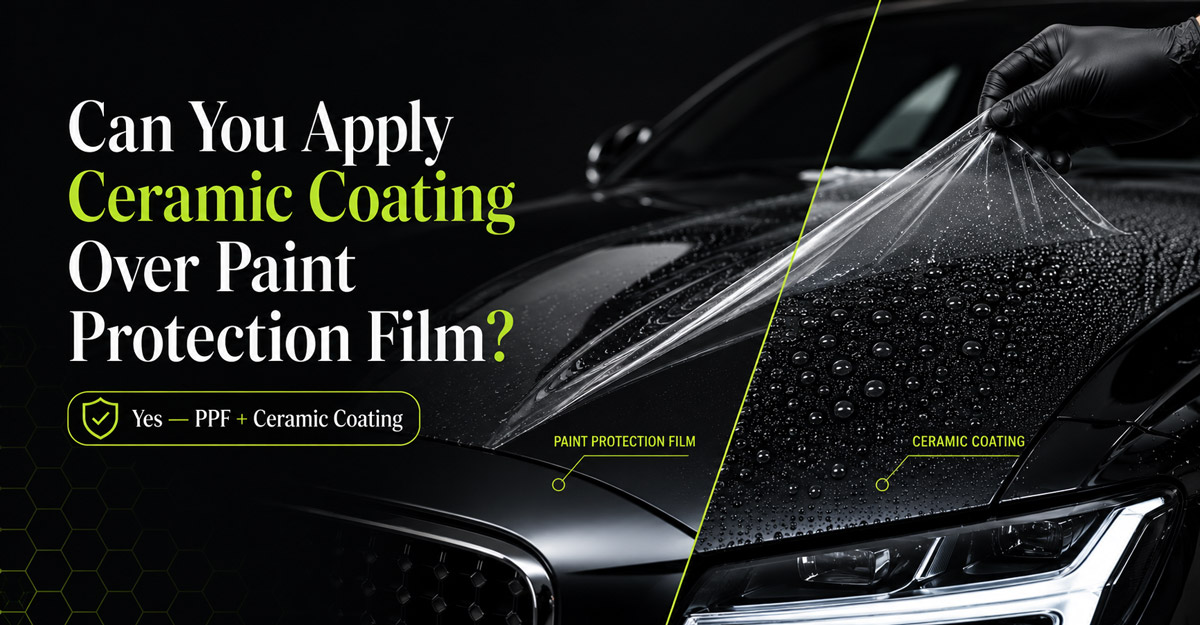
Yes, you can apply a ceramic coating directly over Paint Protection Film, which is commonly called PPF or clear bra. In fact, professional automotive detailers consider stacking a high performance ceramic coating over quality film the absolute ultimate strategy for vehicle exterior defense.
While Paint Protection Film provides a heavy physical shield against flying gravel, stone chips, and light scratches, ceramic coating delivers an ultra slick chemical barrier that repels water, prevents staining, and blocks damaging ultraviolet radiation. Combining these two advanced automotive surface technologies creates a dual layer system that preserves factory paint while keeping your vehicle effortlessly clean.
However, stacking these protection layers requires adhering to specific application guidelines, cure times, and surface prep methods. Applying coating incorrectly can ruin film adhesives or impede the self healing features of modern clear bra. This comprehensive guide covers everything you need to know about layering ceramic coatings over PPF safely and effectively.
The Ultimate Protection Stack: How PPF and Ceramic Coating Work Together
To understand why combining PPF and ceramic coating works so effectively, it helps to examine what each product achieves on its own. They are engineered to solve entirely different exterior wear challenges.
- Paint Protection Film (PPF): Made from clear, elastomeric polyurethane, PPF is approximately 6 to 8 mils thick. It acts like an impact cushion. When rocks, road debris, or sharp debris strike your vehicle bumper or hood, the flexible polyurethane absorbs and disperses kinetic energy, preventing paint chips.
- Ceramic Coating: Formulated from liquid silicon dioxide (SiO2) or silicon carbide (SiC), ceramic coating cures into an ultra thin, crystalline nano glass matrix measuring only 1 to 2 microns. It does not stop flying rocks, but it creates extreme surface slickness, gloss, and chemical resistance.
When applied as a composite defense system, PPF serves as the primary impact armor underneath, while the ceramic coating serves as the top hydrophobic skin.
Core Benefits of Coating Over Paint Protection Film
Adding a ceramic layer to clear bra does far more than make the surface shiny. It resolves several inherent vulnerabilities found in raw polyurethane films.
1. Superior Hydrophobicity and Water Beading
Polyurethane film surfaces feature microscopic porous structures. Over time, environmental dirt and road grime embed into these pores, reducing surface slickness. Liquid ceramic coatings flow into these micro pores, sealing them completely. Water contact angles dramatically increase beyond 110 degrees, creating intense water beading. Dirt and mud slide off during routine washing, requiring minimal manual agitation.
2. Shielding Against Chemical Contaminants and Staining
Because PPF is relatively soft, exposure to bird droppings, acid rain, bug splatter, and tree sap can etch permanently into the top clear coat of the film if left unattended. A dedicated ceramic coating forms an chemically inert, hard barrier that resists harsh acidic and alkaline compounds ranging from pH 2 to pH 12, protecting the underlying clear bra from deep discoloration.
3. Blocking UV Rays to Prevent Premature Fading and Yellowing
Harsh sunlight causes ultraviolet degradation over time. Although modern TPU films contain built in UV stabilizers, prolonged solar exposure degrades film elasticity and can cause slight yellowing on white or light colored vehicles. Ceramic coatings feature specialized UV blocking nano particles that filter solar energy, dramatically slowing film oxidation and keeping clear bra crisp and transparent for years longer.
4. Enhancing Optical Gloss and Visual Depth
On glossy paint protection films, a ceramic coating increases light refraction, imparting a rich mirror like reflectivity and deep wet look clarity. For vehicle owners with matte or satin wrapped finishes, specialized matte ceramic coatings enrich color saturation without adding unwanted gloss or sheen.
5. Preserving Self Healing Clear Bra Properties
A common concern among car enthusiasts is whether a hard glass coating will freeze or ruin the self healing capabilities of films like XPEL Ultimate Plus, SunTek Ultra, or STEK DYNOshield. High quality ceramic coatings designed for flexible films bond elastomeric molecules that stretch and contract alongside the film. Minor swirl marks in the coating layer or film still heal when exposed to warmth from engine heat or direct sunlight.
Critical Rules: Order, Cure Times, and Product Selection
Achieving a durable bond without damaging your clear bra requires following strict rules regarding layering sequence, curing timelines, and chemical compatibility.
Rule 1: Always Apply Film First, Ceramic Coating Second
The application order is non negotiable. PPF must be applied directly to bare clear coat or paint correction surfaces. If you apply a ceramic coating to raw paint first and then attempt to install PPF over it, the low surface energy of the ceramic coating will prevent the film adhesive from bonding. The film edges will lift, bubble, and fail immediately.
If your car already has a ceramic coating and you decide to install PPF later, the existing coating must be removed via light machine polishing on the target panels prior to film installation.
Rule 2: Respect the Essential PPF Cure Period
Never apply ceramic coating immediately after PPF installation. Film installation uses slip solutions containing water, alcohol, or specialized concentrated gels. Moisture remains trapped beneath the polyurethane film for several days after squeegeeing.
You must allow the film to outgas and dry completely:
- Minimum Wait Time: 24 to 48 hours in warm, dry climates.
- Recommended Wait Time: 5 to 7 days in humid or cold environments.
Applying a ceramic sealant too early traps moisture under the film, causing persistent air bubbles, cloudiness, or premature lifting around panel edges.
Timeline Requirements For Stacking Protection Layers
Rule 3: Use Flexible Coatings Specially Formulated for Films
Traditional ceramic coatings designed strictly for hard clear coats cure into extremely rigid structures. When applied to soft, flexible polyurethane clear bra, rigid coatings can crack, yellow, or cause unsightly stress hazing over time.
Always choose ceramic coatings formulated specifically for PPF and vinyl wraps. These specialized formulas incorporate flexible polymer backbones that flex seamlessly alongside clear bra during thermal expansion and contraction.
Step by Step Guide: How to Apply Ceramic Coating Over PPF
If you are undertaking a DIY detailing project or verifying your professional installer work, follow this proven procedure to ensure maximum adhesion and flawless optical results.
Ceramic Coating Application Steps
Thorough Wash & Decontamination
Remove surface dirt, iron deposits, and tar to prepare the surface for bonding.
Surface Inspection & Gentle Polish (If Aged PPF)
Inspect for imperfections and lightly polish to restore clarity before sealing.
Isopropyl Alcohol (IPA) Solvent Wipe Down
Strip remaining polish oils and residues to ensure maximum coating adhesion.
Cross Hatch Ceramic Coating Application
Apply evenly using overlapping horizontal and vertical passes for complete coverage.
Flash Time Observation & Microfiber Buffing
Monitor the rainbow/beading flash, then level high spots with clean microfiber towels.
Controlled Indoor Cure Cycle (24 Hours Minimum)
Keep the vehicle in a dry, temperature-controlled environment away from water and dust.
Step 1: Thorough Wash and Chemical Decontamination
Wash the vehicle thoroughly using a pH neutral automotive shampoo and the two bucket method with microfiber wash mitts. If the PPF has been installed for several weeks or months, perform a gentle chemical decontamination using an iron remover spray to dissolve embedded brake dust particles. Avoid using aggressive clay bars on soft PPF surfaces, as heavy claying can scratch or mar clear bra.
Step 2: Surface Prep and Panel Wipe
Inspect the film under bright detailing inspection lights. Ensure there are no lifted edges, trapped dirt, or deep scuffs. Clean the entire surface using a dedicated panel wipe or a diluted isopropyl alcohol (IPA) solution (15 percent to 20 percent concentration). This removes residual finger oils, wash lubricants, and light surface film, leaving a pristine surface for chemical bonding.
Step 3: Precise Cross Hatch Application
Wrap a suede microfiber applicator pad around a foam block. Apply 8 to 10 drops of flexible PPF ceramic coating across the pad face. Working in small 2 foot by 2 foot sections, apply the product using overlapping vertical and horizontal passes in a cross hatch pattern. Ensure uniform coverage across all film edges without letting product accumulate heavily in film seams.
Step 4: Monitoring Flash Time and Buffing
Allow the coating to flash. Depending on ambient room temperature and humidity, film specialized coatings typically flash within 1 to 3 minutes. Look for a light rainbow sheen or subtle sweating effect on the film surface.
Using a clean, plush 300+ GSM microfiber towel, gently wipe away excess residue using light pressure. Follow immediately with a second clean, low pile microfiber towel to level the surface completely and eliminate high spots.
Step 5: Post Application Curing Environment
Keep the vehicle in a dry, temperature controlled environment for at least 24 hours post application. Do not allow water, rain, or dew to contact the fresh coating during this initial drying phase. Avoid washing the car with soap or detergent solutions for 7 to 14 days while the liquid matrix fully cross links into its durable shield.
Top Recommended Ceramic Coatings Formulated for PPF
Selecting the right product ensures long lasting durability and prevents hazing on clear bra surfaces. Here are the leading industry recognized ceramic coatings engineered specifically for films and wraps:
- Gtechniq Halo Flexible Topcoat: Specifically engineered for flexible polyurethane films and vinyl wraps. Halo chemically bonds into the film structure without hardening excessively, offering exceptional dirt repellency and oil resistance.
- GYEON Q² PPF EVO: Formulated with fluorine modified polysilazane technology. It provides extreme hydrophobic performance while preserving self healing characteristics and glossy or matte surface optics.
- CarPro Skin: Developed specifically for paint protection film and vinyl. It offers superior resistance to UV radiation, environmental chemicals, and water spotting while maintaining original film texture.
- Ceramic Pro PPF & Vinyl: A heavy duty professional ceramic formulation designed to increase clear bra hardness slightly while retaining elasticity, engineered for certified professional application networks.
Maintenance Best Practices for Coated PPF
To maximize the life expectancy of both your clear bra and your ceramic coating layer, follow these ongoing maintenance routines:
- Use Touchless or Hand Wash Techniques: Never drive a coated or PPF wrapped vehicle through automatic friction car washes with spinning brushes. Micro bristles can lift film edges and scour the coating.
- Employ pH Neutral Shampoos: Wash regularly with dedicated ceramic maintenance soaps that contain no added waxes, silicone gloss enhancers, or harsh petroleum distillates.
- Promptly Remove Organic Contaminants: Even with ceramic defense, remove bird droppings, dead insects, and tree sap as soon as noticed using a soft microfiber cloth and gentle quick detailer spray.
- Apply Periodic Ceramic Boosters: Every 3 to 6 months, apply a silica based spray sealant during maintenance washes to refresh top layer water hydrophobicity and slickness.
Frequently Asked Questions
Can I apply ceramic coating over a matte or satin PPF?
Yes, but you must use a dedicated matte finish ceramic coating. Standard ceramic coatings contain gloss enhancers that create uneven streaks or unwanted shine on satin surfaces. Matte specific formulations preserve the flat, stealth look while adding full hydrophobic protection.
Will ceramic coating stop PPF from self healing?
No. High quality ceramic coatings designed for clear bra flex alongside the polyurethane material. Heat from warm water or sunlight passes through the ultra thin nano coating layer, allowing the underlying elastomeric memory of the film to heat heal scuffs effortlessly.
How long does a ceramic coating last on PPF?
When properly maintained, film specific ceramic coatings typically last between 2 and 5 years before requiring a booster or reapplication. This matches or extends the natural service lifespan of quality clear bra films.
Can I remove ceramic coating from PPF if needed?
Removing a ceramic coating from PPF requires caution. Unlike clear coat paint, you cannot aggressively machine compound PPF without scorching or burning the film. Instead, detailers use mild chemical strippers or ultra light finishing polishes with non abrasive pads to remove worn coatings without compromising the film.
Summary and Key Takeaways
Combining Paint Protection Film with a dedicated ceramic coating represents the gold standard in automotive exterior preservation. While clear bra absorbs physical gravel strikes and heavy stone impacts, ceramic coating seals porous polyurethane surfaces, repels water and environmental acids, and simplifies routine washing.
To get the best performance from your investment, remember these golden rules:
- Always install PPF first directly on bare paint; apply ceramic coating second.
- Wait 24 hours to 7 days after film installation before coating to allow trapped moisture to fully evaporate.
- Choose flexible ceramic coatings formulated specifically for PPF and clear bra materials.
- Follow proper maintenance practices to preserve high hydrophobicity and film optical clarity for years to come.
Next Step
Protect your vehicle with the ultimate dual layer defense system. Consult with a certified professional detailer in your area to select the ideal Paint Protection Film and film safe ceramic coating package tailored specifically to your driving conditions and vehicle finish.