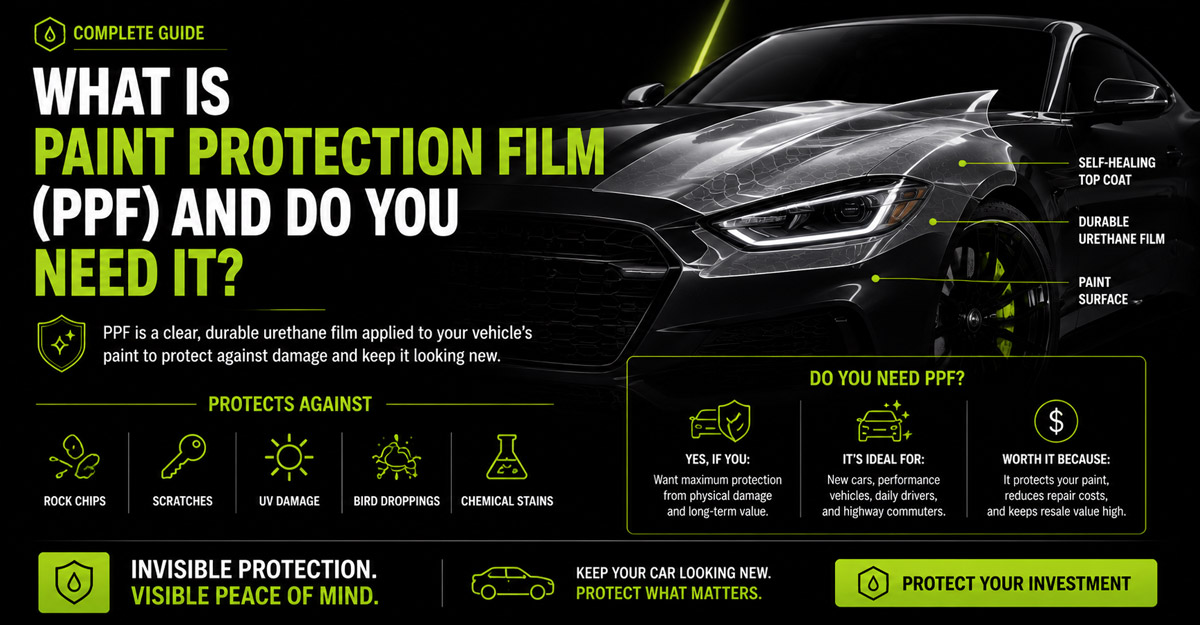
Buying a vehicle is often one of the largest financial investments you will make. The moment you drive off the dealership lot, your factory paint faces constant environmental threats. Loose gravel flying off truck tires, acidic bird droppings, harsh road salt, winter brine, and high speed bug impacts immediately begin eroding the pristine exterior of your car.
For decades, car owners relied on leather front bra covers, spray waxes, or frequent repainting to maintain their exterior. Today, modern chemical engineering offers a far superior solution: paint protection film, commonly abbreviated as PPF or referred to as clear bra.
In this comprehensive guide, we unpack every detail surrounding paint protection film. You will learn the underlying chemistry, self healing capabilities, realistic pricing structures, key advantages and limitations, direct comparisons with ceramic coatings, and a practical decision framework to determine if PPF is worth your hard earned money.
Understanding Paint Protection Film: The Technology Behind Clear Bra
Paint protection film is a heavy duty, transparent thermoplastic urethane layer applied directly to the painted surfaces of an automobile. Unlike thin decorative vinyl wraps designed purely for color changes, PPF is specifically engineered for high impact energy absorption and rugged chemical resistance.
Historically developed during the Vietnam War to protect military helicopter rotor blades from flying shrapnel and sand erosion, thermoplastic urethane technology was later adopted by professional motorsport teams. Today, advanced manufacturing techniques have refined clear bra into an optically clear, ultra durable automotive shield that remains completely invisible when installed correctly.
The Four Construction Layers of Quality PPF
Premium paint protection film is not a single piece of plastic. It consists of four distinct engineered layers working in harmony:
- Release Liner: A protective backing film removed during installation to expose the underlying adhesive.
- Acrylic Adhesive: A specialized pressure sensitive adhesive measuring roughly 1.6 mils (thousandths of an inch) thick. It bonds permanently to clear coats without clouding or damaging factory paint upon eventual removal.
- Polyurethane Core: The primary structural layer measuring approximately 6 mils thick. This flexible, elastomeric polymer absorbs dynamic kinetic energy from road debris and stone impacts.
- Self Healing Elastomeric Top Coat: A thin top layer (around 0.5 mil) made of hydrophobic cross linked polymers. This top coat resists chemical staining and possesses self healing properties when exposed to thermal heat.
Anatomy of Paint Protection Film (Cross Section)
Science of Self Healing Paint Protection Technology
One of the most remarkable features of modern PPF is its capacity to self heal micro scratches and wash induced swirl marks automatically.
When a foreign object lightly scratches the surface of the film, it alters the alignment of the elastomeric polymer chains in the top coat layer. Because these polymers possess shape memory, introducing heat causes the chemical structure to return to its original, smooth equilibrium state.
Heat Sources That Trigger Self Healing
- Direct Sunlight: Parking your vehicle outside on a warm day (above 75 degrees Fahrenheit) naturally releases surface tension and heals minor swirl marks.
- Hot Water: Pouring warm water over affected panels immediately smooths out light abrasion marks.
- Heat Guns or Hair Dryers: Detailing professionals use controlled heat sources during maintenance detailing to reset the top coat.
Note: Self healing technology applies to surface level abrasions within the top coat. Deep gouges that puncture through the polyurethane core will require film panel replacement.
Core Advantages of Installing Paint Protection Film
Investing in professionally installed clear bra delivers tangible physical and financial benefits for car owners.
1. High Velocity Impact Absorption
Gravel and stone debris kicked up by highway traffic travel at significant velocity. The polyurethane core in PPF acts as a cushioned sacrificial barrier, distributing kinetic energy across the material rather than letting it penetrate to your metal panel or original factory paint.
2. Acidic Stain and Chemical Resistance
Bird droppings, crushed bug splatters, tree sap, and road salt contain corrosive acidic compounds that etch permanently into automotive clear coat within hours. PPF creates an impenetrable boundary layer, preventing chemical etching from reaching the base coat.
3. UV Degradation and Oxidation Prevention
Prolonged exposure to solar ultraviolet rays oxidizes paint finishes, leading to premature fading, chalking, and loss of depth. High grade clear bra incorporates advanced UV inhibitors that preserve original paint color saturation over long periods.
4. Preservation of Vehicle Resale Value
Automotive appraisers heavily deduct value for rock chips, repainted panels, and front end road rash. Keeping factory paint in pristine condition under PPF ensures maximum trade in value and higher resale figures on the private market.
Limitations and Cons: What PPF Cannot Do
While paint protection film is the ultimate defense against physical road hazards, setting realistic expectations is crucial.
High Initial Financial Investment
Professional installation requires skilled labor, climate controlled facilities, and expensive raw materials. Complete vehicle wraps or extensive front coverage packages represent a substantial upfront expense.
Professional Skill Required
Installing film requires precise edge wrapping, stretch control, and squeegee technique. Poor amateur installation results in lift lines, trapped dirt, air bubbles, stretch marks, and misaligned cut patterns around badge emblems.
Not Indestructible
Large rocks at high speeds or sharp key scratches can still tear through the film. While the film may save your paint underneath from catastrophic gouging, damaged film sections will eventually need replacement.
Comprehensive Cost Breakdown: What Should You Expect to Pay?
The price of installing PPF varies based on vehicle geometry, surface area, installation complexity, and film quality (such as XPEL, SunTek, 3M, or STEK).
| Coverage Package | Panels Covered | Average Cost Range | Ideal Candidate |
|---|---|---|---|
| Partial Front | Front bumper, partial hood (18-24 inches), partial fenders, side mirrors | $600 to $1,200 | Budget conscious drivers seeking basic stone chip defense |
| Full Front (Most Popular) | Front bumper, full hood, full fenders, headlights, side mirrors | $1,500 to $2,500 | Daily drivers, highway commuters, standard sports cars |
| Track Package | Full front plus rocker panels, rear wheel arches, and lower door sections | $2,500 to $3,800 | Performance cars, track day enthusiasts, widebody vehicles |
| Full Body Vehicle Wrap | Every painted exterior body panel, door sills, and exposed gloss trim | $4,500 to $8,000+ | Exotic vehicles, high value collector cars, matte factory finishes |
PPF vs Ceramic Coating: Clearing Up the Confusion
One of the biggest misconceptions in auto detailing is confusing paint protection film with ceramic coatings. While both enhance and preserve paint, they solve fundamentally different problems.
Comparison Breakdown
- Paint Protection Film (PPF): Heavy physical shield (6 to 8 mils thick). Its sole duty is impact protection against rock chips, physical scratches, road debris, and deep abrasions.
- Ceramic Coating: Liquid nanostructure silica sealant (0.5 to 1.5 microns thin). Its primary duty is surface slickness and gloss, creating super hydrophobic water repellency, dirt resistance, and effortless washing. Ceramic coating offers zero impact absorption against stone chips.
The Ultimate Protection Combination
For maximum protection and ease of maintenance, expert detailers recommend combining both technologies:
Decision Framework: Do You Actually Need PPF?
Not every car owner needs clear bra film. Use the evaluation criteria below to decide if the financial investment aligns with your ownership scenario.
✓ YES: You Should Get PPF
- You drive high mileage on interstate highways or gravel roads.
- You purchased a luxury car, sports car, or vehicle over $45,000.
- Your car features soft factory paint sensitive to chipping.
- You own a vehicle with factory matte or satin paint finish.
- You leased a vehicle and want to prevent lease return penalties.
- You plan to keep the vehicle for 4 or more years.
✕ NO: You Can Skip PPF
- Your vehicle is an older daily commuter with existing paint chips.
- Your primary driving is slow speed city street stop and go traffic.
- You view your car strictly as a basic utility appliance.
- You plan to sell or trade in the car within 12 to 18 months.
- The cost of full front PPF exceeds 10% of the car market value.
Key Factors When Choosing a Professional PPF Installer
The final outcome of clear bra depends heavily on installation skill rather than just film brand selection. Keep these key questions in mind when interviewing detailing shops:
Pattern Cutting vs Custom Hand Trimming
Inquire whether the shop uses computer cut software patterns pre-sized to your panel or performs custom bulk installations. Software templates eliminate razor blades near paint, while bulk installs allow extended wrapped edges inside panel gaps for invisible seam lines.
Dedicated Cleanroom Environment
Installing clear bra requires an enclosed, dust free climate controlled bay. Facilities without proper air filtration, humidity control, and high intensity lighting risk trapping dust motes under your film.
Warranty Coverage
Reputable brands like XPEL, SunTek, 3M, and STEK offer 7 to 10 year manufacturer warranties covering yellowing, bubbling, cracking, peeling, and delamination. Ensure your shop provides official registration documentation upon project completion.
Essential Aftercare and Maintenance Tips for Long Film Life
To keep clear bra performing perfectly throughout its warranty period, follow these simple care practices:
- Curing Time: Allow film to cure for 48 to 72 hours before washing after installation. Avoid pressing down on water pockets or moisture bubbles during initial curing.
- Pressure Washing Cautions: Keep high pressure spray nozzles at least 18 inches away from film edges and seams to prevent lift lines.
- Avoid Petroleum Based Waxes: Avoid applying waxes containing naphtha or kerosene solvents, which cause yellowing. Use ceramic sealants specifically formulated for PPF care.
- Clean Bug Splatters Promptly: While film offers stain resistance, remove baked on organic matter using bug remover spray within a reasonable timeframe.
Conclusion: Is Paint Protection Film Worth the Investment?
Paint protection film remains the single most effective defense against real world road hazards, rock chips, and paint damage available today. While ceramic coatings provide slickness and gloss, PPF stands alone in absorbing high speed impacts and self healing micro scratches.
If you own a new vehicle, drive regularly on highways, or care deeply about maintaining original factory finish and maximum resale value, installing at least a Full Front PPF package is one of the smartest investments you can make.
Take the Next Step for Your Vehicle
Ready to safeguard your car exterior with industry leading clear bra protection?
Contact our certified master detailers today for a customized consultation, panel inspection, and transparent quote tailored specifically to your vehicle make, model, and driving habits.