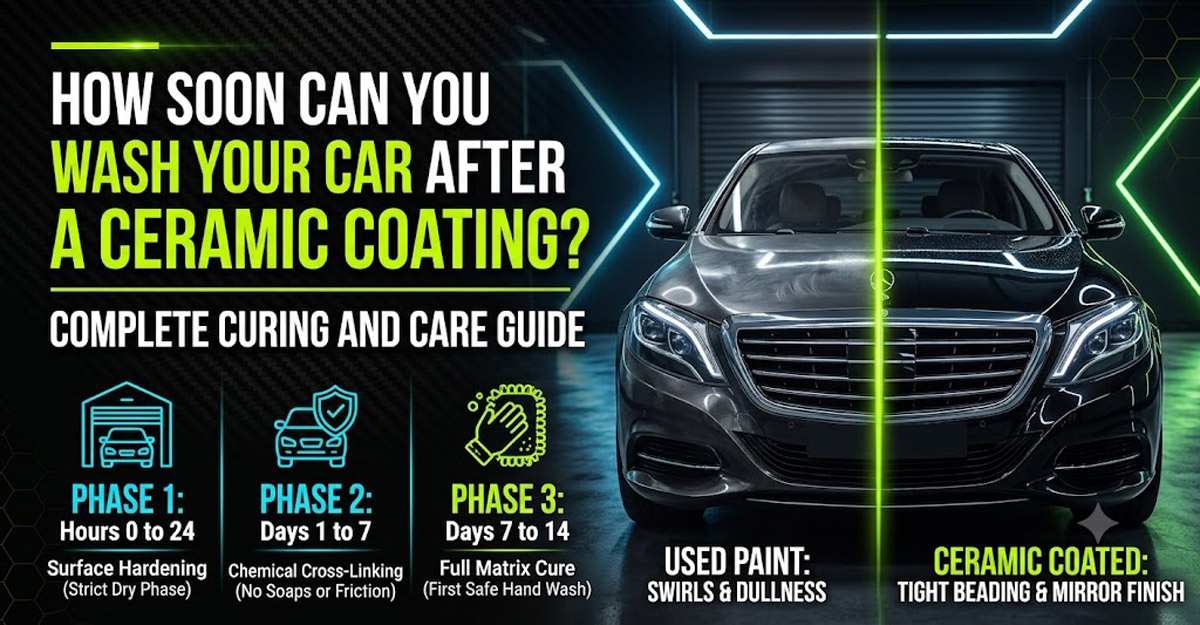
Investing in a high grade ceramic coating is one of the single best decisions you can make to protect your vehicle paint finish. A premium liquid polymer coating chemically bonds with your factory clear coat, providing hyper hydrophobic water repellency, intense optical depth, and shield like resistance against ultraviolet rays, chemical stains, and environmental fallout. However, the performance and longevity of this investment depend almost entirely on what happens during the immediate post application period.
The quick answer to the core question is clear: You must wait at least 7 full days before performing a traditional contact wash or using any soap on your vehicle after a ceramic coating is applied.
While professional ceramic coatings dry to the touch within a few hours and become hard enough to drive safely within 24 hours, the microscopic cross linking process is far from complete. Exposing the curing layer to surfactant soaps, high water pressure, or friction too early can permanently disrupt chemical bonding, compromise gloss, and strip away hydrophobic protection.
This detailed guide breaks down the chemical curing timeline, emergency cleanup protocols, safe washing techniques, and brand specific requirements to ensure your coating lasts for years to come.
The Science of Ceramic Coating Curing: Why Timing Is Everything
Understanding why you must wait before washing requires a basic look at surface chemistry. A genuine ceramic coating is typically composed of silicon dioxide (SiO2), titanium dioxide (TiO2), or silicon carbide (SiC) dissolved in chemical solvents. When applied to clean vehicle paint, the solvent evaporates, initiating a process known as hydrolysis and condensation cross linking.
During cross linking, nano particles bond with the microscopic pores of your factory clear coat to form an impenetrable crystalline matrix. This transformation occurs in distinct stages:
Hardening Versus Full Chemical Curing
Many car owners confuse surface dryness with full chemical cure. Within 2 to 4 hours of application, the solvent flashes off, making the surface feel smooth and dry to the touch. By hour 24, the top layer has hardened sufficiently to allow normal driving in clear weather.
However, full chemical cross linking requires 7 to 14 days depending on ambient humidity, air temperature, and chemical composition. During this window, the coating remains chemically vulnerable.
Why Water and Soap Disrupt Curing Molecules
During the initial 7 day window, surfactant molecules present in car wash shampoos can interlock with unbonded siloxane chains. This chemical interaction inhibits full polymerization, leaving weak spots across the paint finish.
Similarly, tap water or rainwater containing dissolved calcium and magnesium minerals will create stubborn water spots. Because the nano matrix is still finalizing its structural density, mineral deposits can become physically embedded inside the curing coating layer, creating permanent etchings that cannot be washed away.
The Definitive Ceramic Coating Aftercare Timeline
To maximize protection, every vehicle owner should follow a strict multi stage aftercare calendar.
First 24 Hours: The Zero Moisture Critical Phase
The first 24 hours after application represent the most delicate phase of the curing journey. The car must remain completely dry and kept away from all moisture sources.
- Keep the vehicle indoors in a clean garage or climate controlled space.
- Avoid driving in rain or wet road conditions.
- Never park near active lawn sprinklers.
- Guard against overnight dew formation by keeping the vehicle covered inside.
Days 1 to 7: The Active Chemical Cross Linking Window
Once the initial 24 hour mark passes, you can drive the car under normal dry weather conditions. However, the active cure window remains open.
- Do not apply any car wash soap, quick detailer, or synthetic spray wax.
- Avoid high pressure water sprays at self serve wash bays.
- Keep the vehicle out of prolonged harsh direct sunlight when parked for long hours.
- Do not allow tree sap, bird droppings, or bug splatter to rest on the paint surface.
Days 7 to 14: The Final Hardening and First Safe Contact Wash
By day 7, the chemical structure has established strong hydrophobic bonds. For most consumer coatings and professional single layer formulas, day 7 marks the green light for your very first gentle hand wash.
Certain professional multi layer systems require up to 14 full days before any friction wash. Always verify with your installation specialist if your package falls under extended warranty guidelines.
Visual Ceramic Coating Curing Spectrum
Phase 1: Hours 0 to 24 Surface Hardening Zero Moisture Allowed
Phase 1: First 24 Hours
Initial Surface Curing
No Water Contact
Phase 2: Days 1 to 7
Chemical Cross Linking
No Soaps or Friction
Phase 3: Days 7 to 14
Full Matrix Cure
First Safe Hand Wash
Comprehensive Aftercare Rule Matrix
Emergency Protocol: What to Do If Your Car Gets Dirty Before Day 7
Life happens. Even if you plan carefully, environmental contaminants may land on your vehicle paint during the critical 7 day cure window. Leaving acidic contamination to bake under direct sunlight will cause permanent etching, yet rubbing the surface forcefully with regular soap will break the uncured coating.
Follow these specific emergency protocols to handle early contamination safely.
Neutralizing Acidic Bird Droppings and Insect Splatter
Bird droppings contain uric acid with pH levels between 3.0 and 4.5, capable of eating through uncured coatings within hours. Insect residue contains corrosive organic proteins that harden quickly.
- Do not use tap water, dish soap, or traditional car shampoos.
- Generously saturate the spot using a dedicated waterless wash fluid or pure pH neutral quick detailer spray.
- Allow the liquid to dwell for 60 to 90 seconds to soften the debris.
- Take a clean, ultra soft plush microfiber towel folded into four sections.
- Gently place the towel over the debris and lift or blot upward without dragging or wiping across the paint.
- If residual grime remains, re-spray and repeat with a fresh, clean side of the microfiber towel.
Handling Rainwater Drops and Mineral Spotting
Rain droplets carry atmospheric dust, minerals, and industrial pollutants. When rainwater evaporates naturally on uncured ceramic coatings, it leaves behind concentrated mineral deposits.
- If your car gets caught in rain during days 1 through 7, store it indoors immediately after driving.
- Take a high GSM plush microfiber drying towel and gently dab standing water drops off the horizontal panels.
- Never wipe wet rain water vigorously across dirty paint, as trapped road grime will cause micro scratches.
Removing Tree Sap and Dust Without Scratching
Tree sap contains sticky resins that adhere tightly to clear coats.
- Never attempt to scrub tree sap off with fingernails, scrub pads, or heavy tar removers during the cure window.
- Soften the sap droplet by holding an isopropyl alcohol soaked cotton pad against the spot for 30 seconds.
- Gently lift the dissolved sap away without spreading it across neighboring paint surfaces.
Golden Rules for the First Official Hand Wash
Once the mandatory curing countdown concludes on day 7 or day 14, you can safely wash your vehicle. However, maintaining your coating for maximum durability requires abandoning outdated wash methods.
Why Automatic Car Washes Destroy Ceramic Coatings
Automatic friction car washes utilizing spinning nylon brushes or heavy hanging cloth curtains are the primary enemy of clear coats. These brushes collect dirt, sand, and metal particles from hundreds of previous vehicles, acting like coarse sandpaper against your finish.
Even touchless automated washes pose significant dangers. To compensate for the lack of mechanical agitation, touchless systems rely on aggressive chemical soaps with extreme pH levels (either highly alkaline or harsh acids). These harsh chemicals strip optical clarity, degrade top coat slicks, and drastically shorten coating lifespan.
Selecting Pure pH Neutral Shampoos Without Waxes
When shopping for maintenance shampoo, select a pure, free rinsing formula specifically engineered for ceramic maintenance, such as CarPro Reset or Gtechniq GWash.
- Ensure the label states pure pH neutral (pH 7.0).
- Avoid soaps containing added carnauba wax, synthetic gloss enhancers, or silicone slickness agents.
- Added waxes clog the nano microscopic pores of the ceramic matrix, temporarily masking its natural hydrophobic water beading properties.
The Two Bucket Wash Method and Straight Line Wipe Pattern
Mechanical friction must be kept to an absolute minimum during every wash session. The gold standard technique is the classic two bucket wash method equipped with grit guards.
- Fill Bucket One with clean water and your measured pH neutral car shampoo.
- Fill Bucket Two with pure rinse water.
- Place a plastic grit guard insert at the bottom of both buckets to trap settled dirt particles.
- Pre rinse the vehicle using a pressure washer or foam cannon to loosen surface road film before touching the paint.
- Dip a microfiber wash mitt into the soapy bucket, then wash one panel at a time.
- Always wipe using straight back and forth lines along the direction of airflow. Never scrub in circular motions, as circles trap light reflection and form visible swirl marks.
- Rinse the mitt thoroughly in Bucket Two after every panel before reloading with soapy water from Bucket One.
Safe Drying Techniques with Plush Microfiber Towels
Improper drying causes more swirl marks than washing. Water drops act like tiny magnifying lenses under sunlight and collect airborne dust as they evaporate.
- Never use natural chamois leather, bath towels, or old cotton shirts.
- Use a dedicated 70/30 blend plush twist loop microfiber drying towel with soft silk edges.
- Alternatively, use a touchless electric leaf blower or dedicated car dryer to blow standing water out of body seams, grilles, and mirrors.
- When using a drying towel, lay the towel flat across the panel and gently drag it toward you by its corners without pressing down.
Manufacturer Specific Curing Guidelines
Different coating formulations carry distinct chemical compositions and curing protocols. Review this quick reference summary for popular professional and consumer brands:
Ceramic Pro Systems
Professional Ceramic Pro packages (such as Ceramic Pro 9H and Top Coat) utilize complex multi layer matrix technology. Ceramic Pro explicitly mandates a full 14 day curing period before any contact wash, soap usage, or chemical exposure. Failure to observe the 14 day window can void factory structural warranties.
CarPro CQuartz Coatings
CarPro CQuartz UK 3.0 and CQuartz Professional require a 7 day cure window before soap washing. CarPro allows light rain exposure after 24 hours if infrared curing lamps were utilized during installation, but recommends applying CarPro Reload or Gliss as a protective sacrificial layer if rain threatens within the first week.
Gtechniq Crystal Serum Ultra and EXO
Gtechniq Crystal Serum Ultra forms a hard composite structure beneath a hydrophobic top coat. Gtechniq specifies a strict 7 day waiting period before performing a contact wash with Gtechniq GWash.
System X Ceramic Protection
System X coatings bond quickly to paint surfaces. While vehicle delivery occurs after 20 minutes to 1 hour of infrared curing, System X mandates waiting 7 days before performing the initial maintenance hand wash.
Long Term Ceramic Coating Maintenance for Maximum Longevity
Following the initial wash, long term care determines whether your coating lasts 2 years or 7 years. Incorporate these proven care steps into your regular routine:
Regular Bi Weekly Washing
Wash your vehicle every two weeks using the two bucket method. Leaving road film, traffic soot, and brake dust on the paint for extended periods reduces hydrophobic water beading performance through surface contamination.
Decontamination Washing Every 3 to 6 Months
Over time, microscopic metallic iron particles from brake dust and industrial pollution become embedded in the surface pores of the coating. Every 3 to 6 months, apply a dedicated pH neutral iron remover spray (such as CarPro Iron X) during your pre wash routine to dissolve embedded iron particles without touching the paint.
Applying Ceramic Maintenance Toppers
Revitalize gloss and top coat slickness every 3 to 4 months by applying a high silica content ceramic detail spray or spray sealant after washing. Topper sprays act as sacrificial protection layers, taking the brunt of environmental exposure while keeping the underlying ceramic coating pristine.
Summary of Essential Aftercare Rules
Proper aftercare is the bridge between a great ceramic coating application and long lasting paint protection. By honoring the chemical cure process, you protect your financial investment and keep your vehicle looking showroom new.
- Wait at least 7 full days before using soap or performing a contact wash on your vehicle.
- Keep the car completely dry during the initial 24 hour post application window.
- Treat early environmental contaminants like bird droppings using blotted pH neutral quick detailers.
- Never enter automated friction or high chemical touchless car washes.
- Wash exclusively with the two bucket method, pH neutral shampoos, and plush microfiber towels.
- Maintain hydrophobic properties with regular bi weekly washes and periodic ceramic topper sprays.
Next Step: Protect Your Coating Investment Today
Ready to elevate your car care routine? Download our free complete Ceramic Coating Maintenance Checklist to keep in your garage, or contact our team of professional detailers today to schedule a custom maintenance assessment for your vehicle.