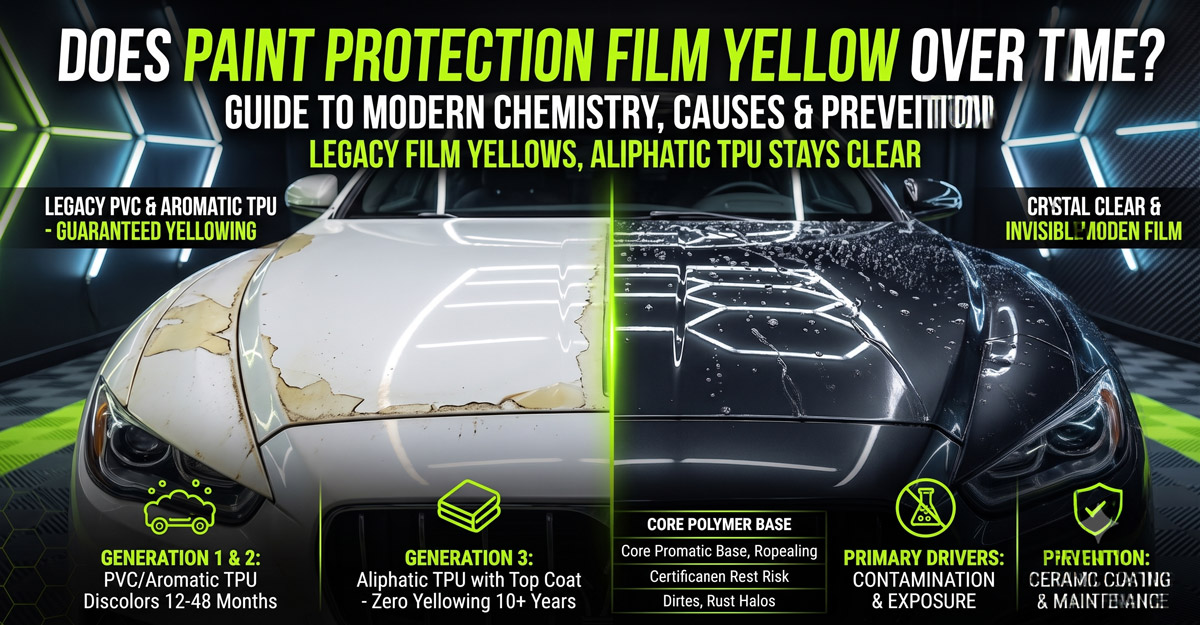
Installing paint protection film (frequently referred to as PPF or clear bra) is one of the most effective investments you can make to preserve your vehicle finish. A top tier film shields your clear coat from harsh rock chips, flying road debris, acidic bird droppings, and damaging ultraviolet rays. However, one lingering concern stops many car owners from pulling the trigger: Does paint protection film yellow over time?
The short answer is: Yes, paint protection film can turn yellow, but discoloration primarily plagues older generations of film and cheap, low quality materials. Modern premium films manufactured with advanced chemical technology are engineered to maintain optical clarity for ten years or more under standard driving conditions.
To fully understand why yellowing happens, how modern chemistry solved the problem, and how you can ensure your clear bra remains completely transparent, this comprehensive guide explores material science, environmental factors, vehicle color physics, and professional maintenance techniques.
The Material Evolution: Why Older Films Yellowed While Modern PPF Stays Crystal Clear
To understand why discoloration occurs, you must look at how clear bra technology evolved over the past several decades. Paint protection film has undergone three major generational upgrades in core construction and polymer chemistry.
Evolution of PPF Materials
- Rapid yellowing within 12 to 24 months
- High stiffness, prone to cracking, zero UV stability
- Moderate yellowing within 2 to 4 years
- Improved flexibility, but vulnerable to UV oxidation
- Zero yellowing under normal UV exposure for 10+ years
- Self healing elastomeric layer with chemical stain resistance
Polyvinyl Chloride and TPH Films: The Cheap Material Trap
Early iterations of clear bra, as well as budget level films sold today under generic labels, rely on Polyvinyl Chloride (PVC) or low grade modified plastics often marketed as TPH.
PVC is naturally rigid and brittle. Manufacturers add liquid chemical plasticizers to make PVC flexible enough to conform to car curves. Under constant sun exposure and ambient heat, these plasticizers migrate to the surface and evaporate. As plasticizers escape:
- The material structure breaks down chemically under UV rays.
- The film turns a noticeable amber, yellow, or deep brown shade within 18 to 36 months.
- The plastic becomes extremely brittle, cracking and bonding permanently to the underlying paint clear coat.
Avoid any installer using PVC or unbranded TPH films, as yellowing is a guaranteed outcome.
Aromatic TPU Versus Aliphatic TPU Chemistry Explained
High end automotive protection films utilize Thermoplastic Polyurethane (TPU). However, TPU exists in two distinct chemical structures: Aromatic TPU and Aliphatic TPU.
- Aromatic TPU: Aromatic polyurethane contains chemical benzene rings in its polymer backbone. When exposed to ultraviolet radiation from sunlight, these benzene rings undergo a photochemical reaction called photo oxidation. This reaction forms quinoid structures, which naturally exhibit a yellow pigment. While aromatic TPU is far superior to PVC in flexibility, it inevitably discolors after three to five years of outdoor parking.
- Aliphatic TPU: Premium film manufacturers like XPEL, 3M, SunTek, and STEK exclusively use premium Aliphatic TPU. Aliphatic polyurethane polymers feature straight or branched aliphatic carbon chains completely devoid of aromatic rings. Because there are no benzene structures to break down, sunlight cannot trigger quinoid formation. As a result, aliphatic TPU remains optically transparent even after decade long sun exposure.
Adhesive Layer Oxidation and Discoloration Secrets
Sometimes the polyurethane film material itself remains clear, yet the overall film installation appears yellow. In these scenarios, the culprit is the mounting adhesive layer underneath.
Budget film manufacturers utilize low grade solvent based adhesives to bond the film to the vehicle paint. These cheap adhesives lack UV stabilizer additives. Over time, heat and UV rays cause the adhesive layer to oxidize, changing color from crystal clear to yellow or orange.
Leading manufacturers utilize optical grade acrylic pressure sensitive adhesives infused with specialized UV inhibitors. This ensures that neither the top surface nor the bonding layer beneath discolors over time.
Primary Causes of PPF Yellowing on Modern Vehicles
If you have installed a modern aliphatic TPU film from a reputable brand and notice a yellowish tinge after a couple of years, the issue is almost never the failure of the underlying film material. Instead, external contamination and chemical exposure are the primary drivers.
Primary Drivers of Film Discoloration
Environmental Fallout
Tree sap, iron dust, and acid rain embedding directly into top coat pores.
Harsh Cleaning Agents
High pH alkaline soaps that strip protective layers and dull the finish.
Organic Contaminants
Bug splatters and acidic bird droppings permanently etching the film surface.
Solvent Wax Residue
Petroleum distillates in traditional waxes trapping yellow grime on edges.
Installation Mistakes
Dirty slip solution, trapped dust particles, or overheated film edges during installation.
Solar UV Exposure and High Thermal Accumulation
While aliphatic TPU resists UV photo oxidation, extreme sun exposure combined with high surface temperatures can accelerate surface staining. Dark hoods and engine bay covers generate significant thermal energy. Heat opens the microscopic pores of the film clear coat, making it easier for environmental pollution to enter and stain the clear layer.
Environmental Contaminants and Porous Surface Absorption
Modern PPF features an elastomeric top coat designed to self heal fine scratches when exposed to heat. However, this top layer contains microscopic pores. If left unwashed, several environmental contaminants settle into these pores:
- Tree Sap and Pollen: Organic compounds contain natural yellow and brown resins that penetrate deep into protective coatings.
- Industrial Fallout and Rail Dust: Airborne iron particles embed into the film, rusting upon contact with water and creating yellow rust halos.
- Road Tar and Exhaust Soot: Oil based road grime leaves a oily yellow or grayish stain along lower rocker panels and rear bumpers.
- Bird Droppings and Insect Protein: Highly acidic organic matter etches into the clear layer if allowed to bake in the hot sun.
Chemical Exposure From Improper Car Washing Agents
Using improper cleaning products is a fast track to ruin film clarity. High pH alkaline cleaners (pH 11 or higher), aggressive degreasers, and non automotive soaps strip the protective hydrophobic properties of the film top coat.
Once the protective outer layer is stripped or etched by aggressive chemicals, the raw polyurethane below is exposed to airborne pollutants. This allows dirt and oils to bond directly to the film material, causing a yellowed appearance.
Installation Errors and Trapped Surface Contaminants
Improper installation techniques by inexperienced technicians can cause localized yellowing around seams and edges:
- Contaminated Mounting Solution: If an installer uses dirty water, improper slip solutions, or low grade baby shampoos during fitting, residue gets trapped beneath the film.
- Overstretching and Overheating: Applying excess heat with a heat gun or overstretching the film thins out the protective top coat, leaving vulnerable patches that discolor under sunlight.
- Adhesive Burn: Excessive tacking solution or harsh alcohol squeegee techniques can fracture the acrylic adhesive layer, causing milky or yellow streaks.
Comprehensive Film Comparison Matrix
The table below provides a detailed side by side evaluation of how different protective film formulations perform over time.
Visual Performance Chart: Optical Clarity Retention Over 10 Years
The graphical representation below illustrates how light transmission and optical clarity degrade across different protection materials under continuous sunlight exposure.
Optical Clarity Retention
After 10 Years of Continuous UV Exposure
The White Car Dilemma: Why Discoloration Appears Worse on Light Paint
Vehicle color plays a decisive role in how human vision perceives clear bra aging. The film on a bright white sedan and a jet black sports car might experience the exact same microscopic contamination, yet look completely different to the naked eye.
Light Reflection & Contrast
How paint color dictates film discoloration visibility
White / Light Paint
High Sensitivity- Acts as a light mirror behind the clear film
- High contrast makes even a 1% yellow tint immediately visible
- Edges easily accumulate visible black or yellow dirt lines
Black / Dark Paint
Masks Discoloration- Absorbs light passing through the clear film
- Masks minor amber, yellow, or golden undertones completely
- Only reveals physical water spots or severe hazing
Contrast Physics on White, Pearl, and Silver Paints
Bright white paint acts as a pure reflective backdrop. When light passes through the paint protection film, hits the white paint coat, and reflects back to your eye, it passes through the film layer twice.
If the film adhesive or clear coat possesses even a tiny fractional percentage of warm tint or yellow contamination, the stark contrast of white paint amplifies the discoloration dramatically.
Why Dark Vehicles Mask Minor Discoloration
Dark paint shades such as metallic black, midnight blue, charcoal gray, and deep green absorb most visible light rays. Small amounts of yellowish environmental staining or adhesive aging are completely absorbed into the dark backdrop, making minor discoloration invisible to human sight.
If you own a white, pearl, or light gray vehicle, investing in top tier aliphatic TPU film with ceramic top coating protection is essential.
How to Prevent Paint Protection Film From Yellowing
Preventing clear bra yellowing requires combining proper material selection during installation with consistent maintenance care throughout vehicle ownership.
4-Step PPF Protection Action Plan
Essential steps to prevent yellowing & maximize film longevity
Material Selection
Install Premium Aliphatic TPU with a hydrophobic top coat.
Safe Maintenance
Wash vehicle regularly using a two-bucket pH-neutral method.
Layer Protection
Apply a PPF-specific ceramic coating layer every 2 to 3 years.
Strict Avoidance
Never use petroleum waxes, abrasive compounds, or harsh soaps.
Step 1: Choose Premium Aliphatic TPU With Self Healing Top Coat
Always verify the exact manufacturer and film series installed on your vehicle. Choose top tier brands offering aliphatic polyurethane construction backed by extensive written warranties:
- XPEL: Ultimate Plus Series
- 3M: Scotchgard Pro Series
- STEK: DYNOshield Series
- SunTek: Reaction or Ultra Series
Request an official warranty certificate from your installer containing the product batch number to ensure you are receiving authentic aliphatic film.
Step 2: Maintain a Strict pH Neutral Car Wash Routine
Regular maintenance stops organic pollutants from settling into the top coat pores.
- Wash Frequency: Wash your car every two weeks to remove bird droppings, pollen, and road salt.
- Soap Selection: Use dedicated car shampoos formulated with a neutral pH level of 7.0. Avoid household dish detergents, degreasers, or automatic car washes using harsh alkaline pre soaps.
- Washing Technique: Use the two bucket wash method equipped with grit guards and ultra soft microfiber wash mitts. Never scrub film edges aggressively.
Step 3: Apply a PPF Safe Ceramic Coating Layer
Layering a professional ceramic coating specifically formulated for flexible film creates an extra microscopic shield:
- It seals the porous surface of the elastomeric top coat.
- It adds extreme hydrophobic properties (water contact angle above 110 degrees), allowing grime, oil, and bird droppings to slide off effortlessly during washing.
- It adds enhanced UV blocking capabilities, preventing chemical staining from sun exposure.
Step 4: Avoid Solvent Waxes and Aggressive Polishes
Standard carnauba waxes contain petroleum distillates, naphtha, and organic solvent carriers. When applied to clear bra:
- Solvents dissolve the protective outer clear coat over time.
- Yellow colored carnauba wax builds up along exposed film edges, leaving ugly yellow lines.
- Heavy rotary polishers with aggressive abrasive compounds can burn or melt the polyurethane material.
Always use synthetic sealants or ceramic spray toppers explicitly rated as safe for clear bra materials.
Can You Fix or Reverse Yellowed Paint Protection Film?
If your vehicle clear bra is showing signs of discoloration, your corrective options depend entirely on whether the staining is on the surface layer or within the material structure.
Diagnosing & Treating Discoloration
Identify whether film yellowing is repairable or requires replacement
Surface Staining
FixableMaterial / Adhesive
UnfixableSurface Decontamination Protocol for Stained PPF
If the yellowing stems from environmental contamination sitting on top of the film:
- Iron Decontamination Treatment: Spray a pH neutral iron fallout remover across the yellowed film areas. The chemical reacts with embedded iron particles, turning purple as it dissolves rust deposits out of top coat pores. Rinse thoroughly with clean water.
- Mild Surface Claying: Use a fine grade synthetic clay pad with abundant clay lubricant. Glide the clay gently across the lubricated surface to lift stubborn tree sap and road grime without scratching the film.
- Specialized Film Cleaner: Apply a non abrasive film restoration cleaner engineered specifically for clear bra care to restore optical clarity.
When Film Replacement Is mandatory
If decontamination fails to restore transparency, the discoloration sits inside the polymer structure or the adhesive layer:
- Brittle, Cracked Surface: Indicates PVC degradation or plasticizer loss.
- Uniform Yellow Tint Underneath Film: Indicates oxidized adhesive layer or aromatic TPU degradation.
In these situations, chemical polishing or buffing will not restore clarity. The yellowed film must be professionally removed using steam units and replaced with modern aliphatic TPU film.
Understanding PPF Warranties: What Coverage Protects Against Yellowing?
Navigating film warranties can be confusing. Top manufacturers back their premium films with comprehensive guarantees, but car owners must understand what is covered.
Warranty Coverage Comparison
What PPF manufacturer warranties include vs. what they exclude
What Is Covered
PROTECTED- Material yellowing caused by UV oxidation
- Adhesive layer discoloration, bubbling, or delamination
- Film cracking, hazing, or blistering under normal conditions
What Is Excluded
EXCLUDED- Neglect or failure to remove acidic bird droppings & tree sap
- Physical stone impact tearing, deep punctures, or accident damage
- Chemical damage from non-pH neutral soaps or petroleum solvent waxes
Reading Manufacturer Fine Print
A standard 10 year manufacturer warranty from brands like XPEL or 3M explicitly covers material yellowing, bubbling, cracking, peeling, and delamination. If the film turns yellow due to material failure under normal sun exposure, the manufacturer provides replacement film material and covers labor costs through authorized installers.
Certified Installer Requirements
To keep your manufacturer warranty valid:
- The installation must be performed by an authorized, certified shop.
- You must keep your original invoice and digital warranty registration number.
- You must follow prescribed care instructions, avoiding non recommended wash chemicals.
Frequently Asked Questions About Paint Protection Film Yellowing
Does XPEL or 3M paint protection film turn yellow over time?
No. Modern XPEL Ultimate Plus and 3M Scotchgard Pro series use advanced aliphatic thermoplastic polyurethane engineered with built in UV inhibitors. Under standard operating conditions, these films do not yellow and are backed by comprehensive 10 year manufacturer warranties protecting against discoloration.
Does ceramic coating stop PPF from turning yellow?
While aliphatic PPF naturally resists UV yellowing, applying a PPF safe ceramic coating provides an extra protective layer. The ceramic coating seals microscopic surface pores against industrial fallout, acid rain, bird droppings, and tree sap, preventing surface contamination stains from turning yellow.
Can sun exposure self heal PPF without causing yellowing?
Yes. Modern self healing films feature an elastomeric top layer that flows back into place when warmed by sun light or hot water, eliminating fine swirl marks. Because aliphatic TPU polymers lack aromatic benzene rings, solar heat and UV radiation trigger self healing without inducing yellowing photo oxidation.
How long does premium PPF stay clear before needing replacement?
A premium aliphatic TPU film installed by a skilled professional stays crystal clear for 7 to 12 years when washed regularly with pH neutral shampoo. Outdoor vehicles in extreme hot climates may show minor environmental wear around year 8 to 10, whereas garaged vehicles can easily exceed a decade of optical clarity.
Conclusion: Maintaining Crystal Clear Protection for Years
The worry over paint protection film yellowing stems from legacy PVC products and low quality off brand films. Thanks to advancements in material engineering:
- Aliphatic TPU polymers have rendered UV photo oxidation yellowing a thing of the past for premium clear bra products.
- Optical acrylic adhesives keep the bonding layer invisible and clear under solar heat.
- Proactive maintenance using pH neutral car shampoos and ceramic top coatings prevents surface pollution staining.
By choosing a reputable brand, utilizing a certified professional installer, and avoiding harsh wash chemicals, your paint protection film will remain completely invisible, keeping your car finish pristine for a decade to come.
Next Step: Schedule Your Professional PPF Consultation
Ready to shield your vehicle paint with optical clarity guaranteed for ten years? Contact our certified detailing team today to receive a customized paint protection film proposal tailored to your vehicle model, paint color, and driving needs.