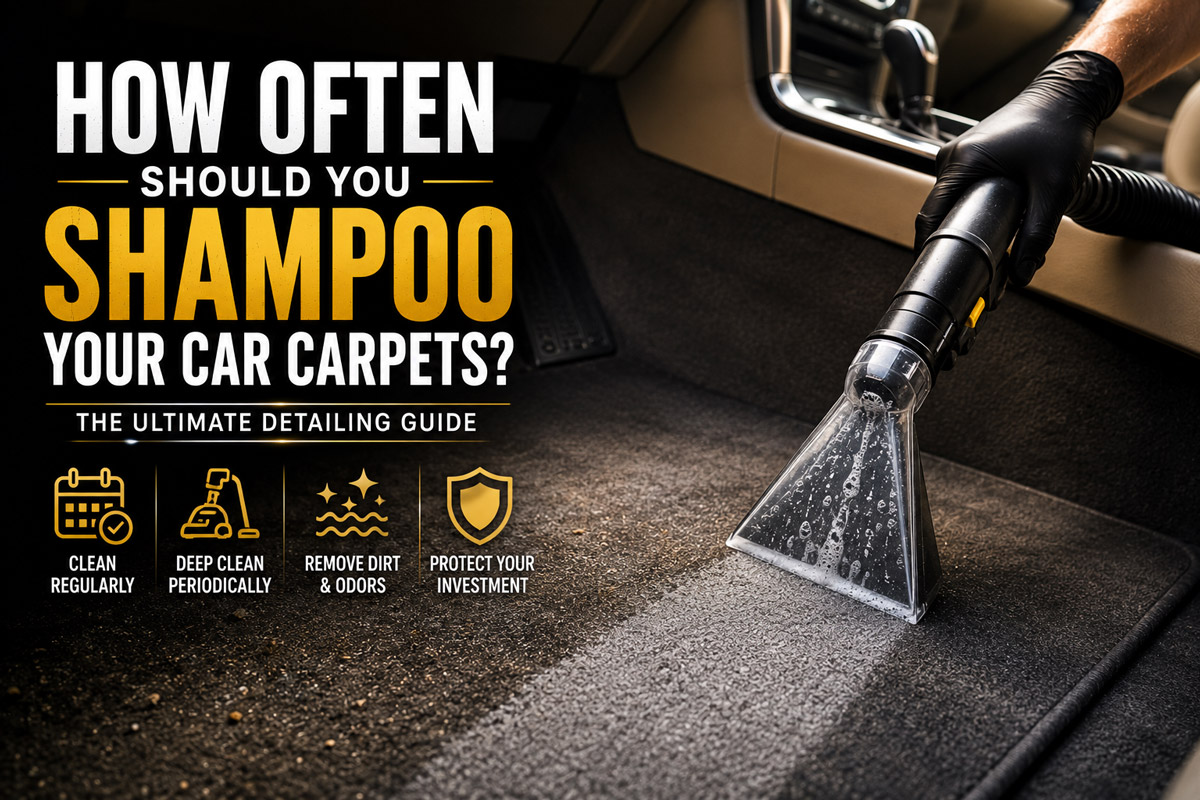
Your car carpet is one of the most heavily abused surfaces inside your vehicle. Every time you enter your car, your shoes track in grit, moisture, asphalt oil, mud, and road salt. Combine that with accidental coffee spills, pet hair, dropped food crumbs, and high humidity, and your automotive carpet quickly turns into a dense trap for dirt, bacteria, and stubborn odors.
While routine vacuuming picks up loose surface debris, it cannot break down deep embedded oils or pull out heavy contamination trapped deep within carpet fibers. That is where shampooing and hot water extraction become essential. However, many vehicle owners wonder about the ideal cleaning schedule. How often should you shampoo your car carpets to keep them fresh without causing fabric wear or mold risks?
In this comprehensive guide, you will learn the exact shampooing timelines tailored to your driving habits, the hidden dangers of over shampooing, essential warning signs that signal an immediate deep clean, and professional techniques to keep your interior spotless for years to come.
Car Carpet Shampooing Frequency Matrix: Finding Your Sweet Spot
There is no single rule for every vehicle because carpet contamination depends entirely on how you use your car. A weekend garage kept vehicle experiences a fraction of the wear compared to a family SUV or a busy rideshare sedan.
As a general benchmark, most personal vehicles benefit from a thorough carpet shampoo every 3 to 6 months. However, customizing your cleaning schedule according to your lifestyle ensures optimal interior hygiene while protecting delicate carpet backing.
Vehicle Usage vs Carpet Shampooing Schedule
| Driver Profile | Recommended Frequency | Primary Hazards | Key Maintenance Focus |
|---|---|---|---|
| Rideshare / Taxi / Parents | Every 1 to 2 Months | Food spills, sugary drinks, high foot traffic, mud | Enzyme spot treatment and low moisture shampooing |
| Pet Owners / Heavy Winter Drivers | Every 3 Months | Embedded dander, saliva, winter road salt rings | Salt neutralizing rinse and deep extraction |
| Standard Daily Commuters | Every 4 to 6 Months | General dirt accumulation, shoe scuffs, dust | Routine vacuuming paired with bi-annual extraction |
| Garage Kept / Low Mileage Cars | Once a Year | Atmospheric dust, light sole friction | Preventive dry extraction and gentle maintenance |
High Intensity Usage (Every 1 to 2 Months)
If you operate a rideshare vehicle, drive a commercial taxi, or haul children daily, your car carpets face continuous friction and high organic waste loading. Dropped fries, spilled juice boxes, wet shoes, and constant entry and exit push grime deep down into the carpet pile. For these vehicles, shampooing every 1 to 2 months prevents permanent staining and keeps odor ratings high for passengers.
Pet Owners and Winter Commuters (Every 3 Months)
Pets bring joy, but their fur, dander, drool, and muddy paws contain organic proteins that bind to synthetic carpet fibers. Similarly, winter driving introduces heavy calcium chloride and rock salt slush. Road salt dries into stubborn white salt rings that crystallize inside the carpet matrix, making fibers brittle over time. A 3 month shampooing cycle breaks down these crystals and extracts trapped pet allergens.
Standard Daily Commuters (Every 4 to 6 Months)
For drivers who commute daily without young kids or pets and who maintain basic vehicle cleanliness, shampooing every 4 to 6 months represents the ideal balance. This bi-annual schedule removes accumulated urban dust, light oil residue, and foot traffic marks before they migrate into the lower backing layer.
Low Mileage and Garage Kept Vehicles (Once a Year)
Low mileage weekend cars, classic vehicles, or garage kept sedans exposed to minimal outdoor dirt require deep carpet extraction only once a year. Annual maintenance is sufficient to remove settled air dust and keep the carpet fibers pliable and fresh.
5 Warning Signs Your Car Carpet Needs an Immediate Shampoo
You should not always rely strictly on a calendar schedule. Environmental changes and unexpected accidents demand immediate intervention. If you spot any of the following warning signals, shampoo your car carpets right away rather than waiting for your next scheduled service.
- Persistent Musty Odors: If your cabin smells stale, earthy, or damp even after taking out trash and vacuuming, moisture and bacterial activity are living inside your carpet underlayment.
- Sticky or Rigid Fiber Texture: Dried coffee, soda, or mud leave behind sticky residues that make carpet fibers stiff to the touch. This sticky layer actively grabs fresh dirt from your shoes.
- Visible Salt Rings and Dark Footwell Patches: White crusty rings around the driver footwell signal concentrated salt buildup that corrodes carpet fibers if left untreated.
- Increased Allergy Symptoms Inside the Cabin: Sneezing, watery eyes, or respiratory irritation while driving often point to trapped dust mites, pollen, and pet dander circulating from dirty carpets.
- Unexplained Subfloor Dampness: Moisture under floor mats after rain or heavy air conditioning usage indicates liquid penetration that requires deep extraction and thorough drying.
The Science of Over Shampooing: Why Too Much Soap Destroys Carpets
While regular cleaning is essential, shampooing your car carpets too frequently or using excessive soap detergent can inflict severe, long term damage on your vehicle interior. Detailing experts frequently see carpets ruined by overzealous cleaning attempts.
The Hidden Dangers of Excess Soap and Wetting
Soapy Residue Dirt Magnet
Unrinsed soap dries into a sticky chemical film. This film attracts fresh shoe dirt, making carpets re-soil twice as fast after cleaning.
Carpet Backing Delamination
Over-saturating carpet water weakens the factory adhesive bonding the fiber layer to the rubberized backing, leading to loose wrinkles.
Underfloor Mold and Mildew
Trapped liquid underneath vehicle sound deadening foam creates an ideal dark breeding ground for toxic mold spores within 24 hours.
The Soapy Residue Dirt Magnet Effect
Carpet shampoos contain surfactants designed to attract and suspend oil and dirt particles. However, if you apply high concentrations of shampoo without thoroughly rinsing and extracting the soap with clean water, a tacky chemical residue remains behind on the fibers. Once dry, this sticky film acts like a magnet for fresh dirt. As a result, your carpet becomes filthier faster than before you cleaned it.
Fiber Backing Delamination
Automotive carpet consists of top face fibers bonded to an underlying backing material using specialized adhesives. Excess water soaking through the face fibers reaches this adhesive layer. Frequent over wetting breaks down the bond, causing the carpet to loosen, stretch, wrinkle, and separate from the vehicle floor pan.
Underfloor Mold Growth and Corrosion
Modern vehicles feature thick foam underlayment and sound dampening mats directly beneath the carpet layer. If liquid penetrates through the carpet backing during heavy shampooing and is not fully extracted, it settles on the metal floor pan. Trapped moisture inside an enclosed vehicle cabin leads to mildew, unpleasant sour smells, mold colonies, and hidden floorboard rust.
Comparing Cleaning Methods: Shampooing vs Steam Cleaning vs Spot Extraction
Selecting the correct cleaning method depends on the type of contamination, available tools, and carpet condition. The chart below illustrates how different cleaning techniques compare in terms of deep stain removal efficiency versus drying time requirements.
Carpet Cleaning Method Comparison Chart
Stain Removal Power vs Moisture Retention and Dry Time Risk
Hot Water Extraction (Shampooing with Wet Vacuum)
This method injects warm water and carpet shampoo solution into the fibers under pressure while simultaneously pulling out the dirty slurry with a high power suction nozzle. It offers unmatched deep cleaning power for ground in mud, grease, and heavy dirt, but requires careful liquid control and thorough drying times.
Dry Vapor Steam Cleaning
Vapor steam uses high temperature steam with minimal water volume to melt oil, kill bacteria, and loosen embedded grime. Steam cleaning excels at killing mold spores and eliminating odors while keeping moisture levels extremely low, allowing carpets to dry within 1 to 2 hours.
Low Moisture Foaming Shampoo Scrub
Foaming cleaners produce dense foam that lifts soil to the surface without saturating the backing layer. Once dry, the encapsulated dirt is simply vacuumed away. This technique works exceptionally well for routine maintenance between heavy extraction sessions.
Step by Step Detailing Process for Shampooing Car Carpets
To get professional grade results without causing fiber wear or soap residue buildup, follow this step by step cleaning routine:
Step 1: Complete Dry Debris Extraction
Never apply liquid to a carpet filled with dry dirt. Liquid converts loose dirt into thick mud, pushing it deeper into the carpet base.
- Remove all loose items, trash, and floor mats from the vehicle interior.
- Use a high performance shop vacuum with a crevice tool to clear dirt around seat rails and tight corners.
- Agitate carpet fibers with a stiff nylon detailing brush or drill brush attachment to pop out deeply trapped sand and grit, then vacuum a second time.
Step 2: Targeted Pre Treatment for Specific Stains
Different stains require tailored chemical solutions before general shampooing:
- Salt Rings: Spray a 50/50 mix of warm water and white distilled vinegar to dissolve calcium deposits. Allow it to dwell for 5 minutes to neutralize alkaline salt crystals.
- Grease and Oil: Apply a citrus degreaser directly to the spot and gently agitate with a soft brush.
- Coffee or Soda Spills: Use an enzymatic fabric cleaner to break down organic sugars and milk proteins.
Step 3: Low Moisture Shampoo Application and Agitation
- Dilute a dedicated automotive carpet shampoo according to manufacturer instructions. Avoid using household dish soap, which leaves heavy residues and high pH levels.
- Lightly mist the shampoo solution onto the carpet surface using a pump sprayer. Do not soak the fabric.
- Work the shampoo into the fibers using overlapping circular motions with a medium density carpet brush.
Step 4: Clean Water Extraction and Rinsing
- Fill your carpet extractor or wet vacuum clean tank with plain warm water or a specialized carpet neutralizing rinse.
- Pass the extraction head over the carpet while spraying clean rinse water to wash out trapped shampoo and dissolved dirt.
- Perform multiple dry passes with the extraction wand without pulling the water trigger. Continue dry extraction until the clear viewing window shows no remaining water or foam being pulled out.
Step 5: Rapid Ventilation and Drying Protocol
Preventing mold and lingering humidity requires proper drying post shampoo:
- Roll down all windows by a few inches or open vehicle doors in a secure dry area.
- Place an automotive air mover or high capacity fan inside the footwell pointing directly across the carpet surface.
- Allow the vehicle interior to dry completely for 6 to 12 hours before installing floor mats or closing up the cabin.
Smart Preventive Tips to Extend Shampoo Intervals
You can easily stretch out the time between heavy extraction sessions while maintaining a clean interior by applying simple preventive measures.
- Upgrade to Custom Fit Rubber Floor Mats: High walled TPE or TPO rubber mats contain liquid spills, mud, and melted snow before they reach your underlying carpet.
- Implement an Immediate Blotting Rule: Keep clean microfiber towels in your glove compartment. Blot liquid spills instantly without rubbing to stop liquids from penetrating the carpet backing.
- Replace Your Cabin Air Filter Regularly: A fresh cabin filter reduces ambient dust settling on carpet fibers when running your climate control system.
- Use Fabric Protectant Coatings: After shampooing and complete drying, spray a hydrophobic fabric sealant over the carpet. This coating repels liquids and prevents stains from bonding to fibers.
Conclusion
Knowing how often to shampoo your car carpets comes down to evaluating your daily driving conditions, passenger load, and regional climate. While a 3 to 6 month schedule serves most personal vehicles well, high traffic rideshare drivers require frequent 1 to 2 month touch ups, whereas garage kept weekend cars need only annual attention.
By avoiding heavy soap concentrations, neutralizing salt stains early, and ensuring complete 6 to 12 hour drying periods, you protect your carpet fibers from wear while maintaining a fresh, healthy cabin environment.
Next Step: Take Control of Your Vehicle Interior Today
Ready to restore your car carpets to showroom condition? Download our free Vehicle Maintenance Checklist, explore our recommended detailing tools, or schedule a professional interior detailing session with our certified detailing team today!