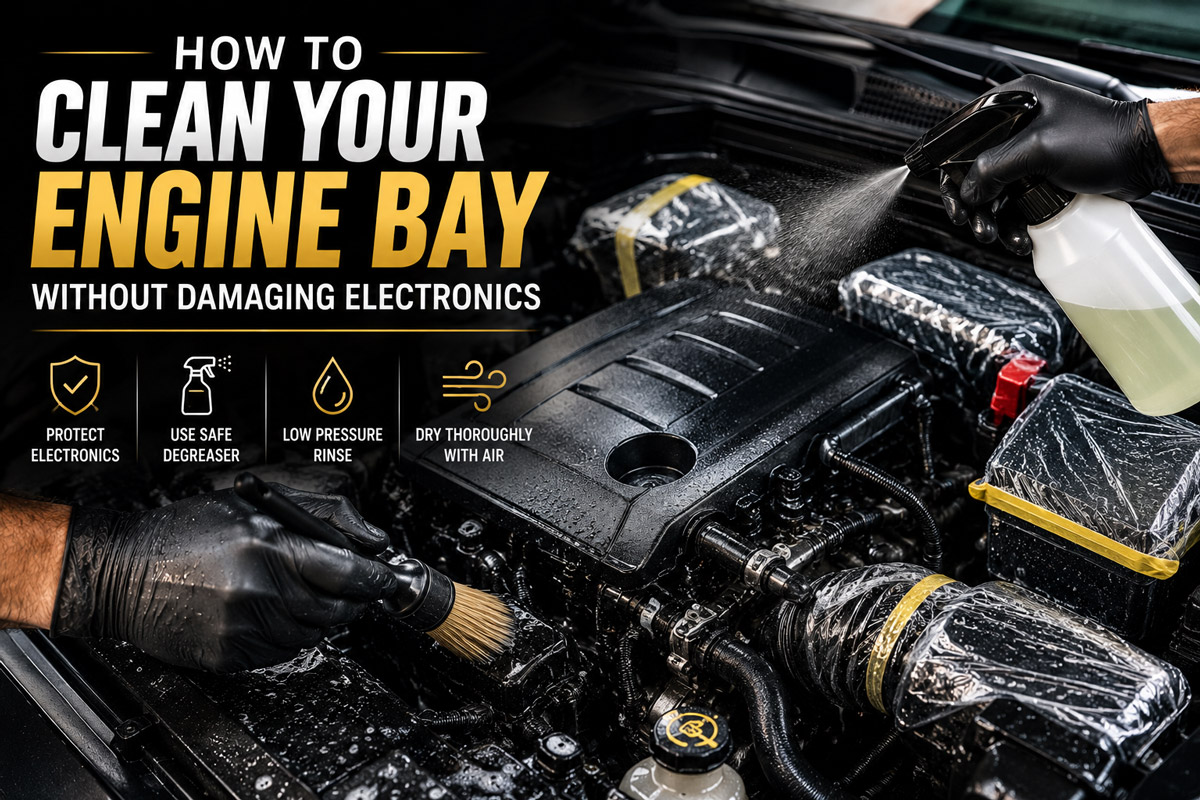
Cleaning an engine bay safely requires protecting sensitive electronics from moisture intrusion while lifting heavy grease. Disconnect the negative battery terminal, seal the alternator, fuse box, and air intake with plastic wrap, and apply a neutral-pH degreaser. Rinse with a pressure washer kept below 1,500 PSI, then dry immediately using compressed air.
At a Glance:
- Wait 30 to 45 minutes for the engine block to cool completely before applying water to prevent thermal shock and cracked metal.
- Covering the alternator, fuse box, coil packs, and air intake inlet is mandatory before spraying any liquids under the hood.
- Water-based engine degreasers with a pH level between 7.0 and 9.5 safely lift oil without chemically etching bare aluminum.
- A pressure washer with a 40-degree fan tip at 1,500 PSI introduces less standing water into the engine bay than a flowing garden hose.
- Compressed air regulated at 40 PSI is the safest method to evacuate standing water from deep spark plug wells and electrical connectors.
Which Engine Parts Need Waterproofing?
Cover the alternator, main fuse box, engine air intake inlet, ignition coil packs, and any aftermarket HID lighting ballasts before introducing water into the engine bay. These specific components lack the heavy rubber weather-sealing required to block pressurized moisture.
Automotive engineers design standard under-hood wiring harnesses to withstand splashing from puddles, but they do not design them to survive direct, sustained spray. If water enters the alternator housing, it can instantly corrode the copper windings or short the internal voltage regulator upon startup. Exposing an unsealed open-element air filter allows water to travel directly into the engine cylinders, creating a high risk of catastrophic hydrolock. Heavily modified vehicles require extra attention; owners must locate and wrap standalone engine control unit (ECU) connections, exposed aftermarket relay blocks, and custom wiring splices.
What Materials Best Waterproof Engine Parts?
Heavy-duty aluminum foil and plastic grocery bags secured with zip ties provide the best water barriers for engine components. Aluminum foil molds tightly over complex shapes like exposed wire looms and irregularly shaped distributor caps, holding its form without requiring tape.
Standard kitchen plastic wrap is a secondary option, but thin plastic wrap tends to blow off when hit by the wind of a pressure washer. Securing plastic bags with rubber bands or zip ties over the alternator ensures the barrier remains intact during the agitation and rinsing phases. Avoid using masking tape, as engine bay residual heat combined with water turns the tape adhesive into a sticky, impossible-to-remove mess.
How Do You Prepare an Engine for Washing?
- Cool the engine: Let the vehicle sit with the hood open for 30 to 45 minutes until the cast iron block or aluminum cylinder heads are cool to the touch.
- Disconnect the battery: Use a 10mm wrench to remove the negative battery terminal, tucking the cable securely away from the battery post.
- Remove loose debris: Extract leaves, pine needles, and dirt from the windshield cowl and hood hinges using a shop vacuum or leaf blower.
- Wrap sensitive electronics: Secure plastic bags over the alternator, fuse box, and air intake.
Skipping the cooling phase is the most destructive mistake a detailer can make. Spraying cold water onto a 200°F metal engine block creates severe thermal shock. This sudden temperature change reliably warps aluminum cylinder heads, cracks cast iron exhaust manifolds, and shatters heated plastic sensor housings.
Should the Engine Be Running During Cleaning?
No, the engine must never be running while applying water or cleaning chemicals. A running engine actively pulls in air, which means the intake system can vacuum up atomized degreaser and water droplets directly into the combustion chambers.
Furthermore, a running engine keeps the serpentine belt and cooling fans spinning. Dropping a detail brush into moving belts causes severe physical injury and snaps delicate plastic cooling fan blades. The vehicle should remain completely powered down with the battery disconnected until the final drying phase is complete.
How to Correctly Apply Engine Degreaser
- Select the chemical: Choose a water-based, heavy-duty engine degreaser.
- Dilute the solution: Mix the degreaser at a 4:1 ratio with water for light dust, or a 1:1 ratio for heavy oil leaks.
- Apply and dwell: Spray the degreaser liberally across the cool engine bay and let it sit for 3 to 5 minutes to break down hydrocarbon bonds. Do not let the chemical dry.
- Agitate the grime: Scrub stubborn oil deposits and textured plastics using a nylon-bristle detail brush or a soft wheel brush.
Dwell time is the critical mechanism for lifting heavy automotive grease. The degreaser needs several minutes to chemically emulsify baked-on oil. If the chemical begins to dry during the dwell period, mist the engine bay lightly with water to reactivate the cleaning agents. Agitation physically breaks the surface tension of the dirt, allowing the chemical to suspend the grease so it can rinse away cleanly.
Which Degreasers Damage Aluminum Parts?
Highly alkaline degreasers with a pH above 11.0, such as undiluted industrial purple cleaners, will instantly etch and permanently stain bare aluminum engine parts. This chemical reaction leaves behind ugly white, chalky spotting across the intake manifold, alternator casing, and engine block.
Water-based degreasers with a neutral to mildly alkaline pH (7.0 to 9.5) cut grease effectively without risking chemical etching. If a detailer accidentally etches an aluminum component with a caustic cleaner, general washing will not reverse the damage. The detailer must manually restore the bare metal using an aluminum polish and 0000-grade fine steel wool.
Pressure Washer vs. Garden Hose for Engines
A pressure washer equipped with a wide 40-degree fan tip is safer for engine cleaning than a standard garden hose. A garden hose delivers a massive volume of continuous, flooding water that overwhelms electrical seals and pools deeply in the engine valley.
In contrast, a pressure washer utilizes low water volume combined with high atomization. The misting effect of a pressure washer blows away suspended dirt and degreaser rapidly while leaving very little standing water behind. The danger of a pressure washer only arises when the user selects a pinpoint nozzle or holds the wand too close to delicate components.
What is the Safe Rinse Pressure and Distance?
Restrict water pressure to a maximum of 1,500 PSI and hold the spray nozzle 24 to 36 inches away from the engine surface. Optimal water temperature for rinsing ranges from 120°F to 140°F, which cuts grease quickly without melting rubber vacuum lines.
Pressures exceeding 1,500 PSI will physically force water past the tightest silicone weather-seals protecting automotive electrical connectors. Never use a 0-degree red pinpoint nozzle under the hood. A pinpoint stream acts like a water jet cutter, easily slicing through rubber wire insulation, slicing silicone coolant hoses, and destroying sound-deadening hood liners.
How to Dry an Engine to Prevent Shorts
- Blow out crevices: Use an air compressor regulated to 40 PSI or a standard leaf blower to evacuate standing water from spark plug wells, electrical connectors, and bolt heads.
- Hand dry surfaces: Wipe down all accessible plastic covers, painted surfaces, and silicone hoses using clean microfiber towels.
- Heat cycle the engine: Remove all plastic waterproofing bags, reconnect the negative battery terminal, start the vehicle, and let the engine idle with the hood closed for 10 to 15 minutes.
Evacuating pooled water mechanically is non-negotiable. If water remains trapped in the spark plug wells, engine heat will turn that water into steam, pushing moisture upward into the ignition coils and causing immediate misfires. Limiting compressed air to 40 PSI ensures the air stream blows the water away rather than driving the droplets deeper into sealed sensor housings.
Cleaning Hybrid and EV Engine Bays
Never spray the heavy orange high-voltage cables or the shielded EV inverters with pressurized water. These bright orange cables carry lethal direct current (DC) voltages ranging between 400V and 800V.
While manufacturers seal hybrid and EV electrical systems heavily against road spray, they are not engineered to withstand concentrated pressure washing. To clean an electric vehicle’s front trunk (frunk) or motor bay, detailers must use a waterless wash solution or mineral spirits applied directly to a microfiber towel. Wipe down the sealed plastic covers by hand, completely avoiding the high-voltage architecture.
Safely Cleaning Pre-1990 Vintage Engines
Vintage engines featuring open distributors, mechanical points, and unsealed spark plug wells must be cleaned entirely without running water. Pre-1990 ignition systems lack the modern silicone weather-sealing found on today’s coil-on-plug designs.
Introducing a hose or pressure washer to a classic carburetor-fed V8 virtually guarantees water will flood the distributor cap, preventing the engine from generating spark. Detailers must clean classic engine bays using dedicated waterless engine washes, quick detailers, and small detailing swabs to carefully lift grease away from delicate vacuum lines and exposed wiring.
Fixing an Engine That Misfires After Washing
To fix a post-wash engine misfire or a flashing Check Engine Light (CEL), shut off the engine immediately, extract the ignition coils, and remove standing water from the spark plug wells. High-pressure water or capillary action often sneaks past worn rubber coil boots, drowning the spark plugs and interrupting the electrical arc.
Use a wet/dry shop vacuum with a micro-attachment to suck out the pooled water. Next, blow the wells completely dry with compressed air. Spray the inside of the rubber coil boots with a moisture-displacing electronic cleaner or WD-40, apply a dab of dielectric grease to the boot seal, and reinstall the coils.
Can You Use Dish Soap to Clean an Engine?
Yes, liquid dish soap can remove light engine dust, but automotive detailers advise against using it. Dish soaps contain heavy surfactants designed to strip grease, which also effectively strip protective dressings and accelerate the drying and cracking of rubber coolant hoses over time.
Additionally, dish soap creates excessive, thick foam. Rinsing this foam away requires significantly more water and time than rinsing a dedicated engine degreaser. Forcing higher volumes of water into the engine bay proportionally increases the risk of water intruding into sensitive electronics.
Does Washing the Engine Void the Warranty?
No, simply washing an engine bay does not void a factory vehicle warranty. Manufacturers expect engines to encounter moisture, road salt, and grime during normal operation.
However, a dealership service department can legally deny a warranty claim for a specific component if they find evidence of physical abuse. If a technician determines that high-pressure water physically shattered a sealed sensor housing or caused an alternator to short out due to negligent pressure washing, the warranty will not cover that specific repair.
How Often Should You Clean the Engine Bay?
Clean the engine bay thoroughly one to two times per year. Detailing the engine in late autumn removes summer dust and oil weeping, while a second cleaning in early spring safely washes away highly corrosive winter road salt.
Maintaining a clean engine bay provides distinct mechanical benefits beyond aesthetics. A grease-free engine runs slightly cooler, allows mechanics to spot fresh fluid leaks immediately, and prevents rodents from nesting in the warm, debris-filled crevices near the firewall.
The Bottom Line
Cleaning an engine bay safely requires protecting the electronics first. By disconnecting the battery, wrapping the alternator and fuse boxes in plastic, and utilizing a water-based degreaser, vehicle owners can strip heavy oil without risking electrical damage. Always use a 40-degree pressure washer tip kept at least two feet away from the surface, and ensure all deep crevices are blown completely dry with compressed air before restarting the vehicle.