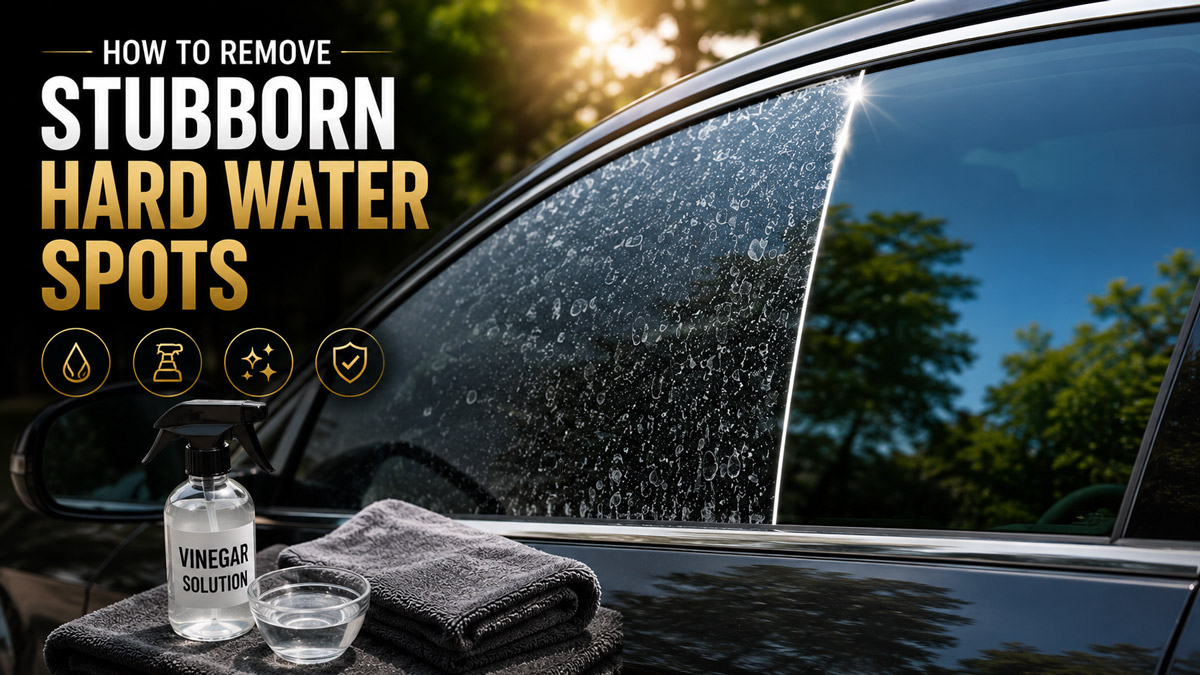
Acidic solutions and abrasive polishing compounds are the most effective methods to dissolve and remove stubborn alkaline hard water spots from car windows. Mild spots require 5% acidity white vinegar, while deeply etched minerals require mechanical leveling using a rotary polisher and cerium oxide slurry.
At a Glance
- Vinegar and distilled water (1:1 ratio) dissolve mild surface-level alkaline mineral deposits.
- Ammonia-based household glass cleaners cannot remove bonded calcium or magnesium carbonate.
- Deeply baked water spots require mechanical leveling with a machine polisher and cerium oxide powder.
- Grade #0000 ultra-fine steel wool physically shears off water spots when heavily lubricated.
- Acidic chemical spot removers will permanently dissolve aftermarket interior window tint.
- Hydrophobic ceramic glass sealants prevent future water spots from bonding to the silica structure.
What causes hard water spots to bond to car glass?
Evaporation of mineral-rich water leaves alkaline deposits like calcium and magnesium that chemically bond with the porous silica structure of automotive glass. When municipal tap water, sprinkler runoff, or acid rain dries on a car window, the H2O turns to gas, but the heavy minerals remain.
Heat from direct sunlight accelerates this bonding process. The UV radiation bakes the alkaline carbonates into the microscopic pores of the glass. Over a period of weeks, a weak surface bond transforms into a hardened chemical shell. Professional detailers classify these alkaline bonds as Type I water spots, which remain flat on the surface and require chemical intervention to neutralize the high-pH minerals.
What is the difference between surface deposits and etched glass?
Surface deposits sit on top of the glass, while etched glass occurs when minerals physically eat into the silica structure, creating microscopic craters. Chemical spot removers can dissolve surface deposits, but etched glass requires physical abrasion to level the surrounding glass down to the bottom of the crater.
Minerals baked under the sun for over two years will migrate from a chemical bond to physical degradation. Detailers refer to this as Type II or Type III spotting. Running a fingernail over the glass reveals the difference: surface deposits feel like raised bumps, whereas etched glass feels like tiny divots. Once the glass is physically pitted, no amount of acid will fix the visual defect. You must resurface the windshield or replace it entirely.
Does regular household glass cleaner remove hard water spots?
No, regular household glass cleaner cannot remove hard water spots. Ammonia-based cleaners are formulated strictly to cut dirt, grease, and human fingerprints. They lack the acidic pH required to break down and dissolve bonded mineral deposits like calcium or magnesium carbonate.
Applying standard glass cleaner to baked-on water spots only cleans the top of the mineral deposit. It leaves the white chalky outline completely intact. To break an alkaline mineral bond, the cleaning agent must possess a pH of 5 or lower. Ammonia resides at a pH of 11, making it chemically incapable of neutralizing hard water stains on automotive glass.
Will standard detailing clay bars work on water spots?
Standard detailing clay bars rarely work on etched-in, flat hard water spots. Detailing clay is designed to shear off raised, above-surface contaminants like industrial fallout, rail dust, or tree sap, but it cannot dissolve chemical mineral bonds.
Because hard water spots are primarily flat microscopic bonds, the clay medium simply glides over them without creating enough friction to pull the minerals from the pores of the glass. Using aggressive, heavy-grade clay on dry glass in an attempt to scrub the spots will only result in severe micro-marring of the window, leaving behind dense scratches that require heavy machine polishing to remove.
How do you remove mild hard water spots with vinegar?
Mix equal parts distilled water and 5% acidity white vinegar to dissolve mild hard water spots. The acetic acid neutralizes the high pH of the alkaline minerals safely without damaging the underlying glass.
- Mix the 1:1 solution of distilled water and white vinegar in a spray bottle.
- Spray the solution generously onto the affected car window out of direct sunlight.
- Let the acidic mixture sit for 2 to 3 minutes to break the mineral bonds. Do not let it dry.
- Wipe the glass clean using a clean waffle-weave microfiber towel.
- Rinse the panel immediately with fresh water to neutralize the acid.
Can lemon juice dissolve alkaline minerals on glass?
Yes, lemon juice possesses a pH of 2 to 3, making it acidic enough to dissolve mild alkaline mineral deposits on car windows. The citric acid acts similarly to acetic acid, breaking down calcium and magnesium carbonates that have bonded to the silica.
To utilize this method, apply straight lemon juice directly to a microfiber applicator pad. Rub the juice vigorously into the spotted glass using overlapping circular motions. The juice must remain wet to maintain its chemical reactivity. You must rinse the glass thoroughly with fresh water within five minutes; allowing citric acid to bake onto the glass will create sticky, sugar-based stains that attract heavy dirt.
When should you use chemical gel water spot removers?
Use specialized chemical gel water spot removers when vinegar and lemon juice fail to break the mineral bond. These heavy-duty acidic formulas are designed to dissolve stubborn, month-old deposits that DIY household chemicals cannot penetrate.
Gel formulas cling to vertical car windows, allowing the acid longer dwell times against the mineral deposit without running down into the door seals. You must apply these gels out of direct sunlight and wipe them off within 60 seconds. Allowing professional-grade chemical spot removers to dry on automotive glass will result in permanent chemical etching that mirrors the exact shape of the chemical run-marks.
Is it safe to use #0000 steel wool on car windows?
Yes, grade #0000 ultra-fine steel wool is safe for car windows if it is completely saturated with a lubricating glass cleaner. When chemical acids fail, this mechanical approach physically shears the tops off hardened mineral deposits without digging into the silica.
Lubrication is vital. Using dry steel wool on dry glass will instantly introduce micro-scratches. You must constantly spray the window with glass cleaner to maintain a slick barrier between the metal fibers and the window. Never use grades #00, #0, or coarser on automotive glass. Those grades are too aggressive and will permanently score the windshield, leading to blinding glares during night driving.
How do you polish deeply etched glass with cerium oxide?
To remove deeply etched water spots, use a rotary polisher set between 1000 and 1500 RPM paired with a rayon felt pad and a cerium oxide slurry. This mechanical process physically shaves down the damaged microscopic top layer of the glass until it is flush with the mineral craters.
- Mask off all surrounding rubber trims and paint with automotive tape.
- Mix cerium oxide powder with water to create a thick paste consistency.
- Apply the paste to a dense rayon glass polishing pad.
- Work the rotary polisher over the glass in a tight cross-hatch pattern at 1000–1500 RPM.
- Mist the glass continuously with water to keep the cerium oxide wet and control heat buildup.
- Wipe the slurry away and inspect the glass with a heavy inspection light.
What temperature should car glass be during spot removal?
Car glass should remain between 50°F and 80°F (10°C to 26°C) during hard water spot removal. Extreme temperatures alter the chemical behavior of acidic cleaners and increase the risk of glass damage during mechanical polishing.
Applying chemical spot removers to glass hotter than 80°F causes immediate flash evaporation. The water in the chemical evaporates, leaving highly concentrated acids behind that quickly bake into the pores and create permanent cloudy stains. Conversely, attempting heavy rotary polishing on freezing glass introduces sudden, concentrated thermal shock, which can cause the windshield to immediately crack under the pad.
How do you protect aftermarket window tint from spot removers?
Never use acidic chemicals or aggressive scrubbing pads on the inside of tinted car windows. Acidic spot removers will permanently dissolve the aftermarket Mylar film and ruin the adhesive bond.
Aftermarket tint is a soft plastic sheet applied to the interior glass, lacking the chemical resistance of bare silica. If the interior tinted glass has hard water spots from leaving windows down during rain, use only distilled water and a soft microfiber towel. If the spots persist, the tint film itself has degraded and must be stripped and replaced by a professional shop.
Can water spot removal chemicals damage matte paint?
Yes, acidic water spot removers and cerium oxide slurries will permanently ruin matte vehicle wraps and matte clear coats. Standard liquid run-off from these glass treatments will stain the porous structure of matte finishes.
Matte paint lacks the smooth, reflective clear coat of standard vehicles. The microscopic peaks and valleys that create the flat finish act like sponges for acidic gels and abrasive powders. You must mask off the borders of the window completely with three layers of automotive detailing tape and cover the surrounding painted panels with plastic sheeting before applying any chemical or abrasive compounds to the glass.
Are auto-dimming side mirrors safe for chemical etching?
No, modern auto-dimming side mirrors are not safe for acidic chemical water spot removers or heavy abrasives. Applying these solutions will permanently destroy the sensitive electronic coatings on the exterior surface.
Many modern luxury vehicles feature electrochromic coatings applied directly to the outside of the mirror glass to dim headlight glare automatically. Heavy acidic gels or cerium oxide polishes will burn through this micro-thin layer, leaving a permanently discolored, splotchy mirror that no longer functions. For these specific mirrors, stick to mild 1:1 vinegar solutions and very light hand-wiping.
How do you prevent hard water spots from returning?
Apply a hydrophobic ceramic glass coating or silica-based sealant directly to the clean window to prevent hard water spots from returning. This creates a highly slick sacrificial barrier over the pores of the glass.
Ceramic coatings lower the surface tension of the windshield. When mineral-rich water hits the treated glass, it beads up tightly and rolls off the vehicle rather than pooling flat. By preventing the water from sitting stationary on the glass, the minerals never get the opportunity to evaporate and bake into the silica structure. Reapply the coating every six to twelve months depending on wiper blade usage.
The Bottom Line
Acidic solutions like 5% white vinegar handle mild surface minerals, while deeply baked stains require mechanical leveling with cerium oxide and a machine polisher. Regular household glass cleaners and detailing clays are structurally incapable of breaking chemical alkaline bonds. You must exercise extreme caution around aftermarket tint, matte paint, and electrochromic side mirrors, as heavy acids will instantly destroy these surfaces. Protecting the restored glass with a hydrophobic ceramic coating is the only reliable way to prevent recurring mineral bonds in the future.