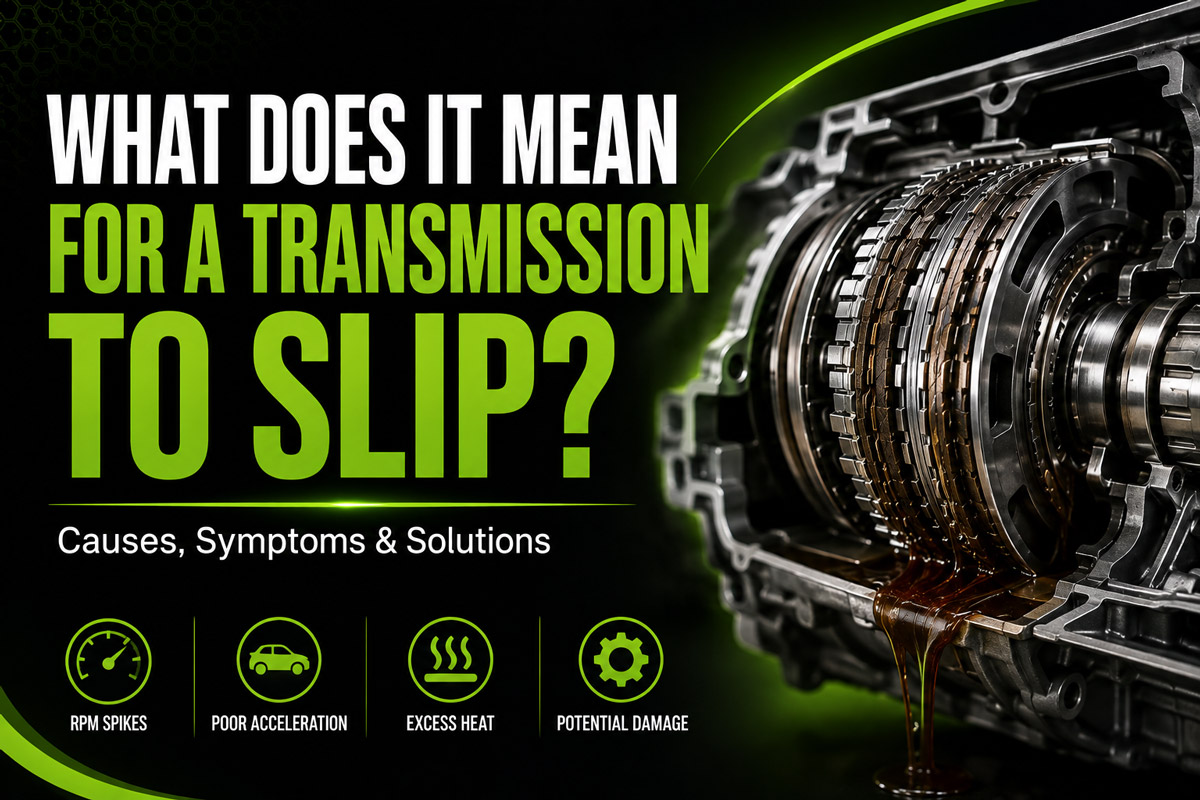
A slipping transmission occurs when engine power fails to reach the wheels due to a loss of internal friction. Instead of locking together, the internal clutch plates slide past each other. This causes the engine RPMs to spike rapidly when you press the accelerator, while the vehicle barely accelerates.
Key Facts at a Glance
- The RPM Flare: A true slip causes engine speed to jump 500 to 2,000+ RPM without a corresponding increase in vehicle speed.
- Heat Generation: Slipping clutch plates generate intense friction, spiking internal fluid temperatures from a normal 175°F to over 250°F.
- Time-to-Failure: Driving a slipping vehicle triggers a snowball effect of debris and heat; complete failure typically occurs in under two weeks or less than 100 miles.
- Repair Costs: Fixes range from a $300 solenoid replacement for electrical faults to $8,000 for a heavy-duty remanufactured unit.
- The Fluid Catch-22: If transmission fluid is already black and gritty, flushing it can cause immediate transmission failure by washing away the suspended friction material.
What Are the Mechanics of a Slip?
A transmission slips when it lacks the hydraulic pressure or the physical friction material required to hold a gear under load. Automatic transmissions rely on hydraulic clamping force. When the system functions correctly, the transmission pump pressurizes automatic transmission fluid (ATF) to a specific line pressure, often between 150 and 250 psi while in gear.
The vehicle’s computer commands a solenoid to open, sending this high-pressure fluid into a piston. The piston squeezes a clutch pack—an alternating stack of steel plates and friction-lined plates—locking them together to transfer power to the driveshaft.
A slip interrupts this chain of events. If the pump is weak, fluid is low, or a solenoid fails, pressure drops below the required threshold. The piston fails to clamp the clutch pack tightly. The steel and friction plates slide against each other rather than locking. This sliding generates extreme heat (often exceeding 300°F locally), which glazes the friction material and turns the transmission fluid brown or black. Once the plates glaze, their ability to grip is permanently destroyed.
How Do Different Transmissions Slip?
Different transmission architectures utilize varying internal mechanisms, meaning the physical cause and the feel of the slip differ based on what you drive.
Traditional Automatic Transmissions
Traditional automatics experience the most common type of slip. This is caused by worn clutch packs or broken bands failing to hold a planetary gear set stationary. Because clutch packs are gear-specific, traditional automatics often slip only in specific ranges, such as failing to shift from 2nd to 3rd gear, while operating perfectly in 1st and Reverse.
Continuously Variable Transmissions (CVTs)
A slipping CVT is a catastrophic mechanical event. CVTs use a steel belt or chain riding between two adjustable conical pulleys (variators) rather than traditional gears. When a CVT slips, the metal belt slides against the smooth face of the pulley. This feels like a severe shudder or rubber-banding effect. Once the metal belt scores and gouges the pulley face, the transmission cannot be rebuilt locally and must be replaced entirely.
Manual Transmissions
Manual transmissions slip at the clutch disc located between the engine and the transmission input shaft, rather than inside the gearbox itself. A manual slip usually manifests in high gears (4th, 5th, or 6th) under heavy load, such as accelerating up a hill. The engine revs rise, but the car does not speed up. Unlike an automatic transmission, replacing a slipping manual clutch is a routine wear-item maintenance job, not a transmission rebuild.
How Do You Diagnose a Slipping Transmission?
Diagnosing a transmission slip requires evaluating physical symptoms, checking fluid conditions, and reading computer data from the Powertrain Control Module (PCM).
What Are the Primary Symptoms?
The definitive symptom of a slipping transmission is the RPM flare. When you demand power, the tachometer needle swings wildly upward, but the speedometer needle remains largely static. You may also experience harsh, delayed engagements where the vehicle hesitates for several seconds before slamming into gear.
Drivers frequently confuse Torque Converter Clutch (TCC) shudder with a slipping gear. TCC shudder feels like driving over rumble strips at highway speeds (typically 40–50 mph) and is caused by the torque converter struggling to lock up, whereas a true gear slip feels like the vehicle has been temporarily shifted into neutral.
Which OBD2 Codes Indicate Slipping?
Modern vehicles monitor input and output shaft speeds. If the computer detects that the engine is spinning faster than the transmission output dictates for a given gear, it triggers a check engine light and engages “Limp Mode,” locking the transmission in 2nd or 3rd gear to prevent further heat damage. Common Diagnostic Trouble Codes (DTCs) include:
- P0730: Incorrect Gear Ratio.
- P0894: Transmission Component Slipping.
- P0750 / P0755: Shift Solenoid Malfunctions (often the root cause of the low pressure creating the slip).
Should You Change Slipping Transmission Fluid?
Changing transmission fluid on a slipping transmission can either save the unit or destroy it instantly, depending entirely on the current state of the fluid.
You must check the fluid condition first. For older vehicles, pull the dipstick with the engine running and warm. For modern “sealed” transmissions, a mechanic must remove a check-plug on the side of the transmission pan while monitoring the fluid temperature via a scan tool.
- When to change the fluid: If the fluid is slightly dark but still retains a reddish hue, and you are experiencing minor, intermittent slipping or harsh shifts, a fluid and filter change can restore proper hydraulic pressure.
- When to avoid changing the fluid: If the fluid is pitch black, smells like burnt toast, and contains visible metallic grit or black sludge, do not flush it. That grit is the friction material that has sheared off the clutch plates. When suspended in the old, thick fluid, it provides the only remaining grip keeping the transmission moving. Introducing fresh, highly detergent fluid washes away this grit, resulting in total and immediate loss of drive.
Avoid bottled “stop-slip” additives like Lucas Transmission Fix as a permanent repair. These highly viscous fluids temporarily swell internal rubber seals to boost pressure and increase friction. While they might buy you a few months of drivability, they eventually gum up the delicate passages in the valve body.
How Much Does It Cost to Fix a Slip?
Repairing a slipping transmission is heavily dependent on the vehicle make and the root cause. Prices in 2025/2026 vary widely based on labor rates (typically $120–$200/hour) and part availability.
| Repair Type | Estimated Cost | Timeframe | Best For… |
| Fluid & Filter Change | $150 – $400 | 1 Day | Minor slipping caused by low fluid or clogged filters. |
| Solenoid Replacement | $300 – $800 | 1–2 Days | Slipping localized to one gear with accompanying electrical OBD2 codes. |
| Local Rebuild | $2,500 – $4,500 | 3–5 Days | Keeping the original vehicle case; internal soft parts are replaced. |
| Remanufactured Unit | $3,000 – $8,000 | 1–2 Weeks | Long-term ownership; features factory updates and a 3-year warranty. |
| Used (Junkyard) Unit | $600 – $1,500 | 2–4 Days | Budget repairs on older vehicles; high risk with 30-90 day warranties. |
Rebuild vs. Remanufactured Transmissions
A local rebuild involves a technician disassembling your specific transmission on a bench and replacing the worn clutches, seals, and bands. While potentially cheaper, its success relies entirely on the skill of the builder. Rebuilds often fail prematurely if the technician reuses a worn valve body that continues to leak hydraulic pressure.
A remanufactured transmission is built in a dedicated factory setting, fully dyno-tested before shipping, and includes engineering updates to fix the factory design flaws that caused the original failure. This is the most reliable option, standardizing the quality of the repair.
Which Repair Strategy Is Right for You?
Selecting the right repair path depends entirely on your mechanical ability and your financial timeline for the vehicle.
- The “Keeper” (Driving 3+ more years): Choose a remanufactured transmission. The 3-year/100,000-mile warranty protects your investment, and the factory updates ensure the specific design weakness of your vehicle’s original transmission is permanently corrected.
- The “Seller” (Trading in within 6 months): Investigate solenoids and fluid. If the transmission has a minor slip, replacing a $50 shift solenoid accessible from the oil pan might restore line pressure and provide six months of smooth driving to facilitate a sale.
- The “Budget DIYer”: Always run a diagnostic scan before condemning the mechanicals. Many transmissions are declared “blown” when the actual fault is a stuck-open electrical solenoid preventing pressure buildup. Diagnose the electronics before paying for a rebuild.
Frequently Asked Questions
Can a low battery cause a transmission to slip?
Yes, a low battery or failing alternator can cause transmission slip. Modern transmissions rely on electronic solenoids to direct fluid pressure. If system voltage drops below 12 volts, these solenoids cannot open fully, resulting in low line pressure and subsequent clutch pack slippage.
Will a slipping transmission throw a check engine light?
Yes, a slipping transmission will usually trigger a check engine light. The vehicle’s powertrain control module (PCM) compares the engine’s output speed to the transmission’s output speed. If they do not match the expected ratio, the PCM detects the slip and logs a diagnostic trouble code like P0730 or P0894.
What does a slipping transmission sound like?
A slipping transmission sounds primarily like a sudden, unexpected revving of the engine, similar to pressing the gas pedal while in neutral. Additionally, you may hear a high-pitched whining noise indicating a failing hydraulic pump, or a metallic clunking when the gear finally catches.
Is it safe to drive with a slipping transmission?
No, it is not safe to drive with a slipping transmission. The vehicle can unpredictably lose acceleration while merging onto a highway or crossing an intersection. Furthermore, driving generates extreme heat and metal debris, rapidly turning a repairable transmission into total mechanical failure.