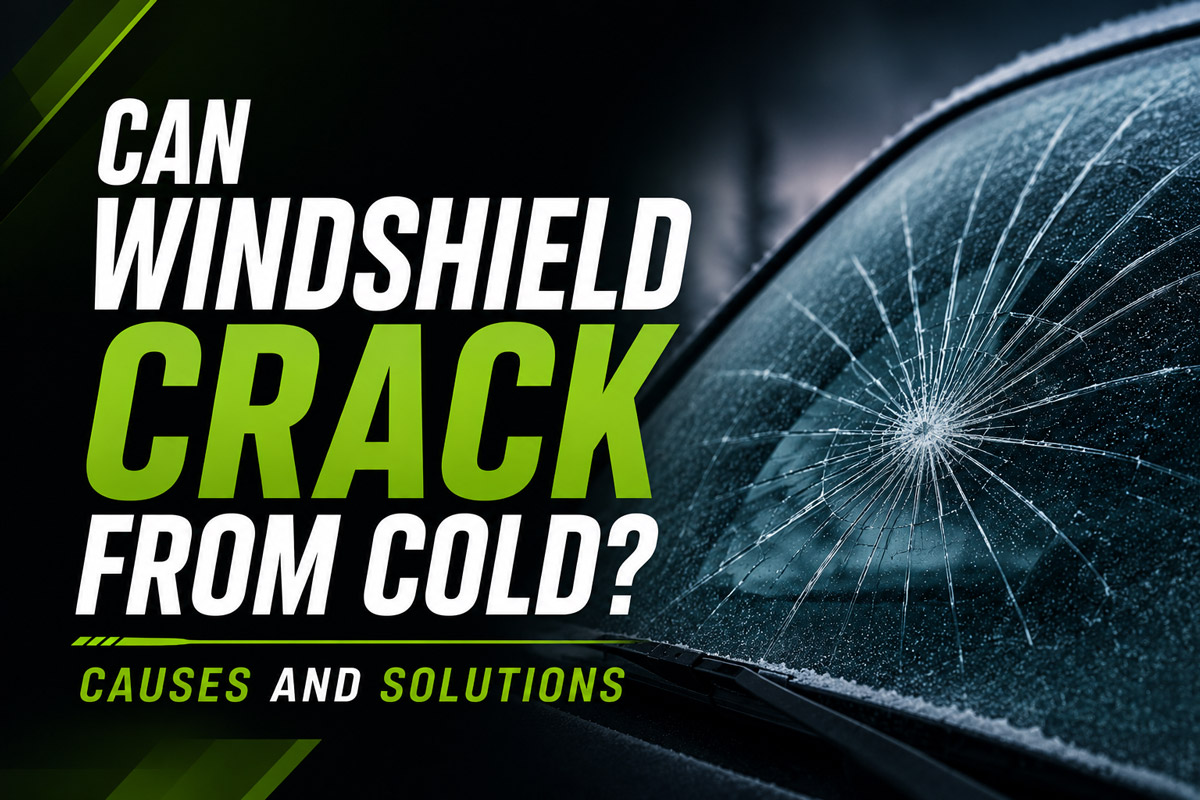
Yes, a windshield can crack from cold due to a structural phenomenon known as thermal shock. When ambient temperatures drop, automotive glass contracts, placing immense tension on the perimeter and any microscopic chips present on the surface. This concentrated stress frequently causes the glass to fracture, especially when drivers introduce sudden heat to a frozen windshield.
Key Facts / At a Glance
- The expansion threshold: Trapped moisture inside existing rock chips expands by 9% when temperatures fall below 32°F (0°C).
- The brittleness point: Laminated auto glass becomes highly inflexible and susceptible to impact fractures at ambient temperatures of 0°F (-18°C) or lower.
- The thermal shock trigger: Blasting an 80°F (26°C) defroster directly onto a frozen windshield creates an immediate temperature differential that shatters contracted glass.
- Repair parameters: Technicians can inject resin into cold-weather bullseye or star cracks in 15 to 30 minutes, provided the damage is smaller than a quarter.
- Replacement costs: Full windshield replacement ranges from $250 for older vehicles to over $1,000 for modern cars requiring advanced camera system (ADAS) recalibration.
Why Do Windshields Crack in Cold Weather?
Windshields crack in cold weather because low temperatures force the molecular structure of laminated glass to contract, amplifying tension across the entire surface area. Modern automotive windshields consist of two layers of glass bonded by a polyvinyl butyral (PVB) plastic interlayer. As temperatures plummet, the outer glass layer contracts at a slightly different rate than the inner layer and the plastic core. This uneven contraction generates inherent structural tension. When the glass is forced to absorb additional mechanical stress—such as a pothole impact or a frozen wiper blade—the tension exceeds the glass’s tensile strength, resulting in a fracture.
How Does Thermal Shock Break Auto Glass?
Thermal shock breaks auto glass by forcing rapid, localized expansion within a deeply contracted material. When a driver turns the vehicle’s heating system to maximum output against a freezing windshield, the interior layer of the glass rapidly heats and expands. Meanwhile, the exterior layer remains locked in a freezing, contracted state. This severe temperature differential (often exceeding 70 degrees Fahrenheit across mere millimeters of thickness) shears the bonding layers. The rigid glass cannot flex to accommodate the dual states, causing it to aggressively snap to relieve the pressure.
Does the Black Frit Band Increase Risk?
Yes, the black ceramic border surrounding the windshield—known as the frit band—increases cracking risk due to its heat absorption properties. The frit band is baked into the glass to protect the urethane adhesive from UV degradation. Because dark colors absorb and retain heat much faster than transparent glass, the perimeter of the windshield warms up at a vastly accelerated rate compared to the center. This uneven thermal expansion creates a volatile stress ring around the edge of the glass, which is why massive, unprovoked winter cracks frequently originate at the extreme edges of the windshield.
Can Windshield Crack From Cold Without a Prior Chip?
Yes, a windshield can crack from cold without a prior chip if the glass possesses a microscopic manufacturing defect or severe edge stress. While the vast majority of winter fractures originate from an existing, neglected rock chip, pristine glass can still fail. Sub-surface micro-abrasions from sand, improper factory installation, or a degrading urethane seal can create invisible weak points. When extreme cold forces the vehicle’s metal frame to contract and torque the rigid glass, these invisible defects undergo concentrated load pressure, resulting in a spontaneous stress crack that seemingly appears out of nowhere.
At What Temperature Does Glass Become Vulnerable?
Auto glass becomes highly vulnerable to temperature-induced cracking the moment ambient temperatures drop below 32°F (0°C). At freezing, any liquid water trapped inside micro-fissures expands into ice by roughly 9%, acting as a microscopic wedge that pries the glass apart. The danger escalates significantly at 0°F (-18°C), the threshold where laminated glass loses its residual flexibility and becomes completely brittle. Finally, the risk peaks when the temperature differential (ΔT) between the outside air and the inside cabin heat exceeds 60 degrees Fahrenheit rapidly, guaranteeing structural failure for compromised glass.
Types of Cold-Weather Windshield Fractures
Different thermal pressures and impact angles produce distinct fracture patterns. Understanding these patterns determines whether the glass requires simple resin filling or complete structural replacement.
| Fracture Type | Visual Appearance | Primary Winter Cause | Repairability |
| Edge Stress Crack | Long, straight line starting directly at the black frit band. | Extreme vehicle frame contraction or thermal shock. | Zero. Always requires full windshield replacement. |
| Bullseye | Circular damage with a dark outer ring and conical center. | Freezing water expanding inside a previous rock strike. | High. Easily repaired if under 1 inch in diameter. |
| Star Break | Multiple short cracks radiating outward from a central point. | Cold, brittle glass struck by road salt or debris. | Moderate. Repairable if the total span is under 1.5 inches. |
| Combination Break | A central pit accompanied by both a circle and radiating legs. | Severe thermal shock applied directly to an existing chip. | Low. Frequently requires replacement due to core instability. |
The Defroster’s Role in Sudden Glass Failure
The vehicle’s defrosting system initiates sudden glass failure when drivers apply high heat directly to a frozen, contracted windshield. When a driver enters a vehicle sitting at 10°F (-12°C) and instantly activates the defroster at 85°F (29°C), the blast of hot air hits the lower quadrant of the windshield. The bottom of the glass expands violently while the upper portion remains frozen. The step-by-step failure occurs rapidly: tension builds at the dividing line between the hot and cold zones, the PVB interlayer fails to absorb the shear force, and a horizontal crack shoots across the driver’s line of sight within seconds.
Windshield Repair vs. Full Replacement Criteria
The decision between resin injection and structural replacement depends entirely on the size, location, and depth of the winter damage. Auto glass serves as a primary safety component, supporting up to 45% of the vehicle cabin’s structural integrity during a front-end collision and preventing roof crush during a rollover.
When Is Resin Injection a Safe Option?
Resin injection remains a safe option when the cold-weather fracture is smaller than a quarter (approximately 1 inch in diameter), does not obstruct the driver’s primary line of sight, and has not breached the inner layer of the laminated glass. Technicians utilize a vacuum system to extract trapped air and freezing moisture from the void, replacing it with a UV-curing acrylic resin. This process takes roughly 30 minutes, restores the structural continuity of the outer pane, and permanently halts the damage from spreading.
When Is Full Windshield Replacement Required?
Full windshield replacement is explicitly required when a crack exceeds three inches in length, intersects with the perimeter edge of the glass, or falls directly in front of the forward-facing Advanced Driver Assistance System (ADAS) cameras. Modern vehicles rely on clear glass for lane-departure warnings and automated emergency braking. Even a minor optical distortion from a resin repair over the camera lens can cause critical safety systems to miscalculate distances. Replacement requires a fresh urethane seal, an overnight curing period in freezing temperatures, and mandatory laser recalibration of the safety suite.
Average Costs for Winter Windshield Damage
Repairing winter windshield damage ranges from minimal out-of-pocket expenses to significant investments, largely dictated by vehicle technology.
- Standard Chip Repair: Typically costs between $50 and $150 per chip. Many insurance providers waive the deductible for this service, making it completely free for the policyholder.
- Basic Windshield Replacement: For older vehicles lacking rain sensors or ADAS cameras, full replacement generally runs between $250 and $400.
- Advanced Windshield Replacement: For modern vehicles requiring OEM (Original Equipment Manufacturer) acoustic laminated glass and dynamic camera recalibration, costs range from $800 to over $1,500.
Expert Insight: Never accept a “mobile replacement” in temperatures below 40°F (4°C) unless the technician uses a heated enclosure. Standard automotive urethane adhesives cannot properly cure in freezing temperatures, leading to wind leaks and a total loss of structural safety during a crash.
Common Mistakes That Destroy Cold Auto Glass
Drivers inadvertently destroy their windshields every winter by relying on dangerous ice-removal myths and aggressive handling.
- Pouring hot water: Never pour boiling or hot water over a frozen windshield to melt ice rapidly. The immediate 100-degree temperature shift guarantees catastrophic thermal shock, shattering the glass instantly.
- Blasting maximum heat: Avoid turning the climate control to “High/Defrost” immediately upon starting a freezing car.
- Ignoring existing chips: Entering winter with an un-repaired rock chip guarantees a full windshield fracture. The combination of contracting glass and expanding ice turns a $50 fix into a $1,000 replacement.
- Aggressive ice scraping: Pounding on the windshield with the hard plastic edge of an ice scraper introduces localized blunt force trauma to highly brittle glass, frequently causing star breaks.
How Can You Prevent Thermal Shock Damage?
You can prevent thermal shock damage by managing interior moisture, isolating the glass from freezing precipitation, and controlling the vehicle’s heating cycles. First, apply a specialized winter windshield cover tightly across the glass every night; this physical barrier prevents moisture from settling and freezing directly onto the surface. Second, manage cabin heat gradually. Start the vehicle and allow the defroster to run on the lowest fan setting with lukewarm air, increasing the temperature only as the engine block naturally warms up. Finally, keep the interior glass clean and utilize silica gel moisture absorbers in the cabin to prevent internal condensation from freezing on the inside pane.
Insurance Coverage for Temperature Cracks
Comprehensive auto insurance policies cover temperature-related windshield cracks because they fall under “acts of nature” rather than collision liabilities. If a cold snap shatters the glass overnight, the policyholder is only responsible for the comprehensive deductible (typically $250 to $500). However, drivers in extreme winter climates should add a specific “Full Glass Coverage” rider to their policy. This inexpensive add-on eliminates the deductible entirely, allowing the driver to replace a thermally shocked windshield at zero out-of-pocket cost without negatively impacting their monthly premium rates.
Frequently Asked Questions
Does a windshield cracking from cold make a loud noise?
Yes, when a windshield cracks from severe thermal shock, it often produces a loud, distinct “pop” or snapping sound inside the cabin. This occurs because the sudden release of deep structural tension reverberates through the vehicle’s metal frame.
Can you safely drive with a cracked windshield in winter?
Driving with a large cracked windshield in winter is highly dangerous. The extreme cold keeps the glass in a brittle state, and driving over uneven, ice-packed roads generates vibrations that will rapidly expand the crack, potentially compromising the driver’s visibility mid-transit.
Are heated windshields immune to cold weather cracking?
No, heated windshields (which feature microscopic tungsten wires embedded in the glass) are not immune to cracking. While they melt ice efficiently without relying on blower motors, a severe rock chip combined with sub-zero temperatures can still cause structural failure.
Can applying rubbing alcohol prevent winter windshield cracks?
Applying a mixture of water and rubbing alcohol helps melt surface ice rapidly due to alcohol’s incredibly low freezing point (-128°F). While this prevents the need for aggressive scraping, it does not prevent existing chips from cracking due to thermal contraction.
The Bottom Line
For drivers wondering if a windshield can crack from cold, the answer is a definitive yes. Extreme drops in temperature force auto glass to contract, placing massive stress on existing chips and invisible micro-defects. By avoiding sudden thermal shock from hot water or max-level defrosters, repairing summer rock chips before winter arrives, and understanding the precise temperature thresholds that make glass brittle, drivers can easily protect their vehicles from expensive cold-weather fractures.