Protecting your vehicle’s paintwork is essential for preserving both its aesthetic beauty and its long term resale value. Every day, environmental contaminants like ultraviolet radiation, acidic bird droppings, road salt, industrial fallout, and mineral deposits attack your clear coat. Without a protective barrier, paint oxidizes, loses its lustre, and develops permanent surface defects.
When deciding how to safeguard your vehicle, two primary contenders dominate the conversation: ceramic coatings and carnauba wax. While both promise to shield your vehicle and enhance its appearance, they rely on entirely different technologies, offer distinct visual aesthetics, and demand radically different maintenance routines.
This guide breaks down ceramic coating vs carnauba wax across every practical dimension. By examining durability, visual finish, prep work, hydrophobic behavior, and long term cost, you can choose the precise paint protection strategy that matches your budget and lifestyle.
Technical Fundamentals: How Each Protective Layer Functions
To understand why these products perform so differently, you must first look at their chemical compositions and how they interact with your clear coat on a molecular level.
The Chemistry of Ceramic Coatings
Modern ceramic coatings rely on nanotechnology, primarily utilizing Silicon Dioxide (SiO2), Titanium Dioxide (TiO2), or Silicon Carbide (SiC) dissolved in a solvent carrier. When applied to clean paint, the solvent evaporates, causing the liquid polymers to cross link and chemically bond directly with the factory clear coat.
Instead of resting on top of the surface, ceramic coatings create an ultra thin, hard, glass like matrix that fills the microscopic pores of your paint. This semi permanent layer acts as a physical shield, measuring roughly 1 to 2 microns in thickness, with a hardness rating often reaching up to 9H on the pencil hardness scale.
The Composition of Carnauba Wax
Carnauba wax is derived from the leaves of the Copernicia prunifera palm tree native to northern Brazil. In its pure form, carnauba is hard as a rock, so detailing manufacturers blend it with solvents, beeswax, and essential oils to create a workable paste or liquid.
Unlike ceramic coatings, carnauba wax does not form a chemical bond with the surface. Instead, it creates a sacrificial mechanical layer that sits directly on top of the paint. Because it relies on weak physical forces to stay in place, it is naturally susceptible to environmental degradation, heat, and detergent washing.
Durability and Environmental Protection Realities
When analyzing long term paint protection performance, lifespan and defense against daily wear dictate your overall value.
Longevity Under Real World Driving Conditions
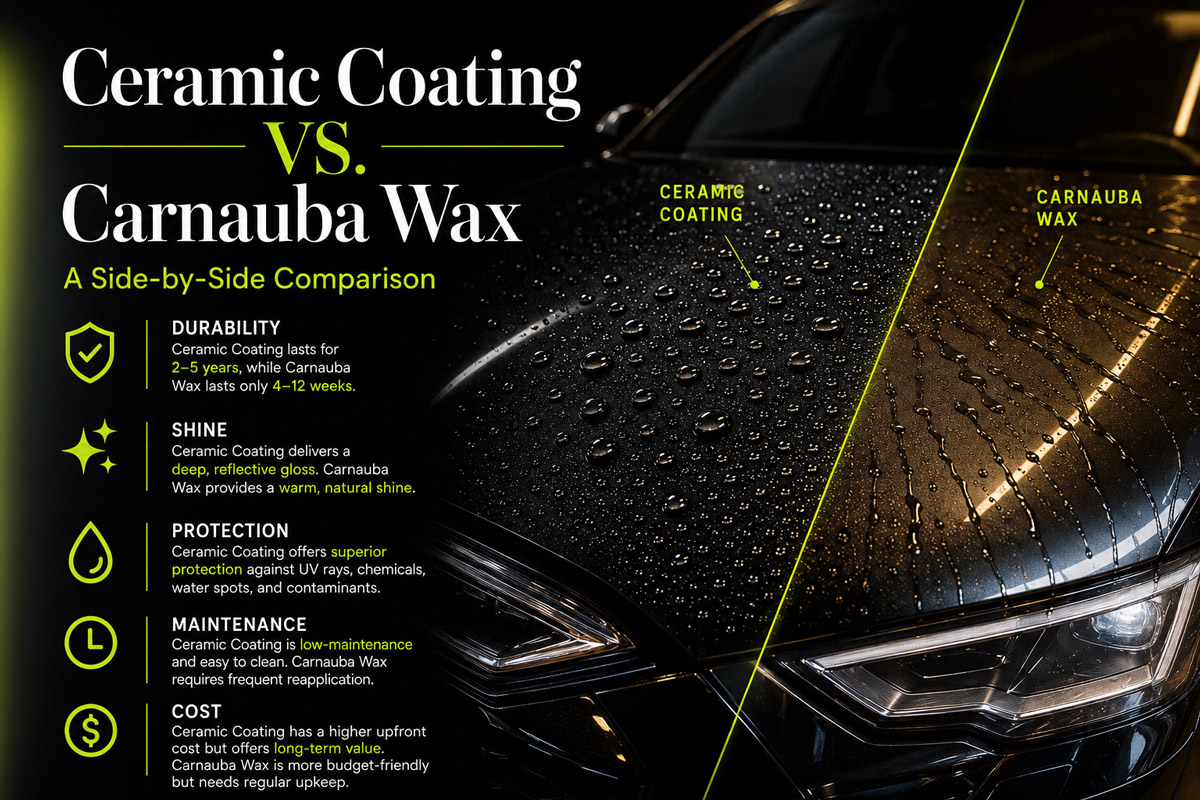
Durability is where the gap between these two options is widest. A high grade professional ceramic coating lasts anywhere from 2 to 5 years, with specialized professional installer formulations lasting up to 7 years or more when maintained properly.
In contrast, carnauba wax typically survives 4 to 8 weeks under optimal weather conditions. Daily exposure to sunlight, heavy rain, or frequent automatic car washes degrades the wax rapidly. Carnauba wax melts around 180°F (82°C). On a hot summer day, dark vehicle paint temperatures can easily exceed 160°F, softened or stripping the wax layer in a matter of days.
Defense Against Environmental Threats
- UV Rays and Thermal Oxidation: Ceramic coatings block ultraviolet radiation, preventing paint oxidation and clear coat failure over time. Carnauba wax offers minimal, short term UV filtering that degrades as the wax thins out.
- Chemical Hazards and Acid Rain: Ceramic coatings feature robust chemical resistance, enduring pH levels ranging from pH 2 (highly acidic) to pH 12 (highly alkaline). This stops acid rain, bird droppings, and bug splatter from etching into the factory clear coat. Carnauba wax dissolves quickly when exposed to aggressive road salts, harsh detergents, or acidic contaminants.
- Scratch Resistance: Ceramic coatings add physical hardness that helps reduce micro marring and light wash swirls. Carnauba wax provides zero scratch resistance and relies on filling oils to hide existing imperfections instead of preventing them.
Aesthetic Differences: Glass Like Clarity vs. Warm Depth
While protection is vital, visual appearance often sways final purchasing decisions. Both options produce stunning finishes, but their optical characteristics are completely distinct.
Ceramic Coating Visual Profile
Ceramic coatings produce a sharp, highly reflective, mirror like shine. Because the coating cures into an optically clear, rigid layer, light bounces cleanly off the flat surface.
This creates a high gloss, candy like appearance that amplifies crisp metallic flake and sharpens body panel lines. On silver, white, or metallic paint, this glass like reflectivity looks vibrant and striking.
Carnauba Wax Depth of Shine
Carnauba wax creates a rich, warm, liquid wet look that ceramic coatings struggle to match. Because natural wax fills minor surface imperfections and slightly diffuses light reflection, it imparts a deep, glowing warmth to the paint.
Car show enthusiasts and collectors often prefer high grade carnauba wax on dark or solid paint colors, such as deep reds, navy blues, and gloss black, where maximum depth and warmth take priority over pure clarity.
Hydrophobic Properties and Water Sheeting Mechanics
Hydrophobic performance determines how well paint sheds water, self cleans, and resists dirt build up.
Water Contact Angles and Self Cleaning Action
Hydrophobic effectiveness is measured by the water contact angle formed between a droplet and the surface. Standard paint exhibits a low contact angle, causing water to pool flatly.
Understanding Water Contact Angles
Carnauba Wax (85° to 95°): Water beads moderately, forming slightly flattened droplets that can remain on flat panels and trap dust as they evaporate.
Ceramic Coating (100° to 115°+): Creates hyper-hydrophobic behavior. Water forms tight, round beads that roll off panels instantly, carrying loose dirt, traffic film, and dust away with them.
This intense self cleaning property means ceramic coated vehicles stay cleaner significantly longer between washes and require far less effort to dry using a microfiber towel or leaf blower.
Application Process and Prep Work Breakdown
The effort needed to apply each product represents a major practical difference between ceramic coatings and carnauba wax.
The Ceramic Coating Prep Work Pipeline
Proper ceramic coating application demands flawless surface preparation. Because ceramic coatings form a permanent lock over the surface, applying them over swirls, scratches, or embedded dirt seals those defects beneath a hard glass layer.
- Decontamination Wash: Thorough strip wash to remove old waxes, sealants, and road grime.
- Chemical Decontamination: Iron remover spray eliminates embedded brake dust particles from the paint pores.
- Mechanical Decontamination: Clay bar treatment removes lingering surface contaminants, leaving the clear coat completely smooth.
- Paint Correction: Machine polishing using compounding or finishing pads corrects swirl marks, scratches, and micro marring.
- Panel Wipe Degreasing: Isopropyl alcohol (IPA) wipe removes residual polishing oils to ensure direct chemical bonding.
- Precision Application: Coating is applied in small cross hatch sections, flash timed carefully, and buffed off before leveling off uneven high spots.
- Curing Phase: Vehicle must remain dry and indoors for 24 hours while keeping chemical exposures away for up to 7 to 14 days during full cure.
Applying Carnauba Wax
Applying carnauba wax is far more forgiving and accessible for home detailers.
- Basic Wash: Clean the vehicle thoroughly with standard car shampoo.
- Optional Claying: Recommended if the surface feels rough, but not strictly required.
- Hand or Machine Application: Spread a thin, even layer of wax using a foam applicator pad.
- Haze and Buff: Allow the product to haze over for 5 to 10 minutes, then buff off effortlessly using a clean microfiber cloth.
Errors in wax application, such as applying too thick a layer or leaving it on too long, are easily corrected with a quick detailer spray or a fresh microfiber towel.
Cost Analysis: Initial Outlay vs. Long Term Maintenance
To choose the right option, you must evaluate both short term expenses and ongoing maintenance costs over a five year window.
Upfront Cost vs. Total Cost of Ownership
- Carnauba Wax Financial Profile: High quality carnauba wax costs between $20 and $60 per tub, which easily provides 10 to 20 applications. However, labor costs add up quickly. If you pay a professional detailer $100 per wax application every two months, you will spend roughly $3,000 over five years.
- Ceramic Coating Financial Profile: DIY ceramic coating kits cost $60 to $150, while professional ceramic coating installations range from $800 to $2,500 depending on the degree of paint correction required. Over a five year period, the low maintenance demands and lack of constant reapplication make professional ceramic coatings highly cost effective per month.
Ceramic Coating vs. Carnauba Wax: Which Should You Choose?
Selecting the optimal protective coating comes down to your personal goals, budget, time availability, and physical working environment.
Choose Ceramic Coating If:
- You want low-maintenance protection that lasts for years.
- Your car is a daily driver parked outdoors in tough weather.
- You love maximum hydrophobic water-sheeting performance.
- You are willing to invest upfront or commit to meticulous prep work.
- You prefer a sharp, bright, highly reflective mirror gloss.
Choose Carnauba Wax If:
- You enjoy detailing your car regularly as a relaxing hobby.
- You want the deepest, warmest wet-look shine for car shows.
- You own a garage-kept weekend cruiser or classic vehicle.
- You want a budget-friendly DIY project with zero streak risk.
- You prefer not to perform multi-stage machine polishing.
Preserving Your Investment: Maintenance Best Practices
Whichever paint protection route you select, using appropriate maintenance techniques ensures maximum performance and gloss over time.
How to Maintain Ceramic Coatings
- Wash using pH neutral car shampoos free of added waxes or gloss enhancers.
- Avoid automatic drive through car washes with abrasive brushes, which cause deep swirl marks.
- Use the two bucket wash method with grit guards and premium microfiber wash mitts.
- Apply a silica (SiO2) ceramic booster spray every 3 to 6 months to maintain hydrophobic intensity.
How to Maintain Carnauba Wax
- Use gentle, wax safe shampoos that will not strip non synthetic top layers.
- Apply a carnauba infused quick detailer spray after washes to extend durability.
- Avoid washing in direct sunlight, which speeds up water spotting and degrades wax films.
- Reapply a fresh layer of wax every 6 to 8 weeks, or whenever water stops forming tight beads on flat panels.
Final Thoughts
Both ceramic coatings and carnauba wax deserve their place in modern auto detailing. Carnauba wax remains an unmatched choice for enthusiasts seeking classic depth, warm gloss, and low pressure weekend detailing. Ceramic coatings, however, offer superior durability, chemical defense, and self cleaning performance engineered for modern daily driving demands.
By matching the protective material to your maintenance habits and driving conditions, you can keep your vehicle’s paintwork looking brilliant for years to come.
Next Step: Ready to transform your vehicle’s paintwork with long lasting protection? Explore our curated selection of professional grade DIY ceramic coating kits or schedule a custom paint protection consultation with our expert detailing team today!