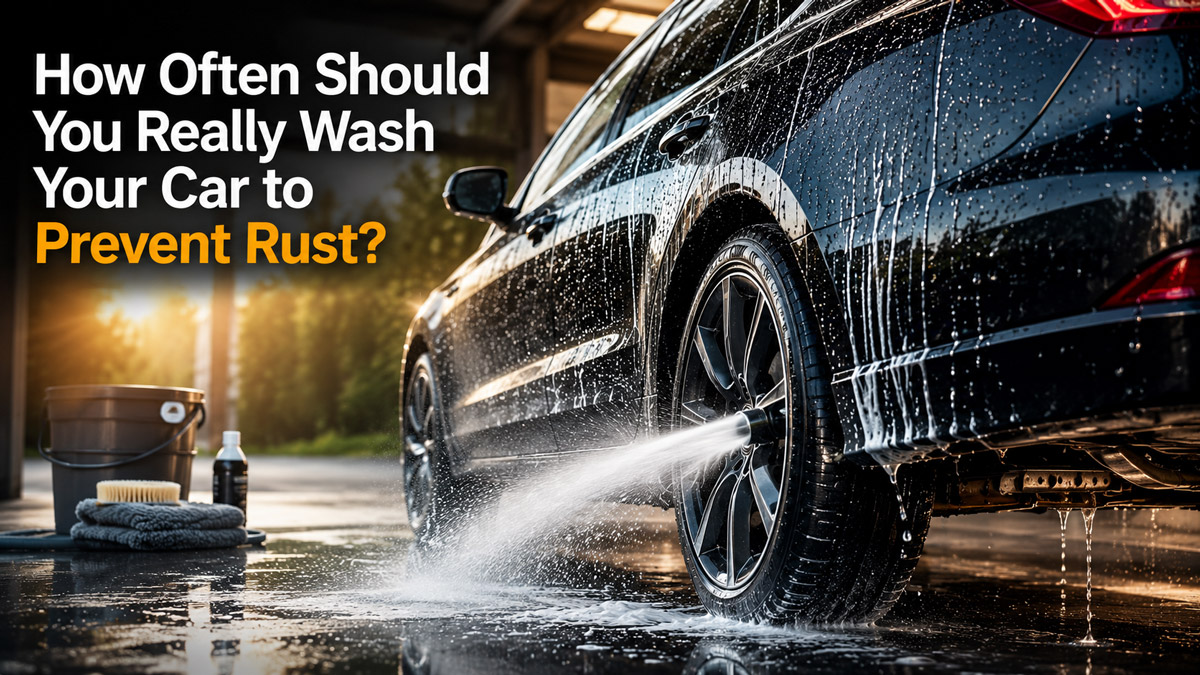
To prevent rust effectively, you should wash your car every two weeks during standard, year-round driving conditions. However, if you drive on winter roads treated with salt or live within 10 miles of an ocean, you must increase this frequency to once a week. The most critical factor is not cleaning the painted body panels, but thoroughly flushing the undercarriage, where 90% of structural vehicle rust begins.
Key Facts / At a Glance
- Winter Frequency: 1 wash per week minimum in the Salt Belt.
- Summer/Standard Frequency: 1 wash every 14 days.
- Primary Threat: Magnesium chloride and liquid road brines, which remain hygroscopic (moisture-absorbing) even on dry days.
- Vulnerability Zone: The undercarriage, specifically rocker panels, wheel wells, and suspension mounts.
- The “Warm Garage” Danger: Parking a salt-covered vehicle in a heated garage accelerates the chemical oxidation process of rust by up to 300%.
How Does Frequency Change Based on Where You Drive?
Vehicle rust is an environmental issue, not a time-based one. The rate of oxidation depends entirely on the concentration of electrolytes (salt) and moisture your vehicle encounters. To prevent rust, match your washing schedule to your environmental exposure.
| Driver Profile | Washing Frequency | Primary Contaminant | Key Maintenance Focus |
| The Salt Belt Driver | Weekly (Winter) | Sodium/Magnesium Chloride | High-pressure undercarriage flushing; salt neutralizing chemicals. |
| The Coastal Dweller | Weekly | Airborne Ocean Salt Spray | Top-down rinsing; salt spray travels up to 10 miles inland. |
| The City Commuter | Every 2 Weeks | Brake Dust (Iron Particles) | Paint decontamination; iron removers to stop surface rust dots. |
| The Garage Queen | Monthly | Ambient Moisture / Dust | Breathable car covers; maintaining sealant/wax layers. |
Why Does Road Salt Accelerate Rust So Quickly?
Rust is oxidation, an electrochemical reaction that occurs when iron reacts with oxygen and water to form iron oxide. Road salts and ocean spray act as potent electrolytes that drastically speed up this electron transfer.
Modern road crews have shifted from traditional rock salt to liquid brines (like magnesium chloride). Magnesium chloride is exceptionally dangerous to automotive steel because it is highly hygroscopic. This means the chemical actively pulls moisture out of the air. Even if you park in a dry garage, a thin film of magnesium chloride will continue corroding your vehicle’s frame. Furthermore, the chemical reaction of rust is temperature-dependent; salt brines become rapidly active at temperatures above 15°F (-9°C). Letting a salty car sit in a 50°F heated garage creates a perfect, high-speed rust factory.
How Should You Wash Your Car to Stop Winter Rust?
Executing a rust-prevention wash requires specialized focus on the bottom 20% of the vehicle. If you are washing in sub-freezing temperatures, drive the car for 15 minutes prior to warming up the exhaust and body panels.
Step 1: The High-Pressure Pre-Rinse
Never apply soap or a wash mitt directly to a dirty, salt-covered car. Blast the vehicle with water at 1,500 to 2,000 PSI. Focus on the wheel wells, suspension components, and lower quarter panels. The goal is to physically knock off heavy salt chunks and sand grit so they do not scratch the clear coat during the contact wash.
Step 2: The Undercarriage Attack
Attach an underbody lance (a wheeled attachment with upward-facing nozzles) to your pressure washer, or use an automatic touchless wash with an undercarriage spray. Flush the frame rails, axles, and exhaust mounts. Continue spraying until the water dripping from the chassis runs completely clear, rather than brown or grey.
Step 3: Chemical Chelation (Salt Neutralization)
Standard automotive shampoo cannot dissolve bonded magnesium chloride. Apply a dedicated salt remover (such as Salt-Away or Ammo Boost). These formulas use chemical chelation to break the ionic bond between the salt molecules and the bare metal, allowing the corrosive film to be rinsed away safely.
Step 4: The Contact Wash and Drain Clearance
Wash the painted surfaces using a pH-neutral automotive soap and a microfiber mitt via the two-bucket method. Crucially, open your vehicle’s doors and locate the factory “weep holes” at the bottom of the doors and rocker panels. Ensure these rubber or metal drain holes are clear of pine needles and dirt; trapped water inside door cavities rots vehicles from the inside out.
Step 5: Drying and Sacrificial Protection
Dry the vehicle completely using forced air or a microfiber drying towel to prevent water spots and frozen door seals. Apply a synthetic spray sealant or ceramic wax every three months. This provides a sacrificial barrier—the winter road salt will eat through the $15 wax layer instead of your vehicle’s expensive clear coat.
Which Car Wash Type is Best for Rust Prevention?
Not all car washes are engineered to remove corrosive materials safely. Choosing the wrong method can either leave salt behind or cause permanent paint damage.
| Wash Type | Average Cost | Rust Prevention Rating | The Expert Verdict |
| Touchless Automatic | $12 – $20 | High | Best for Winter: Uses high-pressure jets and strong chemicals to blast hidden salt without scratching paint. |
| Soft-Touch (Friction) | $10 – $18 | Medium | Skip in Winter: Spinning brushes trap salt and sand from previous cars, leaving micro-scratches (swirls) in your paint. |
| DIY Hand Wash | $2 – $5 | Highest | Best Overall: Allows visual inspection of stone chips and thorough cleaning of specific frame pinch-welds. |
What Are the Most Common Rust-Prevention Mistakes?
Even diligent car owners frequently make critical errors that accelerate vehicle rot.
- The Rubberized Undercoating Trap: Applying cheap, rubber-based spray undercoatings over existing rust is catastrophic. The rubber eventually cracks, allowing moisture and salt to seep behind the coating. The water becomes trapped against the bare metal, rotting the frame invisibly until structural failure occurs. Use lanolin-based or oil-based creeping treatments (like Fluid Film) instead.
- Ignoring Stone Chips: A millimeter-wide rock chip on a hood exposes bare steel. When salty water enters this chip, it oxidizes beneath the surrounding paint, causing bubbling. Dab exposed metal with touch-up paint or clear nail polish immediately.
- Using Dish Soap: Dish detergents (like Dawn) contain strong degreasers. Using them on a vehicle strips away all protective waxes and sealants, leaving the metal completely naked and highly vulnerable to airborne moisture.
How Can You Tell Surface Contamination From Real Rust?
If you notice tiny, bright orange specks on your vehicle’s paint (most visible on white or silver cars), you are likely looking at “rail dust,” not structural rust.
Rail dust occurs when microscopic iron particles from brake pads, snowplow blades, or industrial fallout embed themselves into your vehicle’s clear coat. When these iron particles get wet, they rust on top of the paint. To remove them, do not use an abrasive sponge. Spray an Iron Remover chemical (like CarPro IronX) onto the affected panels. The chemical reacts with the iron, turning bright purple as it dissolves the metal particles safely. Once rinsed, the paint will be smooth and rust-free.
Is the Cost of Frequent Washing Worth It?
Financially, washing your car to prevent rust offers one of the highest returns on investment in vehicle maintenance.
Washing a vehicle bi-weekly at a $12 touchless automatic wash costs approximately $312 per year. Conversely, repairing a single rust-bubbled fender costs between $500 and $1,500 at a body shop. If the rust reaches the vehicle’s structural rocker panels or subframe, repairs routinely exceed $3,000, which often totals older vehicles. Furthermore, in regions like the American Midwest or Northeast, a verified rust-free used vehicle commands a 20% to 30% price premium on the secondary market compared to a model with visible surface oxidation.
Frequently Asked Questions
Does a ceramic coating prevent rust?
Ceramic coatings protect the vehicle’s clear coat from UV rays, bird droppings, and light chemical etching. However, they do not prevent structural rust, because ceramic coatings are applied to the paint, whereas vehicle rot originates on the untreated steel frame and inner cavities of the undercarriage.
Can I wash my car when it is below freezing?
You can wash your car in freezing temperatures provided you use a touchless wash with heated bays or warm the car up thoroughly first. You must immediately dry the door jambs, lock cylinders, and weather seals with a microfiber towel to prevent freezing shut.
Is a car wash undercarriage spray enough?
An automatic car wash undercarriage spray is sufficient for maintenance, but it often misses the deep cavities above the exhaust and inside the rear bumper. For comprehensive protection, combine automatic washes with an annual oil-based rustproofing treatment prior to the first snowfall.
How often should you really wash your car to prevent rust if it sits outside?
Vehicles parked outdoors over dirt or grass should be washed and driven weekly. Moisture evaporates from the soil directly into the vehicle’s undercarriage, causing accelerated oxidation even if the car is rarely driven on salted roads. Park on concrete or asphalt whenever possible.