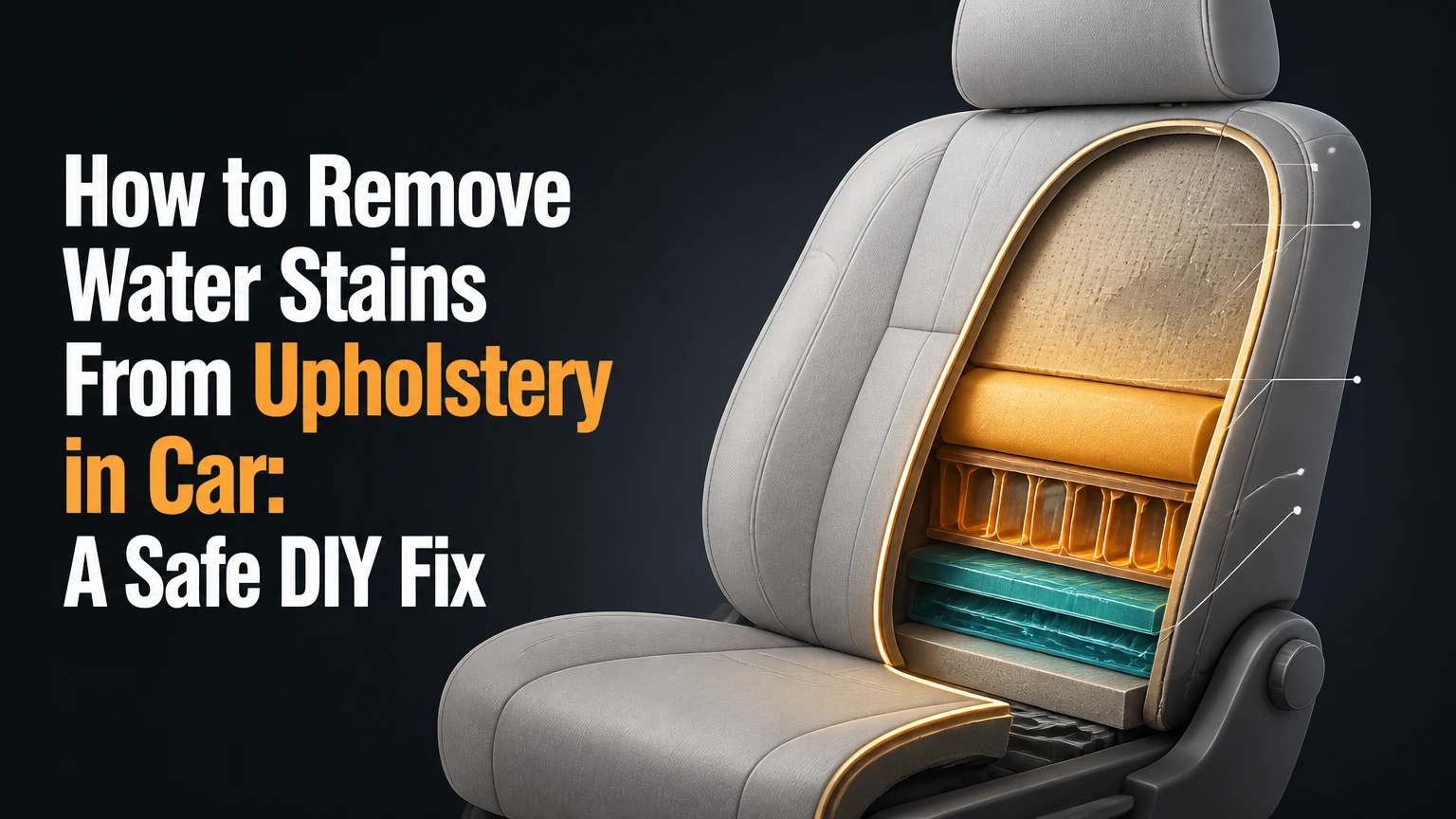
To remove water stains from upholstery in car seats, vacuum the panel, pre-test a fabric-safe cleaner, lightly dampen the entire upholstery section, agitate gently, extract or blot evenly, and dry it rapidly with ventilation and a fan. Cleaning the full panel rather than only the ring prevents a second boundary from forming as moisture evaporates.
Key Facts at a Glance
A water ring usually contains concentrated soil or minerals left behind by evaporating moisture, not water alone.
Clean from seam to seam across the affected fabric panel to prevent a new cleaning outline.
A 1:3 mixture of white distilled vinegar and water is a cautious starting point for washable synthetic fabric, not a universal upholstery cleaner.
Upholstery should feel dry at the surface and beneath the fabric before the vehicle is closed.
Hot-water extraction removes more contaminated moisture than blotting alone, but over-wetting can drive liquid into seat foam and electronics.
Alcantara, leather, vinyl, perforated upholstery, heated seats, and ventilated seats require material-specific procedures.
Why Do Water Rings Form on Car Upholstery?
Water rings form when moisture dissolves loose soil, salts, or minerals and carries them through upholstery fibers. As the water dries, those dissolved materials become concentrated at the edge of the wet area, creating a visible ring or darker outline.
The visible mark can also result from uneven drying. A small spill may wet only part of a cushion, while surrounding fabric retains its original color and texture. On light gray, beige, or tan cloth, the contrast can remain after the moisture has disappeared.
Rainwater is often less damaging than contaminated runoff. Water that passes through a dirty window seal, roof liner, door panel, or floor mat can carry dust, detergent residue, road salt, body oils, and biological material into the seat.
Water stain, salt stain, or wicking?
A water stain is often a combination of moisture damage and transported contamination. A white or chalky mark is more likely to contain road salt or hard-water minerals, while a brown or gray ring usually contains soil or dye transfer.
Wicking occurs when dissolved contamination rises from the cushion foam during drying. The surface may look clean immediately after blotting, then darken again several hours later. Wicking is common when a seat has been saturated, cleaned with too much liquid, or dried only at the surface.
Before You Start: Materials, Time, and Safety
Plan for 30-60 minutes of active work and 2-8 hours of drying, depending on humidity, seat thickness, and whether you use an extractor. Typical DIY supply costs range from $5 for household materials to $25 for a dedicated automotive fabric cleaner.
| Item | Typical quantity or specification | Purpose |
|---|---|---|
| Vacuum | 1 unit, crevice and brush tools | Removes dry soil before liquid cleaning |
| Microfiber towels | 4-8 towels, low-lint | Blotting and absorbing dissolved soil |
| Upholstery brush | 1 soft nylon brush, 2-3 inch head | Agitates fibers without tearing them |
| Fabric cleaner | 8-16 fluid ounces, pH-moderate formula | Re-emulsifies soil and oily residue |
| White distilled vinegar | 1-4 fluid ounces | Optional mineral and alkaline-residue treatment |
| Distilled or clean water | 4-12 fluid ounces | Dilution and controlled rinsing |
| Wet/dry vacuum or extractor | 1 machine with upholstery nozzle | Removes liquid from the cushion |
| Portable fan | 1 unit, 12-20 inch typical diameter | Accelerates evaporation and air exchange |
Read the vehicle manual and the cleaner label first. Seat upholstery may conceal side-impact airbags, occupancy sensors, heating elements, ventilation channels, and wiring beneath the cushion.
Do not flood the seat, spray directly into seams, or direct liquid toward seat controls. Keep ignition off when cleaning around powered seat components, and never remove an airbag connector unless the vehicle manufacturer’s service procedure specifically requires it.
Material identification changes the method
Cloth and polyester blends generally tolerate controlled moisture. Alcantara and suede-like microfiber can develop permanent texture changes if scrubbed aggressively. Leather and vinyl are not fabric and should be cleaned with a compatible leather or automotive interior product.
Perforated leather, ventilated seats, and heated seats need especially small amounts of cleaner. Liquid can travel through perforations and reach foam, fans, heating mats, or electrical connections.
How to Remove Water Stains From Upholstery in Car Seats
The safest general process has six stages: vacuum, pre-test, clean the complete panel, agitate lightly, extract or blot, and dry rapidly. Use the least moisture that can dissolve the contamination, because the objective is soil removal without saturating the foam.
Step 1: Vacuum the entire upholstery panel
Vacuum the seat cushion, seatback, seams, piping, and surrounding carpet before applying liquid. Use a crevice tool around stitching, then a soft brush attachment on the visible fabric.
Dry soil becomes muddy when cleaner is added. Removing it first reduces the amount of liquid required and prevents abrasive grit from being worked deeper into the weave.
You’ll know Step 1 worked when: the vacuum no longer lifts visible dust, crumbs, or grit from the seam.
Common mistake: Vacuuming only the circular stain. Clean the entire panel because surrounding soil affects color uniformity and creates a visible contrast after treatment.
Step 2: Pre-test the cleaner in a hidden area
Apply one or two drops of the chosen solution to an inconspicuous area beneath the seat edge or behind the seatback. Wait 5-10 minutes, blot with a white microfiber towel, and inspect the towel and fabric for dye transfer, fading, stickiness, or texture change.
A white towel makes color bleeding easier to detect. If the fabric color transfers, stop using that solution and choose a manufacturer-approved product or professional service.
You’ll know Step 2 worked when: the test area has no color loss, stiff residue, altered nap, or ring after drying.
Common mistake: Testing the cleaner, then immediately judging the result while the fabric is wet. Some color changes become visible only after complete drying.
Step 3: Apply cleaner across the full fabric section
Spray a small amount onto a microfiber towel or apply a fine mist to the entire seat section from seam to seam. Avoid soaking the cushion. For a typical front-seat cushion, start with approximately 1-2 fluid ounces of ready-to-use cleaner, then add only enough to maintain light, even dampness.
Treating the complete section controls the drying boundary. If the ring covers only one corner, clean the whole cushion surface rather than making the wet area end in the middle of the panel.
You’ll know Step 3 worked when: the fabric is evenly damp, not glossy or dripping, and the cleaner has reached the visible ring.
Common mistake: Pouring solution directly onto the stain. A concentrated wet spot can push contamination into foam and leave a larger ring.
Step 4: Agitate gently with a soft brush
Work the cleaner into the fabric using overlapping strokes and light pressure. Circular motions can help on tightly woven cloth, while straight strokes that follow the fabric grain are safer for nap fabrics and microfiber.
Allow a ready-to-use upholstery cleaner to dwell for approximately 3-5 minutes unless its label specifies another period. Do not let the product dry on the seat. Do not use a drill brush unless the tool has a soft upholstery head and the lowest practical speed.
You’ll know Step 4 worked when: the ring loses contrast and the fabric remains intact, with no fuzzing, pilling, or lifted threads.
Common mistake: Scrubbing harder when the ring remains visible. More friction can damage fibers; persistent discoloration usually requires better extraction or repeated controlled cleaning.
Step 5: Extract or blot the dissolved contamination
A wet/dry vacuum or upholstery extractor is the preferred tool because it removes suspended soil and moisture from the cushion. Make slow passes with the nozzle, overlapping each pass by about half its width, and empty the recovery tank when dirty water accumulates.
Without an extractor, place a clean microfiber towel over the damp fabric and press firmly with a flat hand. Replace the towel as soon as it becomes wet or gray. Blotting lifts less deep contamination than extraction, so a second light treatment may be necessary.
You’ll know Step 5 worked when: the recovery water becomes lighter, the towel picks up little additional soil, and the seat feels damp rather than wet.
Common mistake: Rubbing the towel across the surface. Pressing lifts soil; dragging redistributes it and can create directional marks.
Step 6: Dry the seat completely
Open the doors or windows, position a fan to move air across the seat, and keep the vehicle in a dry, shaded, ventilated location. Typical cloth upholstery dries in 2-4 hours after controlled cleaning, while thick cushions, cool weather, or high humidity can require 6-8 hours.
Do not close the vehicle while the seat remains cool, damp, or musty. Touch the surface, press a dry towel into the fabric, and check around seams because the top can feel dry while the foam remains wet.
You’ll know Step 6 worked when: a dry towel stays dry after firm pressure, the fabric has returned to its normal texture, and no cool dampness remains at seams.
Common mistake: Using high heat from a hair dryer. Excessive heat can set some stains, distort synthetic fibers, dry leather unevenly, or damage seat electronics.
Which Cleaner Works Best for Water-Stained Car Seats?
A pH-moderate automotive upholstery cleaner is the best general option for washable cloth because it combines surfactants with controlled foaming and leaves less unpredictable residue than household detergents. Vinegar can help with mineral or alkaline residue, but it is less suitable for unknown dyes, natural fibers, leather, and delicate finishes.
| Cleaning option | Typical cost | Working time | Drying time | Best use |
|---|---|---|---|---|
| Automotive fabric cleaner | $10-$25 | 10-20 minutes | 1-4 hours | General cloth seats and mixed soil |
| Vinegar and water | Under $2 | 15-25 minutes | 2-4 hours | Light mineral residue on tested synthetic fabric |
| Extractor rental | $30-$50 per day | 30-60 minutes | 3-8 hours | Large panels, repeated wicking, heavy soil |
| Professional detailing | $75-$250 per vehicle | 1-3 hours | 2-8 hours | Delicate materials or saturated cushions |
When should you use vinegar and water?
Use vinegar only after a hidden-area test confirms that the upholstery tolerates it. Begin with 1 part white distilled vinegar to 3 parts clean water rather than an equal-strength mixture; stronger solutions increase odor and may affect dyes or finishes without improving cleaning.
Vinegar can reduce alkaline residue and some hard-water mineral deposits, but it does not remove every cause of a water ring. Vinegar is weak against oily soil, greasy sunscreen, embedded food residue, and contamination inside cushion foam.
Never mix vinegar with bleach, ammonia, alkaline degreasers, or unknown chemicals. Chemical combinations can release irritating gases or create unstable cleaning residues.
When is commercial fabric cleaner better?
A dedicated automotive fabric cleaner is preferable when the ring contains body oil, food residue, road grime, or detergent buildup. Surfactants loosen oily soil so extraction or blotting can remove it, while a labeled formula gives more predictable dilution and dwell instructions.
Follow the product label rather than copying a generic 10:1 or 20:1 dilution. Concentrate strengths vary. An over-concentrated product can leave a sticky film that attracts new dirt and creates a darker outline after drying.
Steam or Extraction: Which Method Should You Choose?
Hot-water extraction is usually better than steam alone for water rings because extraction removes suspended soil and moisture from the cushion. Steam can loosen surface contamination, but a steam-only machine may leave dissolved soil behind and can expose synthetic fibers, adhesives, leather finishes, or seat electronics to excess heat.
The AI Overview’s suggested 200-250°F steam range should not be treated as a universal upholstery setting. Steam temperature at the machine nozzle does not equal fabric temperature, and sanitation depends on temperature, contact time, coverage, and contamination type. A high temperature does not guarantee safe or complete disinfection.
| Method | Equipment cost | Moisture level | Typical drying | Main limitation |
|---|---|---|---|---|
| Manual cleaner and blotting | $5-$25 | Low to moderate | 2-4 hours | Limited foam extraction |
| Portable extractor | $100-$300 purchase | Moderate, recoverable | 3-8 hours | Requires careful passes |
| Rental extractor | $30-$50 per day | Moderate, recoverable | 3-8 hours | Variable nozzle performance |
| Steam-only machine | $50-$200 typical | Low liquid, high heat | 1-4 hours | Heat can damage sensitive materials |
Choose extraction for large water marks, repeated wicking, or seats that absorbed rainwater. Choose manual cleaning for a small, recent ring when you can control moisture. Avoid steam on Alcantara, suede-like microfiber, unsealed leather, or areas near electrical controls unless the vehicle and equipment manufacturers permit it.
How Do You Clean Different Car Upholstery Materials?
Cloth upholstery can usually be cleaned with controlled moisture, while leather, vinyl, Alcantara, and perforated or powered seats require separate products and lower liquid exposure. Material identification should happen before choosing vinegar, detergent, steam, or an extractor.
| Upholstery material | Suitable first treatment | Avoid | Typical drying or finish step |
|---|---|---|---|
| Polyester or nylon cloth | Automotive fabric cleaner and extraction | Flooding, stiff brushes | Fan dry for 2-4 hours |
| Alcantara or microfiber suede | Manufacturer-approved cleaner, gentle towel | Vinegar, steam, circular scrubbing | Restore nap with soft brush |
| Finished leather | Leather cleaner on a damp cloth | Fabric shampoo, soaking seams | Dry naturally, then condition if specified |
| Vinyl or synthetic leather | Mild interior cleaner | Abrasive pads, strong solvents | Wipe dry within 15-30 minutes |
| Perforated or ventilated seat | Minimal cleaner on cloth | Spraying into perforations | Airflow for 4-8 hours |
| Heated seat fabric | Light mist and extraction | Saturation around controls | Confirm complete dryness before use |
Cloth seats
For standard woven fabric, use the six-step process with minimal solution. Clean seatback and cushion separately if the stain crosses a seam, and prevent dirty runoff from flowing into the seatbelt receiver or power-seat controls.
Alcantara and suede-like microfiber
Alcantara is a delicate synthetic microfiber with a directional nap. Do not treat it like ordinary cloth. Use a product approved for the material, apply it to a towel rather than flooding the surface, and brush the nap gently in one direction after drying.
Leather and vinyl
Leather and vinyl water marks often indicate surface soil, dye transfer, or finish change rather than mineral deposits trapped in fabric. Use a damp applicator with a compatible interior cleaner, then wipe dry. If the leather finish has whitened, cracked, or changed permanently, household vinegar will not restore it.
What If the Water Stain Keeps Coming Back?
A returning stain usually indicates wicking from contaminated foam or an incomplete extraction cycle. Re-clean the full affected panel with less solution, then extract slowly and repeatedly until the recovered liquid is nearly clear.
Wait until the seat is completely dry before deciding whether the treatment failed. A dark appearance during drying can be temporary. If the ring returns after 12-24 hours, inspect the cushion edge, seatback junction, door seal, roof liner, and carpet for the original water source.
Professional service becomes sensible when rainwater saturated the foam, the stain covers multiple seats, or a musty smell develops. A detailer can use stronger extraction equipment, controlled drying, and material-specific chemicals, but professional cleaning cannot repair damaged dye, delaminated vinyl, or corroded electronics.
What causes a musty smell after cleaning?
A musty odor means moisture or organic contamination remains in the upholstery, foam, carpet, or padding. Do not mask it with fragrance. Ventilate the vehicle, run a fan or dehumidifier for 8-12 hours, and re-extract only if the cushion remains contaminated and the material allows it.
If odor continues after complete drying, check for a leaking door membrane, blocked sunroof drain, wet carpet underlay, or mold growth. Enzyme odor products may help with biological residue, but they do not replace source repair or drying.
Common Mistakes and Their Fixes
| Mistake | Result | Recovery action | Prevention |
|---|---|---|---|
| Cleaning only the ring | New boundary line | Re-clean seam to seam | Treat the full upholstery panel |
| Flooding the cushion | Wicking and musty foam | Extract with slow overlapping passes | Use 1-2 fluid ounces initially |
| Skipping vacuuming | Muddy residue in fibers | Allow drying, vacuum, then repeat lightly | Remove dry soil first |
| Using a hard brush | Pilling or frayed threads | Stop agitation and trim no fibers | Use soft nylon or microfiber |
| Closing the car damp | Odor and microbial growth | Fan and dehumidify for 8-12 hours | Check seams and foam dryness |
| Mixing chemicals | Irritating fumes or residue | Stop, ventilate, and rinse only if safe | Use one tested product at a time |
One professional rule of thumb is to measure cleaning success by recovered dirt and dry time, not by how wet or foamy the seat becomes. Foam is not evidence of cleaning; extracted contaminated liquid is.
Another counterintuitive point is that a larger, evenly damp panel can dry with less visible spotting than a tiny wet patch. The larger area must still receive controlled moisture, because uniform wetting does not justify saturation.
A third practitioner rule is to clean the source before repeating the treatment. A leaking sunroof, door vapor barrier, windshield seal, or roof-mounted antenna can recreate the same stain after every successful cleaning.
When Should You Hire a Professional Detailer?
Hire a professional when water reached the seat foam, the upholstery is Alcantara or unfinished leather, multiple panels are stained, or the vehicle has persistent odor. Typical mobile detailing prices range from $75-$250 for interior cleaning, with higher prices for flood contamination, mold remediation, or seat removal.
Professional cleaning is not automatically better for every small mark. A recent ring on washable cloth can often be removed safely at home for less than $25, provided the owner can ventilate the vehicle and extract or blot the moisture thoroughly.
Ask the detailer whether the service includes extraction, drying, stain-source diagnosis, and protection of seat electronics. A low-price surface shampoo may improve appearance temporarily while leaving contaminated foam wet.
FAQ
Can baking soda remove water stains from car upholstery?
Baking soda can absorb some odor and surface moisture, but it does not reliably dissolve mineral rings or extract soil from cushion foam. Sprinkle it only on a dry surface for odor control, vacuum it thoroughly, and use a tested upholstery cleaner for the stain itself.
How long should car upholstery stay wet after cleaning?
The surface should become dry within 2-4 hours after light manual cleaning and may require 3-8 hours after extraction. High humidity, cold temperatures, thick foam, and perforated seats extend drying time. Do not close the vehicle or use heated-seat functions while dampness remains.
Can hard-water stains be removed from fabric car seats?
Hard-water residue can often be reduced with a tested mild acidic solution, such as diluted white vinegar, followed by extraction. The method will not fix permanent dye loss, fabric bleaching, or mineral damage that has altered the fiber color.
Will a water stain disappear by itself?
A fresh stain may fade as the fabric dries, but dissolved soil and minerals can remain visible after evaporation. If the ring persists when fully dry, vacuuming and controlled panel cleaning are more reliable than waiting or adding fragrance.
Can I use dish soap on car upholstery?
Dish soap can remove grease but often creates excessive foam and leaves surfactant residue in fabric. Use an automotive upholstery cleaner instead, or dilute a small amount only when the vehicle manufacturer permits it, followed by thorough extraction and drying.
How do I stop rain from staining the seat again?
Repair the water entry point before cleaning again. Inspect door seals, window seals, sunroof drains, roof seams, windshield edges, and door vapor barriers, then dry the seat foam and carpet fully so residual moisture does not recreate the ring.
The Bottom Line
To remove water stains from upholstery in car seats, vacuum first, test the product, clean the full panel, agitate gently, extract or blot evenly, and dry with moving air. Use automotive fabric cleaner for general cloth, diluted vinegar only for tested mineral residue, and professional extraction for saturated foam, delicate materials, or recurring wicking.