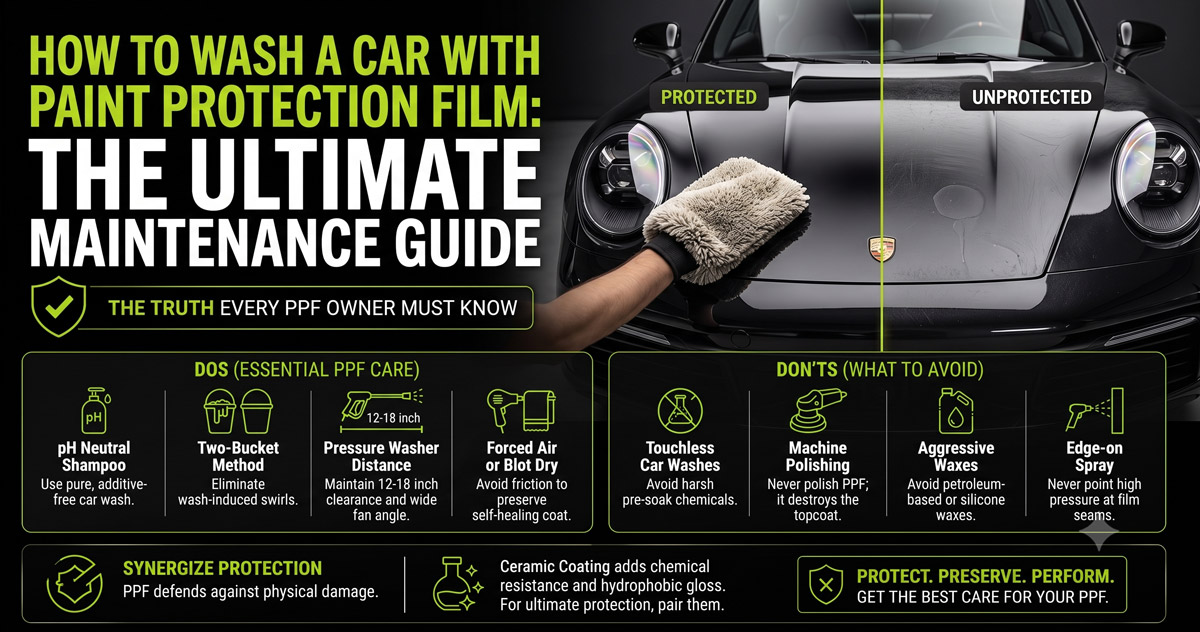
Installing Paint Protection Film (PPF), frequently called clear bra, is one of the single best investments you can make for your vehicle. Engineered from advanced thermoplastic polyurethane (TPU), high quality PPF acts as an invisible armor, shielding your factory paint against stone chips, gravel impacts, road debris, bug splatter, and harsh ultraviolet radiation. Premium films even feature elastomeric self healing topcoats that cause micro scratches and wash swirls to vanish when exposed to gentle heat or warm sunlight.
However, owning a vehicle covered in clear bra does not make it immune to improper washing techniques. In fact, thermoplastic polyurethane film care requires specialized techniques that differ significantly from caring for raw automotive clear coats. Washing your vehicle with aggressive brushes, harsh industrial degreasers, or direct high pressure spray aimed at film edges can result in edge lifting, clouding, premature yellowing, or permanent damage that voids your manufacturer warranty.
This definitive guide reveals every step required for a flawless PPF maintenance wash. You will learn the science behind film curing, the exact two bucket wash technique, safe pressure washing parameters, bird dropping decontamination, and how to maintain ceramic coating on paint protection film to keep your ride looking showroom new for years to come.
Understanding PPF Chemistry and the Initial 7 Day Curing Phase
Before picking up a wash mitt or turning on a hose, you must understand the underlying physics of your clear bra installation. Paint protection film is applied using a specialized slip solution consisting of water, gentle mounting concentrate, or isopropyl alcohol mixtures. Once the installer squeegees the film onto your panels, tiny amounts of moisture remain trapped underneath the polyurethane membrane.
The Curing Process and Adhesive Anchor Timelines
The acrylic adhesive layer beneath the film requires time to fully bond with the vehicle painted surface. As moisture slowly evaporates through the breathable polyurethane pores, the adhesive forms a permanent structural anchor. This initial curing process typically takes between 7 to 14 days, depending on ambient humidity, outdoor temperature, and sunlight exposure.
- Days 1 to 7: Do not wash, wipe, or spray the vehicle under any circumstances. Water pressure or chemical detergents will interfere with the adhesive cross linking process.
- Sunlight Exposure: Parking your car in direct sunlight during the first few days actually accelerates moisture evaporation under the film, helping the edges seal faster.
- Moisture Bubbles: Small water pockets or faint haze may appear under the film during week one. This is completely normal and will dissipate naturally as the liquid evaporates.
Why Washing Early Risks Permeation and Edge Separation
If you subject fresh film to high pressure water spray or physical agitation during the mandatory 7 day cure window, liquid can force its way under the delicate, exposed edges. Once water, soap residue, or dirt penetrates beneath the clear bra border, the adhesive becomes contaminated, causing permanent lifting, pocket air bubbles, and unsightly black line borders that cannot be repaired.
Essential Tools and Products for a PPF Maintenance Wash
Achieving safe, swirl free results requires equipping yourself with detailing tools designed specifically for delicate vinyl and urethane surfaces. Standard household soaps, dirty sponges, or automatic car wash brushes will destroy the optical clarity of your clear bra.
Selecting a pH Neutral Car Shampoo for PPF
Your choice of soap is critical for long term thermoplastic polyurethane film care. Always choose a pure, pH neutral car shampoo that contains zero added waxes, petroleum solvents, or silicone gloss enhancers.
Inexpensive wash and wax products leave behind petroleum residues that collect along the raised edges of the film. Over time, these wax build ups turn into sticky white or yellow lines along seams. High alkalinity or acidic cleaners can degrade the self healing topcoat and strip any hydrophobic top layers.
Wash Mitts, Grit Guards, and Plush Microfiber Towels
Physical contact tools must minimize friction across the film surface:
- Ultra Soft Microfiber Wash Mitts: Select high pile microfiber or genuine merino wool mitts. Never use coarse sea sponges or aggressive scrub pads.
- Dual Wash Buckets with Grit Guards: Heavy duty 5 gallon buckets equipped with bottom grit filter inserts trap dirt particles at the base, preventing them from reentering your wash mitt.
- Plush Microfiber Drying Towels: High GSM (grams per square meter) twist loop or waffle weave microfiber drying towels absorb massive volumes of water without needing heavy wiping pressure.
Pre Wash Protocol: Preparing the Surface and Cleaning Wheels
Before applying any physical agitation to your clear bra panels, you must perform a rigorous pre wash routine. The primary goal during pre wash is removing loose surface grit, brake dust, and mud without touching the paint.
Wheel and Tire Isolation
Always clean wheels, tires, and wheel wells before touching painted bodywork. Brake dust contains sharp iron filings and metallic particles. If you clean your wheels using the same wash bucket or mitt used on your PPF, those abrasive metallic grains will transfer to your clear bra, carving heavy scratches deep into the soft polyurethane topcoat.
Maintain dedicated wheel buckets, soft barrel brushes, and separate microfiber towels that never come into contact with your film covered body panels.
Pre Soaking with a Foam Cannon Pre Wash for PPF
A foam cannon pre wash for PPF is one of the most effective ways to preserve film optical clarity. Attach a foam cannon to your pressure washer and cover the entire cool vehicle with a dense blanket of pH neutral snow foam.
Allow the foam to dwell on the surface for 3 to 5 minutes. The foaming surfactants encapsulate abrasive grit, soften dried bug splatter, and break the electrostatic bond holding fine dust to the film. Thoroughly rinse away the thick foam before proceeding to the contact wash phase.
The Two Bucket Method for PPF Maintenance
When it comes to physical touch washing, the two bucket method for PPF is non negotiable. This proven detailing system isolates lifted dirt from clean wash solution, eliminating the leading cause of wash induced swirls.
Setting Up Wash and Rinse Buckets
Set two clean 5 gallon buckets side by side:
- Bucket 1 (Wash Bucket): Fill with clean water and add the recommended dosage of pure pH neutral car shampoo. Agitate with water spray to generate rich, lubricated suds.
- Bucket 2 (Rinse Bucket): Fill with pure clean water only, placing a grit guard insert firmly at the bottom.
Straight Line Washing Mechanics to Preserve Self Healing Topcoats
Dip your clean microfiber mitt into Bucket 1, picking up ample soapy lubrication. Begin washing the car from the highest point (roof) and move progressively downward toward lower rocker panels.
- Use Straight Lines: Lightly glide the mitt across the film using straight, overlapping horizontal or vertical passes. Never apply heavy pressure or scrub in circular motions.
- Rinse Frequently: After washing a single panel, submerge the dirty mitt deep into Bucket 2. Rub the mitt against the bottom grit guard to dislodge dirt particles, wring out the dirty water, then dip back into Bucket 1 for fresh soap.
- Mind the Seams: When gliding over film edges or wrapped panel corners, always move your mitt along or away from the seam. Never drag your mitt against the exposed edge in a direction that could catch and lift the film.
Pressure Washing PPF Safely: Distance, Angle, and PSI Standards
Pressure washers are exceptional tools for cleaning clear bra quickly, but improper pressure washing technique can instant destroy thousands of dollars worth of installation work.
The 12 to 18 Inch Clearance Rule
Maintain a strict minimum distance of 12 to 18 inches between your pressure washer spray nozzle tip and the vehicle bodywork. High pressure water exiting a nozzle at 1500 to 2000 PSI acts like an industrial blade. Getting too close concentrated spray onto polyurethane can cause structural tearing or permanently burn marks into the soft film.
Preventing Edge Lifting and Water Bridging Under Seams
The most critical factor when pressure washing PPF safely is nozzle angle relative to film seams:
- Wide Fan Nozzles: Use a 40 degree wide fan spray nozzle tip. Never use pinpoint 0 degree or turbo rotating pressure nozzles.
- Perpendicular Spray Angle: Direct water spray perpendicular (90 degrees) to the surface or spraying away from seam edges.
- Never Spray Directly at Edges: Never point a high pressure water blast directly beneath an exposed film edge or relief cut. Directing water forces high pressure liquid under the border, peeling the clear bra away from the clear coat instantly.
Safe Drying Techniques and Water Spot Prevention
Drying your car improperly causes the majority of micro marring found on clear bra surfaces. Additionally, allowing tap water to air dry on TPU film leads to stubborn mineral deposits (water spots) etched deep into the film surface.
Contactless Drying with Forced Air
The safest possible way to dry a PPF wrapped vehicle is contact free forced air. Using a specialized automotive leaf blower or warm filtered air dryer blasts standing water droplets out of panel gaps, emblem recesses, and off clear bra surfaces without touching the film.
Keep air nozzles at least 12 inches away from film edges to avoid pushing high velocity air under seams.
Blotting with a High GSM Microfiber Drying Towel for PPF
If forced air is unavailable, use a clean, plush microfiber drying towel for PPF.
Lay the towel flat across a panel, allowing the absorbent fibers to draw up standing water droplets. Instead of dragging the towel back and forth across the film, gently pat or blot the surface dry. Blotting eliminates friction, preventing fine micro scratches and eliminating any chance of towel fibers snagging on raised clear bra edges.
Spot Decontamination: Handling Bird Droppings, Bugs, and Tree Sap
Environmental contaminants pose an immediate chemical threat to thermoplastic polyurethane. Bird droppings, bug guts, and tree sap contain aggressive organic acids, enzymes, and natural solvents that will etch or stain clear bra if left sitting under hot sunlight.
Spot Cleaning Bird Droppings on PPF Without Scratching
Never dry wipe bird droppings, tree sap, or bug residue. Dry rubbing acidic grit against dry film creates deep gouges and permanent stains.
- Hydrate the Spot: Spray the affected area liberally with a dedicated quick detailer spray or warm, soapy water.
- Dwell Time: Place a wet, warm microfiber towel over the deposit and allow it to soak for 3 to 5 minutes. The heat and liquid will rehydrate and dissolve the hardened organic acids.
- Gently Blot Away: Carefully lift or blot the softened contaminant away using a clean microfiber cloth. Never scrub aggressively.
Chemical Decontamination Safety Limits
If your film accumulates embedded industrial iron fallout or tar:
- Iron Removers: You can safely use pH balanced iron fallout removers on high grade PPF, provided you do not let the chemical dry on the film or under direct sunlight.
- Bug & Tar Removers: Avoid aggressive naphtha or strong kerosene based solvent cleaners. Use only citrus based or PPF dedicated organic solvent spot cleaners.
- No Abrasive Compounds: Never use cutting polishes, heavy rubbing compounds, or rotary buffers on clear bra. Rotary buffers generate friction heat that melts polyurethane, destroying the self healing layer permanently.
Enhancing Protection: Ceramic Coating on Paint Protection Film
Combining a ceramic coating on paint protection film offers the ultimate automotive surface protection synergy. While PPF provides physical impact resistance against rock chips, a ceramic coating supplies extreme chemical resistance, intense gloss, and slick hydrophobic properties.
Applying Ceramic Toppers to Thermoplastic Polyurethane Film
Ceramic coatings engineered specifically for flexible vinyl and polyurethane fill microscopic pores in the film. This prevents dirt, road oil, and atmospheric pollution from bonding to the TPU matrix.
To maintain a ceramic coated clear bra:
- Apply an SiO2 spray sealant every 3 to 6 months after your routine maintenance wash.
- The sealant restores extreme water beading, allowing dirt to rinse off effortless during subsequent washes.
Products to Avoid: Petroleum Distillates and Aggressive Waxes
Never apply conventional paste waxes containing high solvent content or petroleum distillates to your clear bra. Petroleum compounds degrade the topcoat polymer structure, accelerate yellowing on white paint installations, and accumulate in film seams to form ugly lines.
Common Myths and Costly Mistakes in PPF Care
Debunking these common industry myths will save you from accidental clear bra damage:
- Myth 1: “Self healing PPF repairs every scratch.”
- Reality: Self healing topcoats only heal microscopic surface wash swirls when exposed to heat. Deep gouges that cut entirely through the polyurethane clear coat down to the adhesive layer will never heal.
- Myth 2: “Touchless automatic car washes are always safe.”
- Reality: While touchless washes eliminate physical brush scratching, they rely on extremely harsh alkaline and acid pre-soak chemicals to strip dirt. These aggressive chemicals dry out TPU, strip ceramic toppers, and cause adhesive discoloration along seams over time.
- Myth 3: “You can polish PPF to remove deep scratches.”
- Reality: Traditional machine polishing generates heat and uses abrasive aluminum oxide particles that destroy the elastomeric topcoat, leaving dull hazy patches that require total film replacement.
Conclusion
Mastering how to wash a car with paint protection film comes down to using the right products, practicing gentle touch mechanics, and respecting physical limits around film edges. By observing the 7 day post installation cure period, using the two bucket method with pH neutral shampoos, maintaining safe pressure washer clearance, and applying protective ceramic toppers, you ensure your clear bra stays invisible, ultra clear, and fully protective for years to come.
Next Step: Schedule Your Professional PPF Maintenance Inspection
Is your vehicle due for a thorough PPF maintenance wash or specialized ceramic coating top-up? Contact our team of certified paint protection film specialists today to book a professional detailing consultation, ensure your film warranty remains fully compliant, and keep your vehicle looking flawless on every drive!