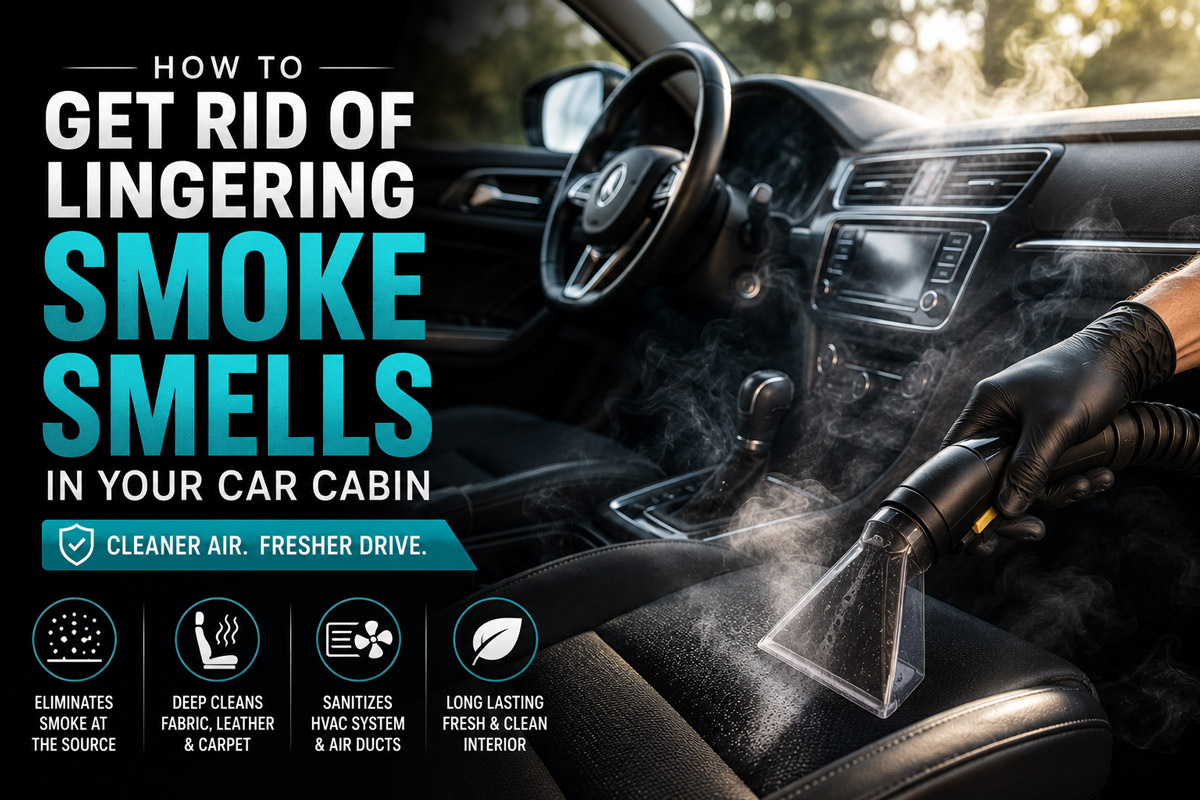
Persistent smoke odors inside a vehicle cabin represent one of the most frustrating challenges faced by car owners and detailing professionals. Whether buying a pre owned vehicle previously owned by a smoker or driving through areas affected by severe wildfire haze, smoke residue penetrates deeply into every corner of the automobile interior. Standard hanging air fresheners or scented sprays only mask the unpleasant smell temporarily, leaving the underlying cause untreated.
To eliminate smoke odors permanently, you must address thirdhand smoke residue. When tobacco products or organic material burn, they release vaporized liquids containing sticky tar, nicotine, carbon ash, and hundreds of chemical compounds. These microscopic vapor droplets settle onto every surface inside the cabin, forming a persistent resin film. As temperature and humidity rise inside a closed vehicle, this trapped resin undergoes thermal desorption, releasing foul smelling gases back into the breathing air.
This comprehensive guide delivers an advanced multi stage protocol designed to outrank surface level quick fixes. By combining targeted surface cleaning, HVAC system sanitization, material specific fabric treatment, and molecular gas oxidation, you can restore your car interior to a fresh clean state.
The Molecular Science of Smoke Residue in Vehicles
Eliminating smoke smell requires understanding how combustion particles interact with interior vehicle materials. Smoke particles measure between 0.1 and 1.0 microns in diameter, making them small enough to lodge inside micro pores of plastic, leather, foam padding, and carpet fibers.
Smoke Contamination Cycle
Tobacco Smoke versus Wildfire Smoke Characteristics
Tobacco smoke contains heavy organic tars, sticky nicotine oils, and volatile aromatic hydrocarbons. These compounds create a yellowish oily film that coats glass windows, interior plastic panels, vinyl dashboards, and fabric fibers. The oil base makes tobacco odor particularly stubborn because water alone cannot dissolve tar resin.
Wildfire smoke consists primarily of fine particulate matter, wood ash, carbon soot, and burned organic polymers. While wildfire smoke leaves less oily tar residue, it deposits extremely dry fine carbon dust deep inside the vehicle HVAC ventilation ducts, cabin air filtration units, and woven fabric upholstery.
Why Summer Heat Makes Smoke Smells Worse
Many vehicle owners notice that smoke odor disappears during cold winter months only to return fiercely in summer. High interior cabin temperatures cause trapped chemical volatile compounds to evaporate rapidly from foam cushions and plastic panels. Without deep chemical neutralization, thermal heat will continue to pull latent smoke smells out of cabin materials year after year.
Essential Preparation and Initial Cabin Airing Protocol
Before applying chemical neutralizers or steam extraction equipment, proper preparation ensures maximum cleaning efficiency while protecting vehicle components.
Safety Precautions and Workspace Setup
Always park the vehicle in a well ventilated covered location or shaded driveway. Open all car doors and the trunk fully to establish maximum airflow across the cabin. Wear protective nitrile gloves and safety eyewear when handling chemical cleaners or specialized odor neutralizer solutions.
Complete Interior Decluttering
Remove every unattached item from the vehicle cabin and trunk space. Smoke odor clings heavily to loose objects left inside the car.
- Remove paper documents, trash, floor mats, and trunk liners.
- Take out removable seat covers, child safety seats, and trunk cargo nets.
- Wash all removable cloth floor mats separately using heavy duty fabric detergent and warm water.
High Suction Vacuuming Technique
Use a high power shop vacuum equipped with a narrow crevice nozzle and a stiff bristle brush attachment. Vacuum every square inch of the vehicle interior systematically.
- Slide front seats fully forward to vacuum underlying carpets and floor air vents.
- Slide front seats fully backward to clean pedal areas and lower dashboard footwells.
- Pass the crevice tool deep inside seat seam folds where ash particles accumulate.
- Brush along floor seams, seat tracks, and under rear bench seats.
Deep Clean Car Interior Smoke Tar Nicotine on Fabrics and Leather
Different interior materials require specialized cleaning procedures. Using incorrect cleaning agents can stain delicate leather surfaces or cause vehicle headliners to sag.
Vehicle Interior Cleaning Reference Guide
| Interior Material | Recommended Cleaner | Key Tool | Critical Safety Rule |
|---|---|---|---|
| Cloth Upholstery | Enzyme Cleaner or Fabric Shampoo | Hot Water Extractor | Avoid over-wetting seat cushion foam layer |
| Leather Seats | pH-Balanced Leather Cleaner | Horsehair Detailing Brush | Condition immediately after cleaning to prevent cracking |
| Vehicle Headliner | Dry Foam or Mild Citrus Cleaner | Soft Microfiber Towel | Never scrub hard or apply direct steam moisture |
| Carpet Floor | Baking Soda & Citrus Degreaser | Drill Brush Attachment | Allow complete drying before placing floor mats back |
Baking Soda Odor Absorber Car Seats Treatment
Baking soda sodium bicarbonate acts as a natural alkaline neutralizer for acidic smoke tars.
Generously sprinkle fresh baking soda over cloth seats, floor carpets, and trunk space. Gently massage the powder into fabric fibers using a soft bristle brush. Allow the baking soda to sit undisturbed for a minimum of two to four hours, or overnight for severe smoking cases. The dry powder draws out surface moisture and traps odor molecules. Vacuum thoroughly using high suction power.
Shampooing and Steam Extraction for Cloth Upholstery
For deep seated cigarette smell embedded in cushion foam, surface dusting is insufficient. Hot water steam extraction breaks down tar resins and extracts dissolved contaminants out of fabric fibers.
- Spray an active enzymatic fabric cleaner evenly across seats and carpets.
- Agitate the surface using a soft nylon carpet brush to break apart sticky tar deposits.
- Pass a hot water commercial extractor across the fabric, injecting clean warm water while immediately sucking out dirty fluid.
- Run high speed floor fans inside the cabin for three hours to dry all upholstery thoroughly. Never leave damp cushions closed inside a car as mold spores can develop quickly.
Shampooing Car Headliner Safely
The vehicle headliner fabric ceiling absorbs a massive amount of rising smoke vapor. However, modern headliners are secured to cardboard backing using thin heat sensitive adhesive glue.
- Direct steam cleaning or heavy liquid spraying will melt the glue, causing the headliner fabric to sag permanently.
- Spray a mild enzyme cleaner onto a clean microfiber cloth until slightly damp.
- Gently wipe the headliner surface in light straight strokes without applying upward pressure.
- Wipe dry immediately with a second clean dry microfiber towel.
Best Way to Get Smoke Smell Out of Leather Car Seats
Leather requires a specialized gentle approach because harsh degreasers strip essential moisture, causing leather to stiffen and crack.
- Spray a dedicated pH balanced leather cleaner onto a soft horsehair detailing brush.
- Work the cleaner into leather pores using small circular motions, creating a gentle lather that lifts yellow nicotine residue.
- Wipe away lifted dirt using a clean microfiber cloth. Inspect the cloth, repeating the process if yellow stains remain.
- Apply a high quality leather conditioner containing natural oils. The conditioner nourishes the leather matrix while sealing micro pores against lingering odor emissions.
Decontaminating Hard Surfaces and Glass Film Removal
Smoke tar coats non porous surfaces like vinyl dashboards, door panels, center consoles, and window glass. Cleaning these surfaces eliminates major odor reservoirs.
Vinegar Water Solution Glass Film Removal
Nicotine leaves a micro thin oily haze on the interior side of windshields and side windows. This haze creates dangerous glare during night driving while continuously emitting smoke odor.
Mix equal parts distilled white vinegar and warm distilled water inside a spray bottle. White vinegar contains acetic acid, which breaks down alkaline nicotine tars instantly.
- Spray the vinegar solution onto interior glass surfaces.
- Scrub using a waffle weave glass microfiber towel to dissolve oily film.
- Wipe clean with a secondary dry microfiber towel to achieve crystal clear streak free clarity.
- Clean rear window glass carefully along heated defroster lines by wiping parallel to the wire heating elements.
Deep Cleaning Dashboards Plastic Panels and Seatbelts
Plastic and vinyl interior panels absorb smoke odors over time.
- Wipe down the dashboard, steering wheel column, door trim panels, and center console using an interior vehicle cleaner.
- Use detailing swabs or soft toothbrushes to scrub tight crevices around radio buttons, air vents, and cup holders.
- Pull seatbelts out to their maximum length. Clamp the belt at the spool anchor to prevent retraction.
- Scrub the entire webbing length using warm water mixed with mild dish soap and an enzyme cleaner. Seatbelts rest directly against the driver shoulder and absorb significant smoke odor.
- Keep seatbelts extended until completely dry before unclamping.
Eradicating Smoke Odor from the Vehicle HVAC Ventilation System
The heating, ventilation, and air conditioning HVAC system acts as an unseen distribution hub for smoke particles. Every time you turn on the fan, contaminated air circulates through dirty ducts into the cabin interior.
HVAC System Cleaning Protocol
Cabin Air Filter Smoke Replacement
The cabin air filter traps airborne pollen, dust, and smoke ash located behind the glove box or engine bay firewall. Continuing to run an old filter will re-contaminate a clean vehicle interior instantly.
Remove the old cabin filter and discard it immediately. Replace it with a high performance active carbon HEPA cabin air filter. Activated carbon layers absorb gaseous volatile organic compounds that standard paper filters miss.
Car HVAC Evaporator Cleaner Spray Application
The HVAC evaporator core stays cold and moist during air conditioner operation, making it a primary magnet for smoke tar and mold accumulation.
- Locate the vehicle exterior air intake vents located below the windshield wipers on the cowl panel.
- Turn the car engine on, set the HVAC controls to fresh air intake, temperature to maximum cold, and fan speed to maximum.
- Spray an enzymatic HVAC cleaner spray foam into the exterior cowl intake vents while the fan runs. The system draws the sanitizing mist through the entire duct network.
- Alternatively, insert an evaporator foaming cleaner probe directly through the HVAC condensate drain tube located under the vehicle chassis. The expanding foam coats the evaporator fins, dissolving tar buildup and draining out harmlessly under the car.
- Switch the HVAC system to heater mode at maximum temperature for ten minutes to dry out internal air ducts completely.
Advanced Molecular Neutralization Technologies
When deep physical cleaning, fabric shampooing, and HVAC sanitization are complete, microscopic smoke odor molecules may still linger deep inside dense polyurethane seat foam cushions. Advanced molecular treatments oxidize these volatile compounds permanently.
Molecular Odor Treatment Comparison Chart
Chlorine Dioxide (ClO2)
Type: Oxidizing Gas Vapor
Safety Rating: High (Safe for Interior Trim)
Foam Penetration: Deep Penetration
Treatment Time: 4 to 12 Hours
Ozone Generator (O3)
Type: Reactive Oxygen Gas
Safety Rating: Use Caution (Can Degrade Rubber)
Foam Penetration: Moderate Penetration
Treatment Time: 30 to 60 Minutes
Thermal Fogging
Type: Micro Mist Deodorizer
Safety Rating: High (Residue Free)
Foam Penetration: Surface to Duct Layer
Treatment Time: 20 to 30 Minutes
Chlorine Dioxide Car Smoke Odor Treatment
Chlorine dioxide ClO2 gas is widely considered by professional auto detailers to be the safest and most effective molecular smoke odor eliminator. ClO2 is a selective oxidizing agent that reacts directly with aromatic smoke rings, converting foul compounds into odorless salts and water vapor.
How to Apply Chlorine Dioxide Safely
- Ensure the car is parked in a shaded area out of direct sunlight as UV light breaks down ClO2 gas rapidly.
- Close all windows fully. Place the ClO2 cup container on a flat heat resistant surface inside the center cup holder or on a floor tray.
- Add the specified volume of warm water to the ClO2 tablet or pouch according to manufacturer instructions to initiate gas release.
- Immediately close all doors and leave the vehicle sealed for 4 to 12 hours.
- Upon completion, open all doors and air out the cabin for 30 minutes before driving. ClO2 leaves no toxic chemical residue or chemical perfume smell behind.
Ozone Generator Car Odor Removal Protocol
Ozone O3 is an unstable molecule containing three oxygen atoms. The third oxygen atom detaches and binds to odor molecules, oxidizing smoke tar instantly. However, ozone requires extreme care during application.
Ozone Oxidation Process
Vital Safety Warnings and Material Damage Risks
- Human Health Hazard: Ozone irritates lung tissue severely. Never enter or remain inside a vehicle while an ozone machine operates.
- Material Degradation Risk: Prolonged ozone exposure breaks down natural rubber door seals, synthetic foam backing, wire insulation, and leather finish coatings. Never run an ozone generator inside a car cabin for longer than 60 minutes per cycle.
Step by Step Ozone Application Protocol
- Ensure the vehicle interior is completely dry. Running ozone in a damp interior can create nitric acid fumes that bleach carpets.
- Place the ozone generator unit on a elevated block inside the center console or front floorboard.
- Route the power cord through a slightly cracked door window, sealing the window gap using painter tape.
- Set the machine timer for 30 to 45 minutes maximum.
- Turn on the vehicle engine and set the HVAC fan to recirculate mode on medium speed so ozone gas circulates through air vents.
- Once the generator turns off, allow the closed cabin to sit for 30 minutes so remaining ozone degrades naturally back into oxygen O2.
- Open all doors and air out the vehicle for at least 40 minutes before entering.
Thermal Fogging Method
Thermal foggers heat specialized solvent based deodorizers into an ultra fine fog. The heated fog particles match the exact size of smoke droplets, allowing them to follow the exact path original smoke took deep into seat foam, headliner fabric, and interior air ducts. Thermal fogging serves as an exceptional final step following deep steam cleaning.
Passive Natural Odor Absorbers for Long Term Freshness
After completing deep cleaning and molecular gas treatments, installing passive natural absorbers helps capture any minor latent smells released over subsequent months.
Activated Charcoal Car Odor Eliminator
Activated bamboo charcoal contains millions of microscopic porous pockets that capture airborne gas molecules through physical adsorption.
Place two to four porous cloth bags filled with activated charcoal under the front seats and inside the trunk space. Unlike scented air fresheners, activated charcoal absorbs odor continuously without releasing artificial fragrances. Reactivate charcoal monthly by placing the bags in direct sunlight for two hours to release trapped gas molecules.
Fresh Coffee Grounds and Natural Aromatics
Fresh dry coffee grounds contain natural nitrogen compounds that neutralize ambient smells effectively.
- Fill two small open bowls or breathably woven socks with dark roast coffee grounds.
- Place them inside the vehicle overnight to absorb lingering odors.
- Remove bowls before driving.
- Alternatively, place dried cedar wood blocks or natural eucalyptus sachets under seats for a clean natural interior aroma.
Wildfire Smoke vs Tobacco Smoke Eradication Strategies
Remediating wildfire smoke damage requires subtle adjustments compared to heavy tobacco smoke treatments.
Wildfire vs Tobacco Smoke Strategy
Remediating Wildfire Smoke Contamination
Wildfire smoke leaves minimal oily tar but fills the interior with fine mineral ash and wood soot.
- Avoid wet scrubbing initial ash layers as water turns carbon ash into black mud that stains fabric.
- Use a high efficiency HEPA vacuum to dry vacuum all surfaces thoroughly first.
- Replace cabin air filters immediately following wildfire exposure.
- Use thermal fogging or chlorine dioxide treatments to neutralize wood combustion aromatics trapped in HVAC air ducts.
Remediating Long Term Tobacco Smoke Damage
Vehicles exposed to years of daily heavy cigarette smoking require a complete systematic approach.
- Perform deep surface cleaning with citrus degreasers and vinegar solutions to break down yellow nicotine layers.
- Shampoo carpets and seats using hot water extractors.
- Clean the HVAC evaporator core with foaming spray cleaners.
- Run a chlorine dioxide gas treatment or timed ozone generator cycle to destroy deep foam odors.
Conclusion: Achieving a Permanent Smoke Free Interior
Eliminating stubborn lingering smoke smells from your car cabin is entirely achievable when you follow a structured scientific approach. Masking sprays and air fresheners fail because they treat symptoms rather than the chemical source. By conducting thorough vacuuming, dissolving surface tar films with vinegar solutions, shampooing upholstery, clearing HVAC evaporator ducts, and utilizing advanced molecular oxidation like chlorine dioxide or controlled ozone, you permanently destroy smoke odor compounds.
Restoring a clean smoke free vehicle cabin enhances driving comfort, protects passenger respiratory health, and restores hundreds or thousands of dollars in vehicle resale value.
Next Step: Take Control of Your Vehicle Air Quality
Ready to eliminate lingering odors and enjoy a fresh clean driving environment?
- Clean out loose items and perform a thorough high suction vacuuming of your cabin today.
- Order a replacement active carbon HEPA cabin air filter for your specific car model.
- Pick up a professional chlorine dioxide odor treatment kit or pH balanced leather cleaner to begin your interior restoration project immediately.
For more expert car detailing guides, vehicle maintenance checklists, and interior care tips, explore our comprehensive auto care resource library!