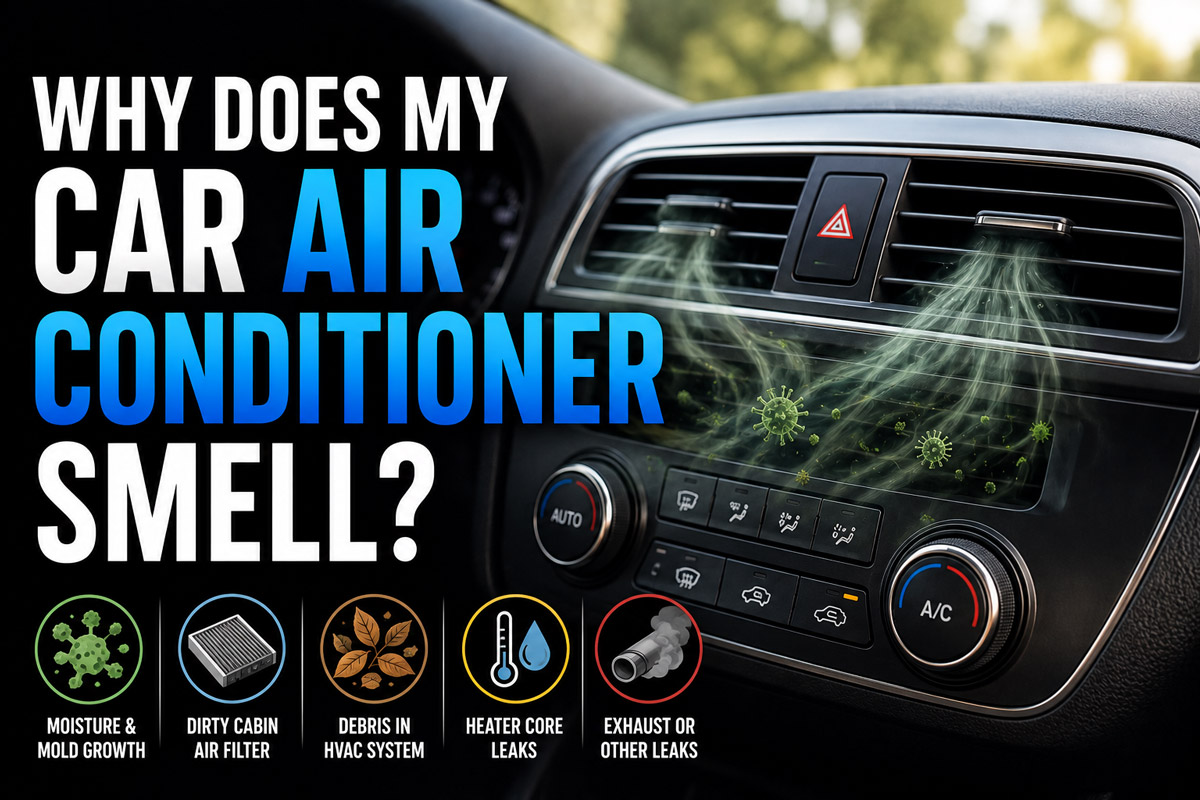
A car air conditioner usually smells because moisture, dust, pollen, or leaves have contaminated the evaporator, cabin filter, drain pan, or air ducts. Musty odors suggest biological growth, while sweet, burning, sulfur-like, or chemical smells can indicate coolant leaks, overheating components, exhaust problems, or trapped debris requiring immediate diagnosis.
At a Glance
- A musty odor usually develops when moisture and organic debris remain on the air-conditioning evaporator.
- A sweet smell accompanied by windshield film can indicate engine coolant leaking from the heater core.
- A burning-plastic or electrical odor requires the HVAC system to be switched off immediately.
- A dirty cabin air filter can contribute to odor but is not always the original source.
- A smell that returns within days usually means the evaporator, drain, or HVAC housing remains contaminated.
- Eliminating moisture and debris is more effective than covering the smell with fragrance.
Why Does My Car Air Conditioner Smell?
A car air conditioner smells when the HVAC system collects moisture, airborne contamination, leaking fluids, overheated materials, or decomposing organic matter. The odor’s character and timing usually identify which category is responsible.
When humid air crosses the cold evaporator core, water condenses on its fins. Dust, pollen, skin particles, leaves, and other organic material can stick to the damp surface. If the evaporator does not dry properly, microorganisms can grow within the contamination and release a musty odor when the blower starts.
Not every vent smell comes from the air conditioner itself. The HVAC intake can also draw in engine-compartment odors, road exhaust, sulfur compounds, washer fluid, or smoke from outside. Mechanical faults may produce distinct warning smells:
| Smell | Most likely source | Urgency |
|---|---|---|
| Musty or damp socks | Wet evaporator, filter, drain or carpet | Moderate |
| Sweet or syrupy | Heater-core coolant leak | High |
| Burning plastic | Wiring, resistor, motor or connector | Immediate |
| Burning rubber | Belt, pulley or compressor problem | Immediate |
| Rotten eggs | Exhaust fault, battery issue or dead animal | High |
| Vinegar or sour odor | Microbial contamination or damp filter | Moderate |
The strongest diagnostic clue is whether the odor occurs only during startup, only with heat, only with outside-air mode, or throughout the entire drive.
Why Does the AC Smell Musty When First Turned On?
A brief musty smell at startup usually comes from microbial contamination on the evaporator core or nearby HVAC surfaces. The first rush of air carries odor-producing compounds from the damp evaporator into the cabin.
The evaporator sits inside a dark HVAC housing behind the dashboard. During cooling, its temperature falls below the air’s dew point, causing water to form on the fins. Most water should exit through the evaporator drain tube, but a thin moisture film can remain after the engine is switched off.
A musty smell that fades within 30 seconds to several minutes often means the contamination is concentrated on the evaporator. A smell that remains continuously may also involve:
- A saturated cabin air filter.
- Standing water in the evaporator case.
- Wet carpet or insulation.
- Leaves inside the blower housing.
- Contaminated foam seals or air ducts.
Professionals do not assume that every musty odor is visible mold. Bacteria, fungi, decaying pollen, and damp debris can create similar volatile compounds. The practical repair is the same: remove the organic material, treat the evaporator appropriately, confirm that the drain works, and keep the assembly dry.
Moisture control matters because mold grows where damp conditions persist; removing only the smell without correcting the moisture source allows contamination to return.
Why Does the Odor Disappear After a Few Minutes?
The odor disappears because fresh airflow dilutes the accumulated compounds and the evaporator’s changing temperature alters how strongly the contamination releases them. The problem can still be present even when the cabin begins smelling normal.
After the vehicle has been parked, odor compounds accumulate inside the closed HVAC case. Starting the blower releases this concentrated air all at once. Continued airflow then reduces the concentration reaching the occupants.
The odor pattern provides useful diagnostic information:
- Strong for 10–60 seconds: Surface contamination on the evaporator is likely.
- Strong for several minutes: A wet filter, deeper evaporator contamination or standing water is more likely.
- Present only after rain: Water intrusion, a clogged cowl drain or damp carpeting should be investigated.
- Present only when using fresh air: The source may be near the exterior intake rather than inside the evaporator case.
- Present continuously: The cabin filter, ducts, upholstery, carpet or a mechanical leak may be involved.
A disappearing smell should not be treated as proof that the system cleaned itself. Experienced technicians judge recurrence across several cold starts. An odor that appears every morning or after every period of parking indicates a persistent contamination or drainage condition, even if each episode lasts less than a minute.
What Does a Sweet Smell From the Vents Mean?
A sweet or syrup-like odor from the vents can indicate engine coolant leaking through the heater core or its connections. The vehicle should be inspected promptly, especially when the smell appears with heat, windshield fogging, coolant loss or damp carpet.
The heater core is a small radiator inside the HVAC housing. Hot engine coolant circulates through it so the ventilation system can warm the cabin. A pinhole leak can release coolant mist or vapor into the airflow.
Look for these supporting symptoms:
- Greasy or difficult-to-clean film inside the windshield.
- Persistent windshield fog when the defroster operates.
- Wet, sticky or colored liquid near the front passenger footwell.
- Falling coolant level in the expansion reservoir.
- Engine overheating or temperature fluctuations.
- Stronger odor when the heater is selected.
Do not rely on odor alone because some interior cleaners and fragranced washer fluids also smell sweet. Check the coolant level only when the engine is completely cold, and never open a hot pressurized cooling system.
Continued coolant loss can eventually cause engine overheating. Avoid prolonged exposure to coolant vapor, ventilate the cabin, and have the cooling and HVAC systems pressure-tested rather than repeatedly topping up the reservoir.
Why Does the Car AC Smell Like Vinegar?
A vinegar or sour smell usually indicates damp microbial contamination, a saturated cabin filter, or decomposing organic debris in the HVAC housing. Less commonly, adhesives, sealants, cleaners or a recently installed low-quality filter can produce an acidic chemical odor.
The phrase “vinegar smell” is subjective. One driver may describe microbial odor as vinegar, while another calls the same smell sour, cheesy or sweaty. Diagnose it by context:
- Occurs only at startup: Inspect the evaporator.
- Began after filter replacement: Remove and smell the filter directly.
- Started after interior detailing: Review the chemicals used near the cowl and vents.
- Worsens in rain or high humidity: Check drainage and water intrusion.
- Occurs without running the compressor: Inspect the filter, blower housing and air intake.
The most common mistake is spraying perfume into every dashboard vent. Fragrance changes the odor temporarily but leaves the underlying damp material untouched.
Replace a visibly dirty or odor-contaminated filter, remove leaves from the cowl, confirm that water drains beneath the vehicle, and use a vehicle-approved evaporator-cleaning process when the odor originates deeper inside the system. Do not assume every filter must follow one universal mileage interval; manufacturers specify different schedules, and dusty or humid conditions can require earlier service. Toyota maintenance guides, for example, use model-specific intervals and state that severe conditions may require more frequent replacement.
What Causes a Burning Smell From the AC Vents?
A burning smell can result from overheated wiring, a failing blower motor, a damaged resistor, a slipping drive belt, a seized compressor pulley or debris contacting a hot component. Switch off the HVAC system immediately and stop driving if smoke, electrical failure or increasing odor accompanies it.
The exact smell helps narrow the fault:
| Odor character | Possible source |
|---|---|
| Melting plastic | Wiring insulation, connector or blower resistor |
| Hot electronics | Control module, relay or blower motor |
| Burning rubber | Serpentine belt, tensioner or compressor pulley |
| Burnt leaves | Debris inside the blower housing |
| Oily smoke | Fluid leaking onto a hot engine or exhaust part |
A smell that appears only when the blower runs points toward the blower circuit or debris in the housing. A smell that begins only after pressing the A/C button can implicate the compressor clutch, pulley or belt load. A smell present even with the climate system off may be entering through the fresh-air intake from the engine compartment.
NHTSA recall documents show that overheated HVAC circuits and electrical components can produce burning odors before smoke or fire, so burning-plastic smells should never be treated as normal “dust burning off.”
Why Does the Ventilation System Smell Like Rotten Eggs?
A rotten-egg or sulfur smell can come from exhaust-system problems, an overcharged or failing lead-acid battery, contaminated fuel, sewage-like standing water, or a dead animal near the HVAC intake. Sulfur odor accompanied by poor engine performance or exhaust fumes requires prompt mechanical diagnosis.
A failing catalytic converter is often blamed, but the converter may only be reacting to an upstream problem. A rich air-fuel mixture, ignition misfire, leaking injector or engine-control fault can send excess sulfur-containing compounds into the exhaust.
Use the timing to distinguish likely causes:
- Strongest during acceleration: Inspect the engine and exhaust system.
- Strongest under the hood: Inspect the battery and charging system.
- Present only through outside-air mode: Check the cowl intake and surroundings.
- Persists while parked: Inspect the blower housing for nesting material or an animal.
- Appears after driving through one location: The odor may be environmental.
Do not remain in a vehicle that is drawing exhaust into the cabin. Open the windows, switch to recirculation temporarily, and arrange inspection for exhaust leaks. Carbon monoxide itself has no smell, so an unusual exhaust odor cannot tell occupants whether dangerous carbon monoxide is present.
A technician may need to scan engine fault codes, inspect fuel trims, test the charging voltage, examine the catalytic converter and open the blower housing.
Is Breathing a Musty Car AC Smell Dangerous?
A musty car AC odor can irritate sensitive occupants and worsen allergies or asthma, although the smell alone cannot identify the organism or determine the exposure level. Children, people with asthma, mold allergies, chronic lung disease or weakened immune systems should minimize exposure until the moisture and contamination are corrected.
Potential symptoms include:
- Stuffy or runny nose.
- Sneezing and throat irritation.
- Coughing or wheezing.
- Burning or watery eyes.
- Headache.
- Asthma flare-ups.
The CDC states that mold exposure can cause coughing, wheezing, nasal symptoms, eye irritation and skin reactions, with more severe responses possible among people with asthma, mold allergies, immune suppression or chronic lung disease. The EPA similarly identifies allergic reactions, irritation and asthma attacks as established concerns, while noting that research into other claimed effects remains ongoing.
A musty vehicle should not be labeled “toxic mold” based only on odor. Routine consumer mold testing also rarely identifies the mechanical reason the HVAC system remains wet. The useful response is to locate the moisture, clean the contaminated surfaces, replace unsalvageable porous materials and verify drainage.
Seek medical advice when symptoms are severe, continue after leaving the vehicle or involve breathing difficulty.
Will Replacing the Cabin Air Filter Remove the Odor?
Replacing the cabin air filter removes the smell only when the filter itself is contaminated or restricting airflow. A new filter will not permanently solve odor growing on the evaporator, inside the drain pan, within wet carpeting or on deteriorated HVAC foam.
Remove the old filter and inspect it for:
- Dampness.
- Mold-like spotting.
- Leaves or insect debris.
- Rodent nesting material.
- Heavy dust loading.
- A sour or chemical smell.
- Incorrect installation direction.
A dirty filter can trap organic matter and hold moisture close to the airflow. Restricted airflow may also reduce dehumidification performance and make the HVAC system take longer to dry.
Filter replacement intervals vary by manufacturer, vehicle and operating environment. Some maintenance guides specify replacement around 30,000 miles or 36 months, while other models and severe-duty schedules differ considerably. Dusty roads, wildfire smoke, high pollen, pets and humid climates can justify earlier inspection.
The professional rule is simple: inspect the filter rather than relying solely on mileage. Replace a wet or foul-smelling filter after correcting the source of moisture. Installing another filter while water continues entering the housing will contaminate the replacement.
Use the filter type recommended by the vehicle manufacturer; an excessively restrictive aftermarket filter can reduce airflow.
Can Disinfectant Spray Permanently Fix AC Odor?
No, a general household disinfectant spray rarely provides a permanent repair because it may not reach the contaminated face of the evaporator or remove the debris supporting biological growth. A vehicle-approved evaporator cleaner is more effective when applied directly according to the product and manufacturer instructions.
Spraying household aerosol into dashboard vents commonly fails for three reasons:
- The airflow path may carry little product to the evaporator.
- Dead organisms and organic debris remain on the fins.
- Standing water or blocked drainage recreates the same damp conditions.
Some sprays also leave fragrance or residue that combines with the existing odor. Applying excessive liquid can wet electrical components, the blower motor or cabin filter.
A proper chemical treatment usually involves accessing the evaporator through a drain tube, filter opening or dedicated service port, depending on the vehicle. Foaming cleaner expands across the fins, loosens contamination and drains out as liquid. Vehicle-specific instructions matter because drain locations, sensors and blower arrangements differ.
Chemical treatment will still fail when the evaporator case contains leaves, rodent material, degraded foam or a severe established deposit. Those cases require physical access and cleaning.
Never mix bleach, ammonia, acids or different disinfectants inside an HVAC housing. The chemical reaction can produce dangerous vapors and damage aluminum, coatings, plastics or seals.
How Can I Identify the Smell by Its Timing?
Identify the source by recording exactly when the odor begins, which climate settings trigger it and how long it lasts. Timing often separates evaporator contamination from heater-core leaks, intake odors and electrical faults more reliably than the odor description alone.
Use this diagnostic sequence:
- Start with the blower off. Note whether the smell is already present in the cabin.
- Run the fan without A/C. An immediate smell may come from the filter, blower housing or ducts.
- Turn on the A/C compressor. An odor appearing after cooling begins points toward the evaporator or compressor load.
- Switch between recirculation and fresh air. A smell limited to fresh-air mode suggests an exterior intake source.
- Select full heat. A stronger sweet smell suggests a heater-core coolant leak.
- Change fan speed. A burning odor that intensifies with speed can involve the blower motor, resistor or wiring.
- Observe duration. A 30-second musty burst differs from a continuous chemical or electrical odor.
Perform this test only when no smoke, severe burning smell, visible coolant leak or exhaust exposure is present.
Write down weather conditions as well. Odors that appear after rain, car washing or humid overnight parking suggest water intrusion or slow drainage. Odors after leaf season may originate from debris beneath the windshield cowl.
How Do I Remove a Musty AC Smell Properly?
Remove a musty AC smell by replacing contaminated filters, clearing debris, confirming evaporator drainage, cleaning the evaporator and drying the HVAC system. Completing these steps in order prevents a temporary fragrance treatment from hiding an unresolved moisture problem.
- Inspect the cabin. Check carpets, floor mats, the spare-wheel well and passenger footwell for water.
- Remove the cabin filter. Replace it when damp, dirty, damaged or odorous.
- Clean the exterior cowl. Remove leaves and dirt from the intake area below the windshield.
- Check condensate drainage. With the A/C operating in humid weather, look for water draining beneath the vehicle. Absence of water is not conclusive in dry conditions.
- Clear the drain safely. Use the manufacturer’s procedure; aggressive wire or high-pressure air can puncture or disconnect HVAC components.
- Treat the evaporator. Apply an automotive evaporator cleaner through the approved access point.
- Dry the system. Run the blower as directed and install the new filter only after treatment is complete.
- Retest after parking. Judge the result during the next several cold starts.
Severe contamination, rodent debris, inaccessible drainage or saturated HVAC insulation may require professional disassembly. Moisture must be eliminated because cleaning without correcting damp conditions permits renewed biological growth.
Why Does the Odor Return After Cleaning?
The odor returns when the cleaning method removes only surface contamination while moisture, debris or contaminated porous material remains inside the HVAC system. Recurrence within several days is strong evidence that the root source was not removed.
Common reasons include:
- The evaporator cleaner never reached the entire core.
- The drain tube remains partially clogged or kinked.
- Leaves remain between the blower and evaporator.
- The replacement filter became wet again.
- Rainwater enters through a damaged cowl seal.
- Carpet padding or firewall insulation remains damp.
- Rodent nesting material remains inside the housing.
- Foam seals have absorbed contaminated moisture.
- The odor originates outside the HVAC system.
A second round of fragrance or vent spray usually produces diminishing results. The next step should be physical inspection rather than a stronger scent.
Technicians may use a borescope through the filter opening or blower cavity to inspect the evaporator. Drain output can be tested, and the housing can be checked for water lines or debris. Water on the passenger floor may come from a disconnected evaporator drain, clogged sunroof drain, door membrane leak or windshield seal—not necessarily from the air conditioner.
The expert rule is that recurring odor is a moisture-management problem until proven otherwise. Microbial growth cannot remain controlled when the underlying surface repeatedly stays damp.
How Can I Prevent the Smell From Returning?
Prevent AC odor by keeping the intake clean, replacing contaminated filters, maintaining clear drainage and allowing the evaporator to dry before extended parking. Moisture reduction is more reliable than routine use of deodorizing chemicals.
Use these habits:
- Clear leaves from the windshield cowl monthly during pollen and leaf seasons.
- Inspect the cabin filter at each major service and sooner in dusty, smoky or humid conditions.
- Turn off the A/C compressor near the end of the drive while leaving the blower operating for approximately two or three minutes when practical.
- Use fresh-air mode briefly before parking if the cabin has been operating in recirculation for a long period.
- Do not park with wet floor mats or carpeting.
- Investigate missing condensate drainage when humidity is high and the system has been cooling continuously.
- Repair water leaks promptly.
The fan-drying technique is helpful but not guaranteed. Some modern vehicles automatically manage evaporator temperature, blower operation or after-run drying, while others shut the blower off with the ignition. Follow the owner’s manual when the manufacturer provides an odor-prevention procedure.
Avoid inserting dryer sheets, fragrance pads or loose absorbent material near the filter or blower. These items can restrict airflow, shed fibers or contact the blower wheel.
When Should a Mechanic Inspect the HVAC System?
A mechanic should inspect the HVAC system immediately for burning smells, smoke, coolant odor, exhaust odor, electrical failure, overheating, breathing irritation or visible water inside the cabin. Persistent musty odor also needs professional attention when filter replacement and basic cleaning do not resolve it.
Stop using the climate system and arrange prompt inspection when:
- Smoke comes from a vent.
- Plastic or wiring smells hot.
- The blower stops, changes speed unexpectedly or blows a fuse.
- A belt squeals when the A/C engages.
- The engine temperature rises.
- Sweet odor accompanies coolant loss.
- The windshield develops oily film.
- Exhaust odor enters the cabin.
- Water repeatedly collects on the passenger floor.
- Rodent contamination is visible.
A routine odor service may involve one to two labor hours when the filter, drain and evaporator are readily accessible. Dashboard removal, heater-core replacement, evaporator replacement or foam-seal repair can require substantially more labor because the HVAC housing is often buried behind the instrument panel.
Ask the technician to identify the source rather than selling a generic deodorizing treatment. A complete diagnosis should distinguish between biological contamination, water intrusion, cooling-system leakage, electrical overheating, intake contamination and exhaust intrusion.
NHTSA documentation confirms that burning HVAC odors can precede component melting, smoke or fire in certain vehicle defects, making an electrical smell a safety symptom rather than a comfort complaint.
The Bottom Line
A car air conditioner usually smells because moisture and organic debris have contaminated the evaporator, filter, drain area or another HVAC surface. Musty odors often require cleaning and moisture correction, while sweet, burning or sulfur-like smells may indicate mechanical or safety-related failures. Replacing the cabin filter can help, but recurring odor means the evaporator, drainage system, water intrusion or porous materials still need attention. Burning smells, coolant vapor, exhaust odors and smoke require immediate professional inspection.