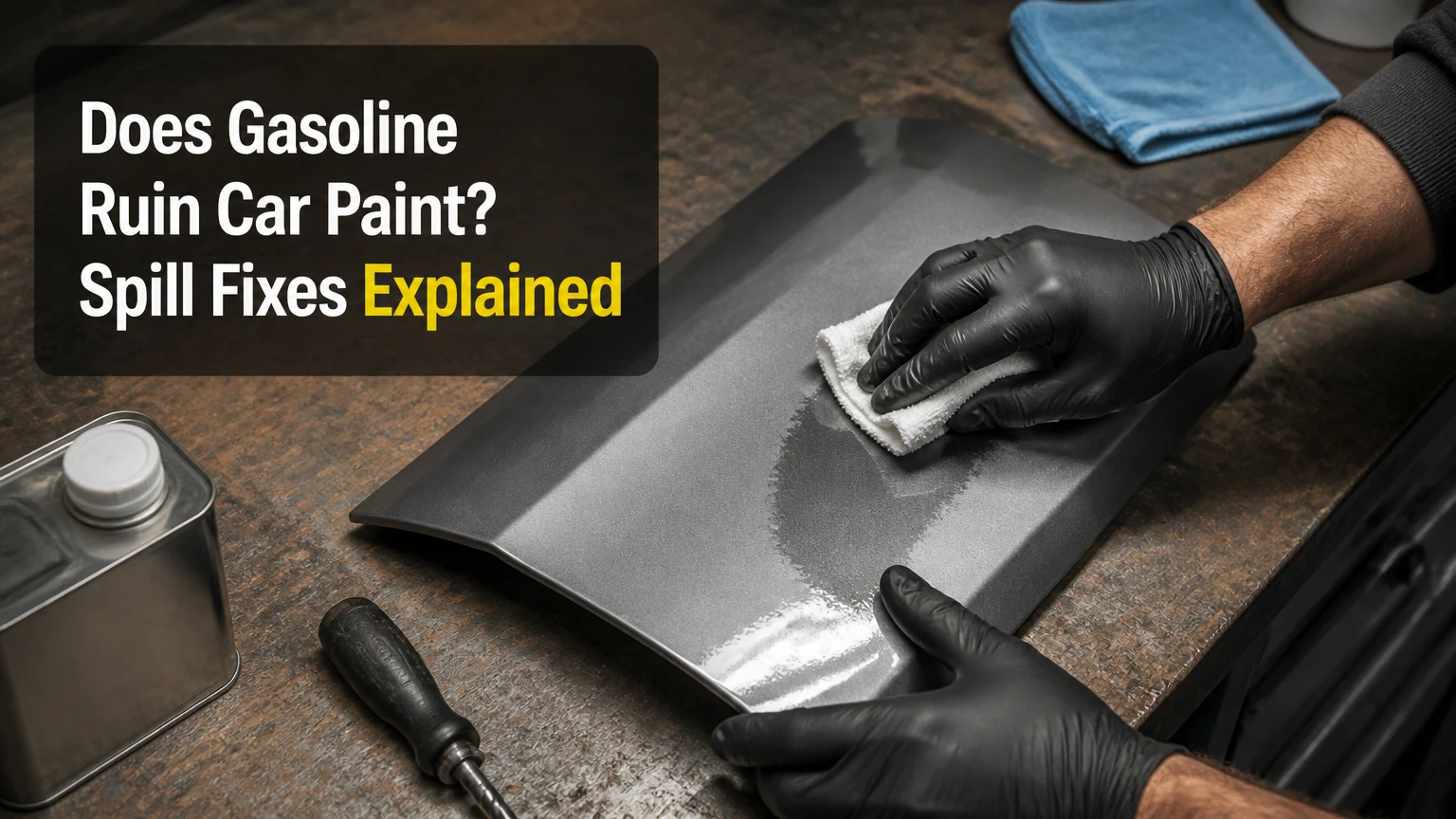
Yes, gasoline can damage car paint, especially when fuel remains on the surface, sits in sunlight, or reaches an older or weakened finish. A brief splash on a modern clear coat usually causes no permanent harm when rinsed promptly, but gasoline can strip wax, soften some coatings, stain residue, and worsen existing clear-coat defects.
Key Facts at a Glance
- Gasoline is more likely to remove wax and sealant than to destroy a healthy factory clear coat immediately.
- Prompt rinsing with plenty of water is safer than dry wiping or allowing fuel to evaporate.
- Heat, ultraviolet exposure, repeated spills, and existing paint failure increase the chance of staining or peeling.
- Matte and single-stage finishes generally have less repair tolerance than modern glossy clear-coated paint.
- Light residue may disappear after washing, while etching can require machine polishing or repainting.
- Typical professional paint repair costs range from $150 for correction to $1,200 or more for a full panel repaint.
Why Does Gasoline Damage Automotive Paint?
Gasoline damages automotive paint through solvent action and prolonged contact, but the actual result depends on the coating system, exposure time, temperature, and condition of the finish. Gasoline can dissolve or weaken waxes and some polymer products, while heavier fuel additives and grime may leave a visible film after the volatile portion evaporates.
Modern automotive finishes usually contain an electrocoat or primer, a pigmented base coat, and a transparent clear coat. The clear coat provides gloss and much of the chemical resistance. It is not an impermeable glass shield. Aromatic hydrocarbons such as toluene and xylene are effective solvents, although commercial gasoline varies by refinery, season, ethanol content, and additive package.
The common claim that gasoline always “eats through” clear coat within a few minutes is too absolute. A healthy OEM clear coat can tolerate brief incidental contact, but prolonged wetting, high temperature, and repeated contamination can soften or discolor the surface. Existing oxidation, cracking, poor repaint quality, and thin clear coat change the outcome.
The National Highway Traffic Safety Administration warns vehicle owners to clean fuel spills promptly because fuel is both hazardous and capable of damaging vehicle surfaces. A practical detailing rule is simple: treat gasoline as a contaminant to remove immediately, not as a liquid that is harmless because it evaporates.
What Happens After a Gasoline Spill?
Gasoline first attacks surface protection, then may affect the clear coat if liquid remains trapped or repeatedly contacts the same area. Damage does not follow a universal stopwatch, so the following intervals are practical risk windows rather than guaranteed chemical stages.
| Exposure condition | Likely result on healthy clear coat | Typical response |
|---|---|---|
| A few droplets, under 5 minutes, cool panel | Usually no permanent mark after washing | Rinse and wash within 15 minutes |
| Wet fuel film, 15-60 minutes, direct sun | Wax loss, greasy residue, possible dull patch | Cool the panel, rinse, wash, inspect |
| Dried residue, several hours or overnight | Staining or light etching becomes possible | Wash first, then assess under inspection light |
| Repeated overflow beside fuel door | Coating wear, edge lifting, recurring discoloration | Correct the cause and inspect professionally |
| Existing peeling clear coat | Faster visual worsening and edge lifting | Avoid polishing loose paint; obtain repair estimate |
Does Gasoline Remove Wax and Sealant?
Gasoline commonly removes or weakens wax and may reduce the performance of a paint sealant at the contaminated spot. Carnauba wax is not designed to resist direct fuel exposure, while synthetic sealants and ceramic coatings offer more chemical resistance but do not make paint fuel-proof.
Wax loss is often mistaken for clear-coat failure. The affected area may look dull because the wax or sealant no longer fills microscopic surface texture, while the underlying clear coat remains intact. Reapplying protection after proper cleaning can restore gloss only when the paint itself is undamaged.
Can Gasoline Reach the Base Coat?
Gasoline can reach or affect the base coat when the clear coat is already thin, porous, cracked, peeling, or poorly cured. A normal factory clear coat separates fuel from the colored layer during brief exposure, but sanding through the clear coat, severe oxidation, or an aged single-stage finish removes that margin.
A color change that remains after washing, decontamination, and conservative polishing deserves inspection. Bubbling, lifting edges, exposed primer, and paint transfer on a cloth indicate a coating failure rather than ordinary fuel residue.
Which Types of Car Paint Are Most Vulnerable?
Single-stage paint, matte finishes, poorly repaired panels, and damaged clear coats are more vulnerable than healthy modern gloss paint. Paint type matters because restoration methods that work on a glossy clear coat can permanently alter a matte surface or remove pigment from single-stage paint.
| Finish or substrate | Typical fuel tolerance | Visible risk | Safe correction approach |
|---|---|---|---|
| Modern OEM gloss with clear coat | Moderate to high for brief contact | Wax loss or dull residue | Wash, inspect, polish only if needed |
| Older single-stage enamel | Low | Color transfer, fading, streaks | Gentle wash and specialist assessment |
| Matte or satin paint | Moderate chemically, low cosmetically | Glossy or uneven patch | Clean without polishing |
| Vinyl wrap | Moderate, varies by manufacturer | Edge lift, staining, sheen change | Rinse quickly and follow wrap instructions |
| Paint protection film | Moderate to high, product-specific | Swelling, staining, edge contamination | Rinse, inspect film edges, replace if damaged |
| Poor-quality respray | Low to moderate | Softness, imprinting, solvent damage | Ask the body shop about cure status |
Are Matte and Satin Finishes Different?
Matte and satin finishes can suffer permanent visual change from gasoline because polishing creates a glossier area than the surrounding panel. A glossy clear coat can often be leveled with abrasive correction, but matte paint depends on controlled surface texture that polishing can destroy.
Use cool water, a pH-neutral automotive shampoo, and a clean microfiber mitt. Do not use a clay bar, compound, scratch remover, or wax on a matte panel unless the finish manufacturer specifically permits that product.
Does Gasoline Damage PPF or Vinyl Wrap?
Gasoline can stain, swell, or loosen paint protection film and vinyl wrap, particularly at exposed edges, seams, and poorly bonded areas. PPF is a sacrificial polyurethane layer rather than a guarantee against every solvent, and vinyl manufacturers publish different fuel-resistance limits.
A fuel spill on PPF is preferable to a spill directly on paint because the film can be replaced separately. Do not scrub an affected edge. If the film becomes cloudy, wrinkled, tacky, or lifted after washing, a PPF installer should evaluate it.
How Do You Remove Gasoline From Car Paint?
Remove gasoline by stopping the source, cooling the panel, flooding it with water, washing with automotive shampoo, and drying with clean materials. The procedure usually takes 10-20 minutes for a small spill, and speed matters more than expensive detailing chemicals.
Before You Start
| Requirement | Typical specification |
|---|---|
| Time | 10-20 minutes for a fresh splash |
| Difficulty | Easy, provided the spill is small and outside |
| Water | 10-20 liters for rinsing and washing |
| Shampoo | 15-30 milliliters of pH-neutral car shampoo |
| Materials | 2 clean microfiber towels, wash mitt, hose |
| Safety | Engine off, no smoking, no sparks, ventilated outdoor area |
Step 1: Stop Fueling and Move Safely
Stop the pump, replace the nozzle, and move the vehicle away from the dispenser if the area is safe. Keep the engine off, avoid electrical sparks, and do not handle fuel with a bare hand. A large spill on the ground requires the station operator because gasoline vapor is highly flammable.
You will know the situation is controlled when no liquid is spreading and the nozzle is secure. The common mistake is continuing to top off the tank, which creates another overflow while the first spill remains untreated.
Step 2: Cool and Flood the Affected Panel
Rinse the contaminated panel with a generous stream of cool water for at least 60 seconds. Do not use hot water, a heat gun, or a pressure washer at close range, because heat increases evaporation and concentrated pressure can drive contamination toward trim gaps.
The panel should look uniformly wet rather than covered by rainbow-colored fuel patches. If gasoline reached a door seam, fuel door hinge, rubber seal, or plastic trim, rinse those areas too.
Step 3: Wash With Automotive Shampoo
Mix 15-30 milliliters of pH-neutral car shampoo in a bucket containing approximately 8-10 liters of water. Wash from the cleanest area toward the spill using a clean microfiber mitt, then rinse the mitt frequently.
The surface is clean when the fuel odor and oily film disappear. A common mistake is using dish detergent, household degreaser, or brake cleaner, which can remove protection and damage plastics even when the paint survives.
Step 4: Dry Without Grinding Dirt
Use a clean, soft microfiber drying towel and blot or lightly drag it across the rinsed surface. Do not dry-wipe a contaminated panel before rinsing, because grit under the towel can create scratches while gasoline has reduced surface lubrication.
The towel should glide without catching and should not carry an oily smell afterward. Put fuel-contaminated towels outdoors in a safe location and follow local hazardous-waste rules rather than storing them in a closed vehicle.
Step 5: Inspect Under Strong Light
Inspect the panel after it has cooled and dried, using daylight or a bright inspection lamp from several angles. Look for a remaining film, color change, loss of gloss, swelling, cracks, bubbling, or clear-coat edges.
A smooth surface with normal gloss usually needs only renewed wax or sealant. A rough surface may contain bonded residue, but roughness alone does not prove paint damage.
What Should You Avoid During Cleanup?
The most damaging cleanup errors involve friction, heat, unsuitable solvents, or delayed inspection. Gasoline contamination should be removed with water and automotive shampoo before any decontamination or polishing product is considered.
- Do not dry-wipe fresh gasoline. Rinse first to suspend grit and reduce scratching.
- Do not use the gas-station squeegee. Shared squeegees can contain abrasive sand, road film, and fuel residue.
- Do not light a cigarette or run an unnecessary electrical device nearby. Gasoline vapor ignites easily.
- Do not apply compound to a wet fuel film. Abrasive products can spread contamination and create uneven gloss.
- Do not use acetone, lacquer thinner, or gasoline as a cleaning solvent. These products can attack paint, trim, and adhesives.
- Do not polish matte paint. A repaired-looking spot may become permanently shinier than the rest of the panel.
An experienced detailer checks the panel after washing before reaching for clay or polish. That sequence prevents a removable residue from becoming an abrasive correction job.
How Can You Tell Residue From Permanent Paint Damage?
Gasoline residue usually disappears after washing, while permanent damage remains as a color, gloss, texture, or coating change on a clean, dry panel. A simple inspection should distinguish surface contamination from chemical etching before any aggressive repair is attempted.
| Symptom after washing | Most likely cause | Next action | Typical cost |
|---|---|---|---|
| Fuel odor or oily film remains | Residue in trim or panel texture | Repeat shampoo wash once | $0-$15 |
| Smooth dull patch | Wax loss or light etching | Apply panel wipe only if compatible, then inspect | $10-$30 |
| Rough but glossy surface | Bonded contamination | Use automotive clay with lubricant on gloss paint | $15-$35 |
| Yellow, brown, or cloudy mark | Etched residue or coating alteration | Test a mild polish on a small area | $20-$80 DIY |
| Bubbling or lifted clear coat | Delamination | Stop polishing and consult a body shop | $400-$1,200 |
| Color on microfiber from old paint | Single-stage oxidation or pigment transfer | Specialist detailing assessment | $100-$500 |
Clay removes bonded surface particles, not clear-coat etching. If a clean, lubricated clay test changes texture but not color, polishing may be appropriate; if the paint is peeling, clay can worsen the edge.
Can You Polish a Gasoline Stain?
You can polish a gasoline stain only after washing and only when the mark is a shallow defect in a glossy, stable clear coat. A dual-action polisher with a mild finishing polish is safer than aggressive rotary correction for a first attempt, but every polish removes a small amount of clear coat.
Test a 30-by-30-centimeter area with one or two slow passes at low to moderate pressure. The defect is improving when gloss returns without a halo or visible color mismatch. Stop immediately if the pad picks up color, the panel becomes uneven, or the defect exposes a deeper layer.
What Does Gasoline Paint Damage Cost to Repair?
Typical repair costs range from $0 for prompt washing to $400-$1,200 for repainting one damaged panel, with professional paint correction commonly costing $150-$300. Prices vary by region, vehicle size, paint color, blending requirements, shop equipment, and whether damage extends around the fuel door.
| Repair level | Work involved | Typical time | Typical US cost |
|---|---|---|---|
| Immediate wash | Rinse, shampoo, dry, inspect | 10-20 minutes | $0-$20 |
| Light decontamination | Shampoo and clay on gloss paint | 30-60 minutes | $20-$75 DIY |
| Paint correction | DA polish and inspection | 1-3 hours | $150-$300 |
| Clear-coat spot repair | Sand, refinish, blend | 1-2 days | $250-$700 |
| Complete panel repaint | Prep, primer, color, clear coat | 3-5 days | $400-$1,200 |
| PPF replacement | Remove and install affected section | 2-6 hours | $150-$800 |
A body shop should quote a panel repaint when bubbling, peeling, or bare primer is visible. Polishing cannot rebuild missing clear coat, and a ceramic coating cannot stabilize failing paint.
Does Insurance Usually Cover a Fuel Spill?
Insurance usually does not cover ordinary accidental gasoline spills as a standalone paint claim, although comprehensive coverage and policy wording can differ. A claim may be impractical when the repair cost is below the deductible, and filing history can affect future premiums.
Photograph the spill and damage, record the station details, and retain receipts if a defective nozzle or station equipment caused a substantial release. The station’s insurer may become relevant, but liability depends on evidence, local law, and proof that equipment or staff caused the event.
Gasoline Versus Other Fuels
Gasoline, diesel, ethanol-blended fuel, and diesel exhaust fluid do not present identical paint risks. Gasoline evaporates quickly and contains strong hydrocarbon solvents, diesel remains oily for longer, ethanol can affect some coatings and adhesives, and diesel exhaust fluid is water-based but can crystallize and damage surfaces if allowed to dry.
| Fluid | Surface behavior | Main paint concern | Immediate response |
|---|---|---|---|
| Gasoline, E10 | Fast evaporation, solvent residue | Wax loss and etching | Flood with water, shampoo |
| Diesel fuel | Slow evaporation, oily film | Staining and grime adhesion | Absorb only pooled fuel safely, then wash |
| E85 gasoline | Higher ethanol content, rapid evaporation | Coating and adhesive compatibility | Rinse promptly and inspect trim |
| Diesel exhaust fluid | Water-based, dries to crystals | Alkaline residue and spotting | Rinse before crystals dry |
| Engine oil | Low volatility, persistent film | Dirt retention and staining | Shampoo, then use approved degreaser |
Do not substitute diesel, kerosene, or household solvents because one fuel appears milder. The safest general response remains prompt rinsing followed by automotive shampoo.
How Can You Prevent Fuel From Reaching the Paint?
Prevent fuel damage by stopping at the first automatic nozzle click, positioning the nozzle correctly, and cleaning drips before they dry. A clean fuel door area also reveals recurring leaks that would otherwise remain unnoticed.
Use the vehicle manufacturer’s fueling instructions, keep the nozzle fully inserted, and avoid repeatedly topping off the tank. Inspect the fuel cap, filler neck, and fuel-door drain after fueling if the same area repeatedly smells of gasoline or shows discoloration.
A small emergency kit can include two clean microfiber towels, nitrile gloves, a 500-milliliter bottle of water, and a travel-size pH-neutral wash concentrate. Store the kit away from heat and ignition sources, and never transport an open container of gasoline in the passenger compartment.
Ceramic coatings and paint protection film reduce risk but do not eliminate cleanup. PPF provides a replaceable sacrificial layer, while ceramic coating mainly improves chemical resistance and cleanability; neither makes a fuel-soaked, defective panel permanently safe.
| Protection method | Typical life | Typical price | Fuel-spill limitation |
|---|---|---|---|
| Carnauba wax | 1-3 months | $20-$50 DIY | Quickly stripped by gasoline |
| Synthetic sealant | 4-12 months | $30-$100 DIY | Protects briefly, not indefinitely |
| DIY ceramic spray | 3-12 months | $20-$80 DIY | Product-specific resistance |
| Professional ceramic coating | 2-5 years | $500-$2,000 | Requires prompt removal |
| PPF on fuel-door zone | 5-10 years | $150-$800 section | Film edges and seams remain vulnerable |
Protection is most valuable for recurring splash zones, such as the quarter panel below a fuel door. It is not a substitute for correcting a leaking filler neck or damaged fuel cap.
What If Gasoline Dried on the Paint?
If gasoline dried on car paint, rinse and shampoo the area before touching the surface, then inspect for remaining residue after complete drying. Dried fuel does not automatically mean permanent damage, because evaporation may leave only a removable additive film rather than an etched coating.
Repeat one careful wash if the panel still feels oily. On glossy paint, use clay only when the surface remains rough after washing and the clay manufacturer approves the finish. Follow with a mild polish if a dull mark remains and the clear coat is stable.
Do not use clay or polish on peeling, matte, satin, or visibly softened paint. A professional detailer can measure or visually assess the defect, but no product can safely polish away a delaminating clear coat.
The Bottom Line
Does gasoline ruin car paint? Gasoline can ruin or permanently mark car paint when exposure is prolonged, repeated, heated, or combined with an already damaged finish, but a prompt rinse and shampoo usually prevent serious harm on healthy modern clear coat. Inspect after cleaning, polish only stable glossy paint, and repaint panels with bubbling or peeling.
The most effective response is immediate, low-friction cleanup. Expensive wax, ceramic coating, or PPF can reduce future risk, but none replaces prompt rinsing or repairs a failed clear coat.
Frequently Asked Questions
Will one gas spill ruin my car?
One small spill rarely ruins a healthy modern factory finish when the area is rinsed and washed promptly. Permanent staining becomes more plausible when gasoline remains wet for hours, bakes in direct sun, reaches a poor-quality respray, or contacts peeling clear coat. Inspect the clean, dry panel before buying repair products.
Can gasoline damage clear coat overnight?
Gasoline can damage clear coat overnight, although overnight exposure does not guarantee failure. The risk increases with high panel temperature, direct sunlight, repeated wetting, and existing oxidation or cracking. Wash the panel, inspect its gloss and texture, and obtain a professional opinion if the mark remains after conservative cleaning.
Is gasoline worse for black cars?
Gasoline is not inherently more chemically damaging to black paint, but black panels reveal dullness, oily halos, and uneven gloss more clearly than light colors. Dark paint also becomes hotter in sunlight, which can accelerate residue-related marking. Prompt rinsing matters for every color, especially black, navy, and dark red finishes.
Can I use rubbing alcohol to remove gasoline from paint?
Rubbing alcohol is not the preferred first cleaner for gasoline on automotive paint because concentration, dwell time, and coating condition affect its behavior. Water and pH-neutral car shampoo are safer initial choices. If a residue remains, use a paint-safe product whose label specifies automotive clear coat compatibility, then rinse thoroughly.
Does gasoline damage a car’s plastic trim?
Gasoline can stain, swell, soften, or discolor some plastic trim, rubber seals, and adhesive-backed components. Textured black plastic may develop a shiny patch that cannot be restored by polishing. Rinse trim immediately, wash it with automotive shampoo, and avoid strong solvents that can worsen swelling or remove surface dye.