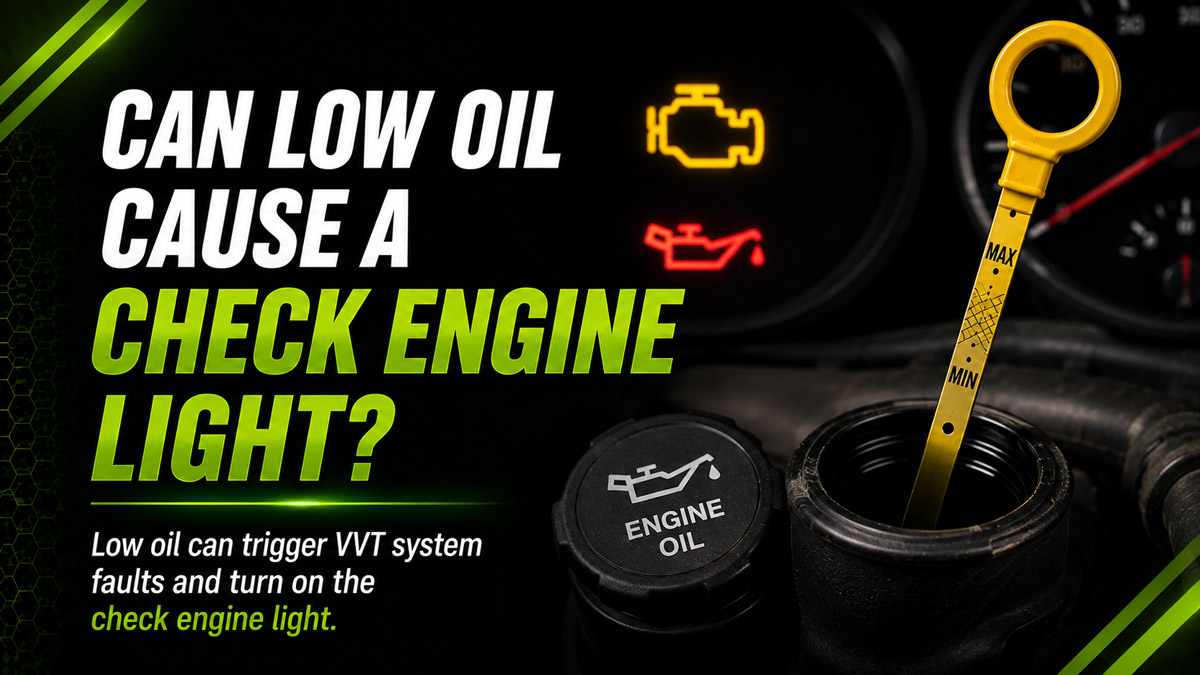
Yes, low engine oil can indirectly cause a check engine light to illuminate. Modern vehicles use oil pressure to operate the Variable Valve Timing (VVT) system. When oil levels drop by 1.5 to 2 quarts, system pressure plummets. This causes camshaft timing to desynchronize, prompting the engine control unit to trigger a fault code.
Key Facts / At a Glance
- The red oil pressure light indicates a direct, critical lack of lubrication, while a check engine light signals a secondary system malfunction caused by that low oil.
- Variable Valve Timing (VVT) OBD-II codes (such as P0011, P0014, and P0021) are the most common check engine light triggers associated with low oil levels.
- Normal idle oil pressure ranges from 25 to 35 PSI; VVT system failures typically occur when line pressure drops below the 15 to 20 PSI threshold.
- Adding oil will not instantly turn off the check engine light; the vehicle’s computer requires 3 to 5 complete drive cycles to clear the fault code automatically.
How Low Engine Oil Triggers the Check Engine Light
Internal combustion engines rely on engine oil for two distinct purposes: lubrication of metal components and hydraulic actuation of internal systems. The check engine light illuminates when the hydraulic function fails.
Modern vehicles utilize Variable Valve Timing (VVT) to improve fuel efficiency and engine power. The VVT system relies on solenoids that direct pressurized engine oil to camshaft phasers. These phasers physically alter the timing of the engine valves based on RPM and load. When the engine oil level is significantly reduced, the oil pump draws in air alongside the remaining oil, causing a drastic drop in hydraulic pressure.
Without adequate oil pressure, the VVT solenoids cannot push the camshafts into their target positions. The Engine Control Unit (ECU) constantly monitors camshaft position via sensors. When the ECU detects that the camshaft is resting at the wrong angle compared to the crankshaft, it determines the engine timing is out of specification and instantly triggers the check engine light.
Which OBD-II Codes Indicate Low Oil Problems?
Diagnostic trouble codes provide the exact reason the Engine Control Unit triggered the warning light. When scanning a vehicle experiencing low oil pressure, the following OBD-II fault codes are the most frequent culprits.
- P0011 / P0014: Camshaft Position – Timing Over-Advanced or System Performance (Bank 1). This indicates the camshaft is stuck in an advanced position because low oil pressure prevented the VVT phaser from returning to baseline.
- P0010 / P0013: Camshaft Position Actuator Circuit. While often electrical, severe oil sludge mixed with low fluid levels can physically jam the actuator, triggering this circuit code.
- P0021 / P0024: Camshaft Position – Timing Over-Advanced (Bank 2). This is the exact same fault as P0011/P0014, but located on the opposite side of a V6 or V8 engine.
- P06DD: Engine Oil Pressure Control Circuit Stuck Off. Common in vehicles with variable-displacement oil pumps, this code flags that the engine cannot generate expected oil pressure, frequently due to a lack of fluid in the oil pan.
Warning Light Comparison: Red Oil Can vs. Check Engine Light
Drivers frequently misinterpret dashboard warning lights, leading to catastrophic engine failure or unnecessary panic. Each light dictates a radically different response protocol.
| Dashboard Warning Light | Core Meaning | Urgency Level | Connection to Engine Oil |
| Red Oil Pressure (Oil Can) | CRITICAL: The engine is actively starving of oil and losing structural integrity. | Stop Immediately. Shut off the engine. Do not drive. | Direct measurement of system oil pressure. |
| Check Engine Light (Engine Icon) | WARNING: An emissions, timing, or sensor system is malfunctioning. | Check Soon. Drive gently to a repair facility. | Indirect (detects VVT failure caused by low oil). |
| Maintenance Required (Wrench) | REMINDER: The vehicle is due for scheduled service. | Low. Schedule an oil change soon. | Mileage counter since the last dashboard reset. |
How Much Oil Loss Causes a Check Engine Light?
Engines are engineered with a specific oil capacity tolerance. Most standard four-cylinder engines hold approximately 4.5 to 5 quarts of oil. The check engine light typically triggers when the system is starved by 1.5 to 2 quarts of oil.
At a 1.5-quart deficit, the oil pump pickup tube begins to suck in air during hard acceleration, aggressive braking, or sharp turns. Normal idle oil pressure sits between 25 and 35 PSI. When the volume drops, system pressure routinely falls below 15 to 20 PSI. At this metric, the hydraulic tensioners and VVT solenoids lose the physical force required to operate, prompting the ECU to register a fault.
Certain vehicle architectures are notoriously sensitive to oil levels. Subaru EJ series engines and GM 2.4L Ecotec engines will often trigger P0011 codes when they are barely 1 quart low, due to the specific placement and sensitivity of their VVT micro-screens.
Step-by-Step Troubleshooting for Oil-Related Engine Codes
When the check engine light illuminates and you suspect an oil level deficit, follow this diagnostic sequence to prevent irreversible bearing damage.
Before You Start:
- Time required: 15 minutes.
- Tools needed: Clean rag/paper towel, correct viscosity engine oil (e.g., 5W-30), OBD-II scanner.
- Safety Prerequisite: The vehicle must be parked on a perfectly level surface to ensure an accurate dipstick reading.
Step 1: Park on Level Ground and Let the Engine Cool
Shut off the engine on a flat surface and wait 5 to 10 minutes. This mandatory waiting period allows the highly viscous oil trapped in the upper cylinder head to drain back down into the oil pan. Checking the oil immediately after shutdown will result in a false low reading.
Step 2: Read the Dipstick Accurately
Pull the dipstick, wipe it completely clean with a rag, reinsert it fully until it clicks or seats, and pull it out again. Inspect the fluid level relative to the hash marks or indicator dots.
- Success Checkpoint: You will know exactly how low the vehicle is. If the oil registers below the bottom dot or is not visible on the stick at all, you have found the root cause of the check engine light.
- Common Mistake: Reading the residual oil smeared on the side of the dipstick tube instead of the distinct fluid line on the stick itself.
Step 3: Top Off with the Correct Viscosity Oil
Add exactly one quart of the manufacturer-specified engine oil through the top filler cap. Wait two minutes for it to reach the pan, then check the dipstick again. Repeat this process until the fluid level sits comfortably between the low and full hash marks. Do not overfill the engine, as this causes oil aeration and foaming.
Step 4: Perform a Drive Cycle to Clear the Light
Restart the engine. Listen closely to the engine bay; if low oil caused the issue, a loud “ticking” noise (hydraulic lifter clatter) should vanish within 10 seconds of adding oil. The check engine light will not turn off immediately. The vehicle requires 3 to 5 distinct drive cycles (getting up to operating temperature, driving at varied speeds, and cooling down) for the ECU to verify the VVT system is functioning correctly before it turns off the light.
Step 5: Scan the ECU for Persistent Codes
If the oil level was full during Step 2, or if the light persists after a week of driving, connect an OBD-II scanner to the port under the steering wheel. If the scanner reads a P0011 or P0014, but the engine is full of clean oil, the VVT solenoid itself has likely failed and requires physical replacement.
What Are the Repair Costs for Low Oil System Failures?
Driving with low oil accelerates component wear. If topping off the fluid does not resolve the check engine light, specific parts will require replacement. Note: Costs are typical estimates based on 2024/2025 independent mechanic labor rates.
| Component Failure | DIY Parts Cost | Professional Repair Cost | Diagnostic Context |
| Synthetic Oil Change | $35 – $60 | $80 – $120 | The mandatory first step. Dirty oil clogs VVT screens even if full. |
| Oil Pressure Sensor | $25 – $60 | $150 – $400 | Required if the ECU reports low pressure but the dipstick is completely full. |
| VVT Solenoid | $50 – $150 | $250 – $600 | Fails when metal shavings or sludge from low oil permanently jam the internal valve. |
| Timing Chain Tensioner | $100 – $300 | $800 – $1,500+ | Hydraulic tensioners lose pressure and allow the timing chain to stretch or jump teeth. |
| Engine Block Replacement | N/A | $4,000 – $7,000+ | The inevitable result of ignoring the red oil pressure light. |
System Cascades: Limp Mode and Hydraulic Lifter Tick
Low oil rarely triggers a check engine light in isolation; it usually presents alongside distinct mechanical symptoms and safety interventions.
When the ECU detects severe timing desynchronization via a P0011 or P0021 code, it will often put the vehicle into “Limp Mode.” Limp mode is a self-preservation protocol where the computer drastically reduces engine power, limits shifting, and caps speeds at 30 to 40 MPH to prevent the internal components from destroying themselves.
Prior to the check engine light illuminating, drivers will almost always hear hydraulic lifter tick. Hydraulic lifters require high-pressure oil to maintain zero valve clearance. When oil drops, air enters the lifters, causing a rapid, loud clicking or clattering sound from the top of the engine that rises perfectly in sync with engine RPMs.
Expert Diagnostics and Prevention Strategies
Different driving habits require different approaches to engine oil maintenance. Applying the right strategy prevents VVT failures and diagnostic codes.
For High-Mileage Vehicles (150,000+ Miles):
Engines inevitably burn more oil as piston rings and valve seals degrade. Switch to a “High Mileage” synthetic oil. These formulations contain specialized seal conditioners that swell aging rubber gaskets to slow minor leaks and reduce burn-off rates. Check the dipstick every 1,000 miles rather than waiting for the 5,000-mile service interval.
For the Budget-Conscious DIY Mechanic:
If you pull a P0011 VVT code, do not immediately purchase a $150 replacement solenoid. Inspect the oil first. Old, degraded oil loses its viscosity and turns into sludge, which clogs the microscopic mesh screens on the VVT actuators. A simple $40 high-detergent synthetic oil change is often enough to dissolve the sludge, restore hydraulic flow, and clear the code permanently.
Frequently Asked Questions
Does a car run worse when oil is low?
Yes. Because low oil pressure disables the Variable Valve Timing system, the engine cannot optimize its valve duration. You will experience sluggish acceleration, reduced fuel economy, and potentially rough idling as the engine timing defaults to a baseline safety mapping.
Will adding oil clear the check engine light immediately?
No. Adding oil restores hydraulic pressure instantly, but the engine control unit must run a series of self-tests to verify the VVT system is operating correctly. This usually requires 3 to 5 complete drive cycles before the computer turns off the dashboard light.
Is it safe to drive with a VVT check engine light code?
It is safe to drive short distances to a repair shop, provided the oil dipstick reads full and the red oil pressure light is completely off. Driving long-term with a VVT code will cause poor fuel economy and eventually damage the catalytic converter due to inefficient combustion.
Can a dirty oil filter cause a check engine light?
Yes. A severely clogged oil filter restricts fluid flow. To prevent the engine from seizing, the filter contains a bypass valve. When this valve opens, unfiltered, dirty oil bypasses the media and is pumped directly into the narrow VVT solenoids, clogging them and triggering a check engine light.
Why does my oil light only flash when I turn corners?
The “corner flash” happens when the oil level is dangerously low. As the vehicle turns, the small remaining pool of oil sloshes to the side of the oil pan, pulling away from the pump pickup tube. The pump sucks air, pressure drops instantly, and the red warning light flashes until the vehicle levels out.