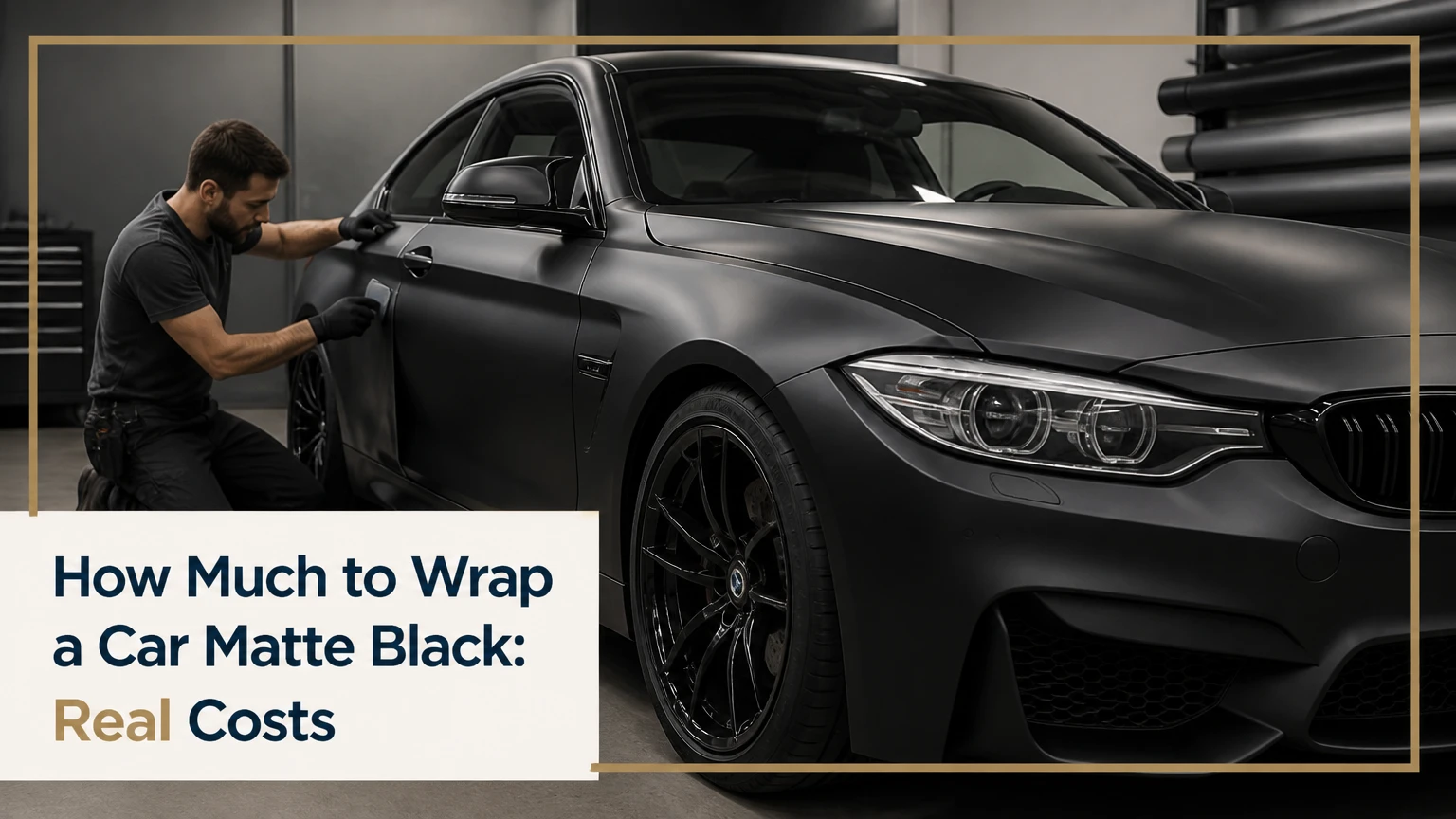
A professional matte black car wrap typically costs $2,500-$6,000 for a full vehicle in the United States, with small coupes near the low end and large SUVs, trucks, luxury cars, or complex body kits above it. A realistic DIY project costs about $700-$1,800, while matte paint and matte PPF usually cost substantially more.
Key Facts at a Glance
- A full professional matte black vinyl wrap usually costs $2,500-$6,000.
- A small coupe or sedan commonly falls between $2,500 and $3,500.
- A full-size SUV or pickup can cost $5,000-$6,500 or more.
- Professional installation normally takes 3-5 business days, including preparation and finishing.
- Standard cast vinyl generally lasts 3-5 years when washed correctly and stored outdoors only occasionally.
- A matte wrap changes appearance and offers limited protection, but it does not replace paint protection film.
How Much Does a Matte Black Car Wrap Cost?
A full matte black vinyl wrap costs $2,500-$6,000 at a reputable professional shop, and the price is determined more by labor, vehicle shape, and preparation than by the black color itself. The material typically accounts for about $500-$1,400, while installation, cleaning, disassembly, trimming, finishing, and overhead make up the larger share.
A shop may quote less than $2,500 for a small, simple car, but a low price often means limited disassembly, visible edge lines, cheaper calendared film, or no correction of damaged paint. A quote above $6,000 can be reasonable for an exotic vehicle, oversized truck, extensive bodywork, difficult removal, or a premium matte PPF system.
Typical full-wrap prices by vehicle
| Vehicle type | Typical film quantity | Professional price | Typical shop time |
|---|---|---|---|
| Small coupe or roadster | 50-60 feet | $2,500-$3,500 | 2-4 days |
| Compact or midsize sedan | 55-65 feet | $3,000-$4,500 | 3-4 days |
| Compact SUV or crossover | 60-70 feet | $4,000-$5,000 | 3-5 days |
| Full-size SUV | 70-85 feet | $5,000-$6,500+ | 4-6 days |
| Pickup truck | 70-90 feet | $4,500-$7,000+ | 4-6 days |
| Sports car with body kit | 60-80 feet | $4,500-$8,000+ | 4-7 days |
These are typical U.S. retail ranges, not a universal rate card. New York, Los Angeles, San Francisco, Toronto, London, and other high-rent markets commonly charge more than smaller cities, while local labor rates and shop demand can move a quote by hundreds of dollars.
What Does the Wrap Price Include?
A complete professional quote should identify the film brand, surface preparation, removable parts, edge treatment, warranty, and post-installation inspection. A bare price that says “full wrap” does not prove that door jambs, bumpers, mirrors, handles, emblems, or difficult trim will receive the same treatment.
| Quote component | Typical amount or duration | Usually included? | What changes the price |
|---|---|---|---|
| Matte cast vinyl | $500-$1,400 | Yes | Brand, finish, roll width, waste |
| Deep cleaning and decontamination | 2-5 hours | Often | Tar, iron deposits, old wax |
| Basic disassembly | 2-8 labor hours | Sometimes | Handles, lamps, trim, badges |
| Paint correction | $300-$1,200 | Usually no | Swirls, oxidation, overspray |
| Paint or body repair | $200-$2,500+ | No | Chips, rust, peeling clear coat |
| Installation labor | 16-35 labor hours | Yes | Panels, curves, sensors, access |
| Removal of old wrap | $500-$2,000 | No | Age, adhesive failure, heat exposure |
| Warranty and inspection | 30-90 minutes | Varies | Brand policy and shop standards |
Most shops do not wrap inside door jambs as part of a standard exterior color change. Jambs, fuel-filler interiors, trunk openings, and engine-bay areas require additional material and disassembly, so ask for those items separately if the original color would be visible.
Which factors increase the quote?
Vehicle complexity increases the price when a panel has deep recesses, sharp body lines, compound curves, exposed edges, or many pieces that require removal. A Porsche 911, Chevrolet Corvette, Tesla Model S, and Ford F-150 can all require more labor than their dimensions alone suggest because their panels, bumpers, vents, and contours create different installation risks.
Paint condition is equally important. Vinyl does not reliably hide peeling clear coat, rust bubbles, loose paint, cracked bumper surfaces, or badly chipped edges. Installers may refuse the job, require repairs first, or exclude paint damage from the workmanship warranty.
How Does a Matte Black Wrap Work?
A matte black vehicle wrap uses thin cast vinyl with pressure-sensitive adhesive, applied over clean painted panels and shaped with controlled heat. Air-release channels in many modern films let installers push trapped air toward an edge, while post-heating stabilizes stretched areas and reduces later shrinkage.
Cast vinyl is generally preferred for full vehicle color changes because it conforms more consistently to curves and has lower shrinkage than inexpensive calendared film. Brands such as 3M, Avery Dennison, ORAFOL, and KPMF publish installation and care guidance for their specific products, and those instructions differ by film series.
The matte effect comes from a textured surface that scatters light instead of producing a sharp reflection. That surface cannot be treated like polished paint. Abrasive compounds, aggressive clay products, rotary polishing, and harsh solvents can create shiny patches that cannot be blended invisibly.
What happens during professional installation?
A quality shop normally follows this sequence:
- Inspect the paint. The installer records chips, rust, dents, peeling clear coat, repainted panels, and existing film.
- Wash and decontaminate. The vehicle is cleaned, dried, and cleared of tar, iron particles, silicone, wax, and embedded road film.
- Remove selected trim. Handles, badges, lamps, mirrors, license-plate brackets, and some moldings may be removed for cleaner edges.
- Clean each panel. Installers use a manufacturer-approved surface cleaner or diluted isopropyl alcohol, allowing the panel to dry fully.
- Apply and conform the film. The sheet is positioned, squeegeed, heated where necessary, and trimmed with controlled relief cuts.
- Post-heat stressed areas. Edges, recesses, corners, and stretched sections receive the film maker’s specified post-heating treatment.
- Reassemble and inspect. The shop checks edges, seams, sensors, trim alignment, bubbles, contamination, and lifting before delivery.
The exact post-heating temperature is film-specific. Many professional systems use a target near 185-203°F, or 85-95°C, but installers should follow the product technical bulletin rather than apply one number to every vinyl.
A useful practitioner rule is simple: if a quote omits the film series and warranty terms, compare the installation process before comparing the price. Cheap vinyl and rushed preparation create most premature failures.
Which Matte Finish Should You Choose?
Standard matte black is the least reflective and usually the lowest-priced option, satin black is easier to live with, matte metallic adds visual depth, and textured films make the surface more distinctive but harder to repair. Finish choice affects cleaning, visible defects, replacement matching, and total material cost.
| Finish | Typical material cost | Visual character | Cleaning difficulty | Typical life |
|---|---|---|---|---|
| Standard matte black | $500-$800 | Flat, low reflection | High | 3-5 years |
| Satin black | $600-$900 | Soft, low sheen | Medium | 3-5 years |
| Matte metallic black | $700-$1,100 | Fine metallic depth | Medium-high | 3-5 years |
| Textured carbon black | $900-$1,400 | Raised or patterned surface | High | 2-4 years |
| Matte color-shift film | $900-$1,500 | Changes hue by angle | High | 2-5 years |
Pure matte black shows fingerprints, dried mineral spots, greasy marks, and uneven cleaning quickly because surface contamination changes the way light scatters. Satin black often suits daily drivers better because its slight sheen masks minor handling marks and dust.
Textured or carbon-fiber film is not automatically stronger. A raised texture can collect dirt, complicate repairs, and make a replacement panel visibly different if the product batch changes.
How Long Does Installation Take?
A professional matte black wrap usually takes 3-5 business days, although a compact car with sound paint may take two days and a large or damaged vehicle may require a week. Preparation, trim removal, adhesive settling, reassembly, and quality control account for much of the calendar time.
A normal handoff includes a cool, clean inspection area and instructions to avoid washing the car immediately. The manufacturer’s care sheet controls the waiting period, because adhesive stabilization varies by film, temperature, humidity, and the amount of stretching used during installation.
What should you inspect at delivery?
Check the vehicle in bright, indirect light rather than under a dim shop ceiling. Look at:
- Door edges, wheel arches, bumper corners, mirror caps, and trunk seams.
- White stress marks, wrinkles, trapped contamination, bubbles, and visible knife cuts.
- Sensor apertures, cameras, parking-assistance components, and charging-port doors.
- Reinstalled emblems, trim gaps, lamps, handles, and license-plate mounts.
- Areas where the original paint color remains visible from normal standing positions.
Small edge lines may be unavoidable on certain panels, but lifting, open seams, deep creases, and unsealed stretched recesses warrant correction before final payment or warranty acceptance.
Is a DIY Matte Black Wrap Cheaper?
DIY wrapping can reduce the project cost to $700-$1,800, but a first-time full-car installation is significantly harder than applying a hood, roof, or mirror caps. The material cost is only one part of the budget because beginners waste film, need replacement panels, and may damage the factory finish during removal.
| DIY expense | Typical quantity | Typical cost | Practical note |
|---|---|---|---|
| Cast wrap vinyl | 60-90 feet | $500-$1,400 | Buy extra for mistakes |
| Heat gun | 1 unit | $30-$150 | A thermometer improves control |
| Squeegees and felt edges | 2-4 tools | $20-$80 | Replace worn felt |
| Knifeless tape and masking tape | 1-3 rolls | $25-$75 | Reduces exposed paint cuts |
| Cleaning supplies | 1 kit | $30-$100 | No wax or silicone residue |
| Work lights and stands | 1 setup | $75-$300 | Useful for large panels |
| Replacement film | 5-20 feet | $50-$300 | Common beginner overage |
DIY is most realistic in a clean, enclosed space between approximately 60°F and 90°F, with enough room to open doors and walk around the vehicle. A full wrap can consume 30-60 hours for a beginner, compared with roughly 16-35 labor hours for an experienced shop.
The hardest panels are usually bumpers, mirrors, door handles, rocker panels, and deep recesses. Start with a roof or hood only if the goal is practice rather than a guaranteed showroom finish.
When should you avoid DIY installation?
Avoid a first full wrap when the vehicle has soft or recently repaired paint, extensive rust, peeling clear coat, complex aftermarket bodywork, or a high resale value. Removal can lift weak paint, and matte film exposes installation defects that gloss film may visually disguise.
How Does Matte Vinyl Compare With Paint and Plasti Dip?
Matte vinyl is usually the best choice for a reversible appearance change, matte paint is the most permanent option, and Plasti Dip is the lowest-cost temporary alternative. Matte PPF is the strongest protection option, but it is priced as a protection system rather than an economical color change.
| Option | Typical installed cost | Lifespan | Reversible? | Protection level |
|---|---|---|---|---|
| Matte vinyl wrap | $2,500-$6,000 | 3-5 years | Usually yes | Minor scuffs and UV exposure |
| Satin vinyl wrap | $2,800-$5,500 | 3-5 years | Usually yes | Minor surface contact |
| Matte automotive paint | $6,000-$12,000+ | Long-term | No | Paint itself only |
| Plasti Dip or liquid wrap | $1,200-$2,500 | 1-3 years | Yes | Low to moderate |
| Matte PPF | $6,000-$10,000+ | 7-10 years | Usually yes | Strong stone-chip protection |
Vinyl does not stop highway gravel, deep door dings, vandalism, or impact damage. Matte PPF, including products such as XPEL STEALTH, combines a matte appearance with a thicker protective film, but it costs more and may not match every desired shade of black.
Matte paint can produce the most integrated finish, yet repairs are difficult because the sheen must match across adjacent panels. A wrapped panel can usually be replaced independently, although an exact color match depends on film availability and batch consistency.
How Should You Maintain a Matte Black Wrap?
Wash a matte black wrap by hand with clean water, a pH-neutral vehicle shampoo, a soft microfiber wash mitt, and separate towels for wheels and bodywork. Rinse bird droppings, fuel, tree sap, bug residue, and oily fingerprints quickly because contamination can stain or create glossy patches.
Use a two-bucket method or a pressure washer with a wide spray pattern held at a safe distance. Do not aim a pressure washer directly at edges, seams, damaged areas, or badges.
Avoid these products and techniques
- Automatic brush washes that contact edges and create abrasion.
- Wax, abrasive polish, compound, glaze, or products designed to increase gloss.
- Strong petroleum solvents, unapproved degreasers, and aggressive adhesive removers.
- Scrubbing dried contamination with a rough towel.
- Parking for long periods beneath sap-producing trees or in intense desert sunlight.
A wrap-safe matte detailer can help remove fingerprints, but test any chemical on an inconspicuous area first. Manufacturers differ, so the film’s care guide outranks generic detailing advice.
How long will matte black vinyl last?
A professionally installed matte vinyl wrap commonly lasts 3-5 years, with outdoor parking, hot climates, neglected washing, and poor paint preparation shortening that period. Garage storage, regular hand washing, and prompt contamination removal can extend useful appearance, but no care routine makes vinyl permanent.
The wrap should be inspected every few months around wheel arches, door edges, bumpers, and recessed trim. Small lifting areas can spread when dirt enters the adhesive boundary, so early warranty inspection is preferable to attempting a home repair with glue.
What Problems Occur With Matte Wraps?
The most common matte-wrap failures are lifting edges, stretched white marks, contamination bubbles, glossy abrasion, and adhesive residue after removal. Each failure usually points to a specific cause: inadequate preparation, excessive tension, poor installation technique, incompatible chemicals, or film that remained on the car too long.
| Visible problem | Likely cause | Correct response |
|---|---|---|
| Edge curls after days | Dirt, inadequate post-heating, tension | Photograph it and request warranty inspection |
| White or gray stretch marks | Film overstretched around a recess | Replace the panel rather than polishing it |
| Small bumps beneath film | Dust, lint, or incomplete cleaning | Have the installer assess before trimming |
| Shiny patch on matte surface | Abrasion, solvent, or polishing | Replace affected section if cleaning fails |
| Glue remains after removal | Aged adhesive or excessive heat | Use approved remover and controlled heat |
| Paint lifts during removal | Weak, repaired, or poorly bonded paint | Stop removal and document the damage |
One counterintuitive fact matters: matte film can hide fine paint swirl marks while making contamination more visible. The wrap changes reflected light, not the physical condition beneath it.
Another professional rule is to avoid wrapping over failing clear coat. Vinyl may adhere to the loose layer temporarily, but removing the wrap can pull away larger sections of paint and create a dispute over responsibility.
How Can You Get an Accurate Matte Black Wrap Quote?
Request an itemized written estimate that names the vehicle, film series, coverage area, preparation work, removable parts, warranty, tax, and removal terms. Comparing two total prices without those details often compares different scopes of work.
Send each shop the same information:
- Make, model, year, body style, and current paint color.
- Photos of every side, including chips, rust, dents, peeling paint, and aftermarket parts.
- Desired finish, such as 3M 2080 Matte Black, Avery Dennison Satin Black, or another specified product.
- Whether jambs, roof rails, spoilers, badges, handles, and mirrors should be wrapped.
- Intended parking conditions and whether an old wrap must be removed.
- Required completion date and whether a loaner vehicle affects scheduling.
Ask whether the estimate includes paint correction, disassembly, edge wrapping, post-heating, rework, warranty coverage, and removal. A credible shop should explain which painted areas remain exposed and identify damage that vinyl cannot conceal.
The Bottom Line
For the query how much to wrap a car matte black, budget $2,500-$6,000 for a professional full vinyl wrap, $700-$1,800 for a serious DIY attempt, and more than $6,000 for matte PPF or complicated luxury vehicles. The best value usually comes from quality cast vinyl, honest paint preparation, and a written scope rather than the lowest advertised price.
Choose satin black when the car is a daily driver and easier maintenance matters. Choose standard matte black when the flat, non-reflective appearance is the priority. Choose matte PPF when stone-chip protection and long service life justify the higher cost.
Frequently Asked Questions
Does a matte black wrap damage factory paint?
A professionally installed and removed vinyl wrap normally protects sound factory paint from light UV exposure and minor surface contact. Damage becomes more likely when the paint is peeling, poorly repaired, rusted, repainted without proper curing, or exposed to excessive removal heat. Ask the installer to document existing defects before work begins.
Can a leased car receive a matte black wrap?
A leased car can usually receive a removable wrap, but the lease agreement may require approval and restoration to the original appearance before return. Keep the installation invoice, film information, and removal documentation. A wrap that exposes paint damage or leaves adhesive residue can create charges during the inspection.
Can a wrap cover dents and scratches?
Vinyl can follow shallow, stable surface imperfections, but it does not repair dents, rust, peeling clear coat, deep scratches, or cracked plastic. A dent may remain visible through matte film because the altered surface changes the way light scatters. Repair bodywork before wrapping when appearance and warranty matter.
Is matte black harder to clean than glossy black?
Matte black vinyl is harder to keep visually uniform because fingerprints, mineral spots, grease, and dried insects change its surface appearance. Hand washing with a pH-neutral shampoo and soft microfiber tools is safer than brush washing. Wax and polishing products can create permanent glossy areas on matte film.
Can a matte wrap be polished or ceramic coated?
Matte vinyl should not be polished because abrasives alter the surface texture and create shiny patches. A manufacturer-approved ceramic coating designed for matte film may improve cleaning and chemical resistance, but it does not prevent dents or stone chips. Confirm compatibility with the film brand before application.
What happens when matte black vinyl is removed?
Removal usually involves controlled heat and slow peeling, after which adhesive residue may need an approved remover. Sound original paint generally remains intact, but weak, oxidized, repainted, or poorly bonded surfaces can lift. The longer a wrap remains exposed to heat and sunlight, the greater the potential removal difficulty.