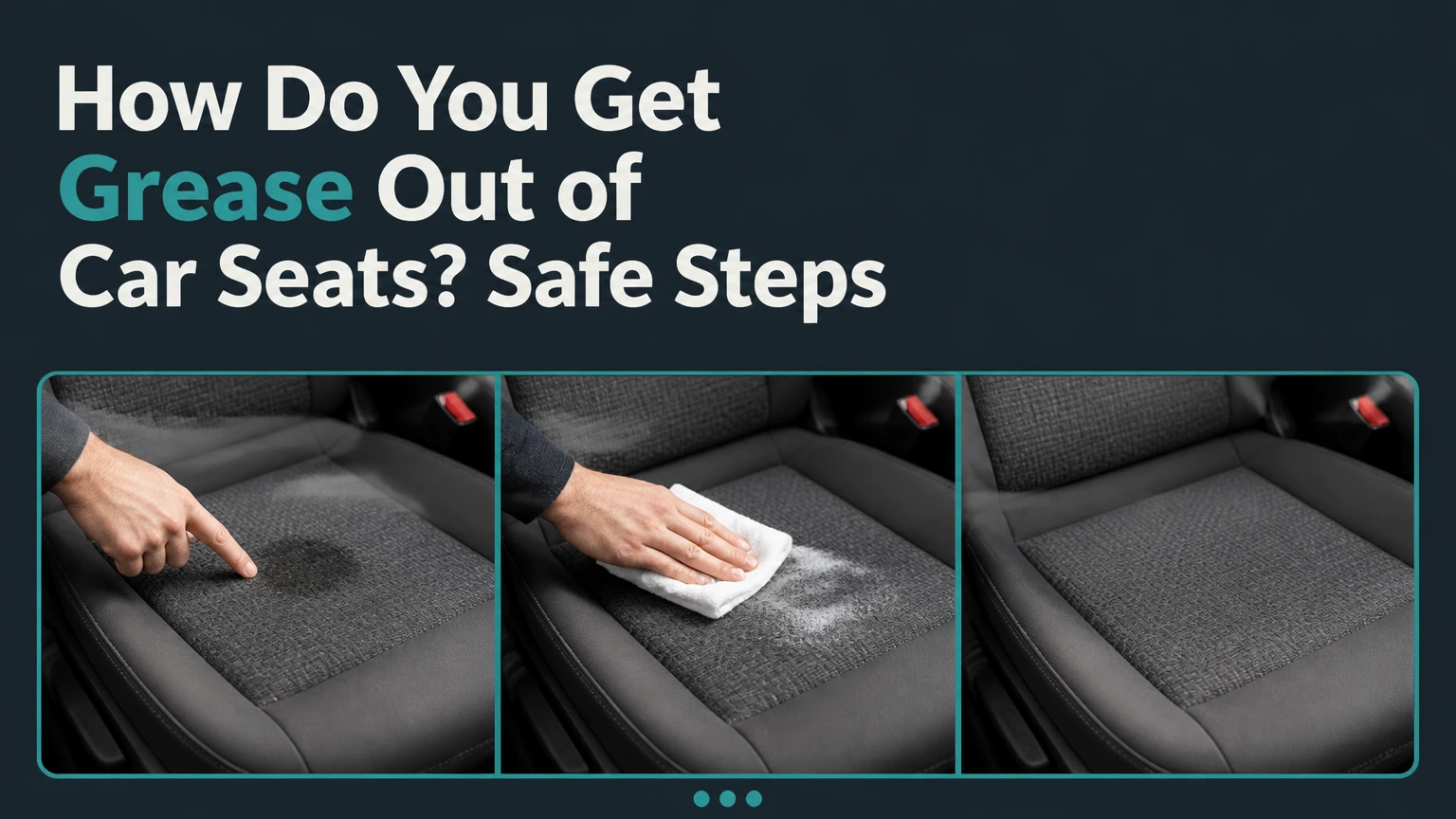
To get grease out of car seats, remove the excess, absorb fresh oil, then use a small amount of diluted degreasing cleaner suited to the seat material. Blot instead of scrubbing, avoid soaking the foam, and dry the upholstery completely. Cloth, leather, vinyl, and Alcantara require different final-cleaning methods.
Key Facts at a Glance
Water alone does not dissolve grease because grease is oil-based and water is water-based.
Fresh grease responds best to scraping, blotting, and an absorbent powder before wet cleaning.
A practical cloth-seat solution is 1 teaspoon of grease-cutting dish soap in 1 cup of warm water.
Leather should receive a dedicated leather cleaner or diluted pH-neutral soap, never bleach, acetone, or undiluted alcohol.
Keep liquid away from seat-belt pretensioners, electrical connectors, heating elements, and side-airbag seams.
Most small food stains take 20-45 minutes of active work plus 2-6 hours of drying.
What to Do First When Grease Spills
The first response determines how far grease penetrates a car seat. Park in a shaded, ventilated place, remove solid material with a plastic scraper, and press a dry microfiber towel onto liquid grease without rubbing. Do not begin with hot water, a steam cleaner, or a large spray of degreaser.
Use a white or light-colored towel so dye transfer becomes visible. Work from the outside edge toward the center, because an outward motion enlarges the stain and pushes oil into clean fibers. If the grease is thick, place a plastic bag containing ice over the residue for 3-5 minutes, then lift the softened or chilled mass with a plastic card. Do not use a sharp blade.
Seat construction matters. Upholstery fabric sits over foam, while leather and vinyl usually have a coated surface that can lose gloss when aggressively cleaned. Perforated leather adds another risk: liquid can enter the holes and remain around the foam.
Identify the Seat Material
Read the vehicle’s owner’s manual or inspect an inconspicuous area before choosing a cleaner. A fabric seat absorbs liquid into woven fibers, coated leather has a protective finish, vinyl is a synthetic polymer surface, and Alcantara or microsuede has a directional nap that can become shiny when rubbed.
Never assume a seat is genuine leather because the vehicle has a leather interior package. Many vehicles combine leather seating surfaces with vinyl side panels, and some use synthetic leather throughout. Test every product on a hidden area for 10 minutes, then check for fading, tackiness, swelling, or gloss change.
Why Grease Needs a Different Cleaner
Grease removal works through absorption, emulsification, or controlled dissolution. Absorbent powders draw some liquid oil away from a porous surface; surfactants surround oil droplets so water can carry them away; solvents dissolve particular oily compounds but can also dissolve dyes, coatings, adhesives, or plasticizers.
A grease stain therefore needs a staged process. Mechanical removal handles the bulk, powder reduces the remaining liquid load, and a low-moisture surfactant solution removes the thin residue. Water alone usually spreads the stain because water cannot bond effectively with nonpolar oil.
The American Cleaning Institute explains that surfactants “reduce the surface tension of water,” which helps cleaning fluid spread and interact with oily soil. The practical implication is simple: a few drops of detergent in controlled moisture are more useful than flooding a seat with plain water.
Choose the Method by Grease Type
| Grease or oil | Typical example | First treatment | Avoid |
|---|---|---|---|
| Fresh food grease | Butter, fries, mayonnaise | Scrape, cornstarch, diluted dish soap | Hot water before absorption |
| Cosmetic oil | Sunscreen, lotion, hair product | Blot, powder, leather or fabric cleaner | Aggressive alkaline degreaser |
| Automotive oil | Engine oil, bearing grease | Scrape, absorbent powder, fabric-safe degreaser | Household bleach and acetone |
| Synthetic lubricant | Chain lube, lithium grease | Remove bulk, test solvent-free cleaner | Undiluted petroleum solvent |
| Cured black grease | Mechanic’s residue | Professional fabric extraction after testing | Repeated soaking at home |
How Do You Get Grease Out of Car Seats?
The safest sequence is a six-step low-moisture process: remove bulk grease, absorb residue, vacuum the powder, apply diluted cleaner, extract the soil, and dry the seat. A small fabric stain usually takes 20-45 minutes to clean, but complete drying commonly takes 2-6 hours.
Before You Start
| Item | Quantity or specification | Typical cost |
|---|---|---|
| White microfiber towels | 4-6 towels, 300-500 GSM | $6-$15 |
| Plastic scraper or old card | 1 blunt tool | $0-$5 |
| Cornstarch or baking soda | 2-4 tablespoons | $1-$4 |
| Dish soap or upholstery cleaner | 1 teaspoon per cup of water | $3-$12 |
| Soft brush | 1, 2-3 inch nylon brush | $5-$12 |
| Vacuum or wet-dry extractor | 1 machine, optional extractor | $0-$150 |
Set aside 30-60 minutes for the cleaning stage. Open the doors or windows, but keep the seat out of direct intense sunlight while a cleaner is wet. Read product labels, especially when a product contains solvents, citrus oil, petroleum distillates, or strong alkaline builders.
Step 1: Remove Excess Grease
Lift solid or semi-solid grease with a plastic scraper, spoon edge, or old payment card. Hold the tool nearly parallel to the surface and move from the stain perimeter toward the center. Transfer each lifted portion to a paper towel instead of wiping it across another section.
Press a dry microfiber towel onto liquid oil for 10-20 seconds at a time. Replace the towel surface as soon as it looks oily. A towel that is already saturated transfers grease back into the upholstery.
You will know it worked when: no raised grease remains and the towel picks up less oil after two or three presses.
Common mistake: rubbing in circles. Circular rubbing spreads the stain and drives oil below the visible fabric surface.
Step 2: Absorb Surface Grease
Cover a fresh fabric stain with 2-4 tablespoons of cornstarch, baking soda, or talcum-free absorbent upholstery powder. Cornstarch is generally the stronger choice for liquid food or cosmetic oil because it clumps visibly as it captures moisture and oil.
Leave the powder for 30-60 minutes on a fresh spill. For a larger or older surface stain, use 2-8 hours, but keep the vehicle dry and prevent passengers from grinding powder into the fabric. Vacuum slowly with an upholstery attachment.
Use cornstarch cautiously on leather. Do not push powder into perforations, stitching, suede nap, seat controls, or ventilation holes. Powder cannot remove grease that has chemically bonded to a finish or penetrated deeply into foam.
You will know it worked when: the powder has formed slightly darker clumps and the stain looks lighter before wet cleaning.
Common mistake: wetting the powder into a paste. That creates a second residue and can spread the original oil.
Step 3: Prepare a Low-Moisture Cleaner
Mix 1 teaspoon of grease-cutting dish soap with 1 cup, or 240 milliliters, of warm water. Use the foam rather than pouring the liquid directly onto a cloth seat. For a commercial automotive interior cleaner, follow the label dilution; a typical concentrated interior cleaner may require a 10:1 water-to-product ratio, but the label takes priority.
Use warm water, approximately 30-40°C, not boiling water. High heat can soften some synthetic coatings, distort adhesives, or set certain oily residues. A small bowl of solution is safer than a spray bottle because it limits accidental oversaturation.
For a fabric seat, lightly dampen a soft brush or towel. For leather or vinyl, apply cleaner to the towel rather than the seat. Avoid products containing bleach, acetone, ammonia, undiluted isopropyl alcohol, or strong engine-degreasing solvents.
You will know it worked when: the cleaner creates controlled foam and the towel feels damp, not wet enough to drip.
Common mistake: increasing detergent concentration because the stain looks difficult. Excess soap leaves a sticky film that attracts dust and creates a new dark patch.
Step 4: Clean Cloth Seats
Work in a small area, approximately 10 by 10 centimeters, so the cleaner does not dry unpredictably. Dab the foam onto the stain, wait 2-5 minutes, and agitate gently with a soft nylon brush using short strokes aligned with the fabric weave.
Blot the loosened grease with a clean microfiber towel. Repeat once if the towel continues to pick up visible oil. Do not scrub until the fabric feels hot or fuzzy, because friction can damage the surface fibers and create pilling.
Remove detergent with a second towel dampened in clean water. Press, lift, and rotate the towel rather than wiping side to side. If available, use a wet-dry extractor with one or two slow passes, followed by two suction-only passes.
You will know it worked when: the towel stops showing an oily transfer and the fabric has an even appearance while damp.
Common mistake: cleaning only the dark center. Residue can wick outward and leave a ring, so feather the final damp-blotting process beyond the original spot.
Step 5: Clean Leather and Vinyl Seats
For coated leather or vinyl, place a small amount of pH-neutral leather or interior cleaner on a microfiber towel. Wipe the affected panel gently, then remove residue with a second cloth lightly dampened with water. Dry the surface immediately with a clean towel.
Condition coated leather only after the surface is clean and fully dry. A leather conditioner can restore a uniform feel to a finished leather surface, but conditioner cannot remove deeply absorbed motor oil or repair a damaged pigment layer.
Vinyl normally does not need leather conditioner. Use a vinyl protectant only if the manufacturer permits it, and keep protectant away from steering wheels, pedals, seat-belt webbing, and control switches because slick residue reduces grip.
Aniline, nubuck, suede, and Alcantara need separate care. Blot and brush these materials according to the vehicle manufacturer’s instructions; do not apply dish soap, leather conditioner, or a wet brush without a material-specific test.
You will know it worked when: the surface feels dry and uniform, with no sticky film, tide mark, or new glossy patch.
Common mistake: applying conditioner to a still-greasy surface. Conditioner can seal residue into the finish and make later correction harder.
Step 6: Dry the Seat Completely
Leave doors or windows open in a secure, ventilated location and run the vehicle’s fan without directing extreme heat at the seat. Press dry towels onto the cleaned area after 10 minutes, then repeat once. A small seat section typically dries in 2-6 hours, while foam saturated by an extractor can take 12-24 hours.
Do not reinstall a child restraint or cover the seat while moisture remains. A cover traps humidity against the upholstery and foam. Avoid placing a household hair dryer close to leather, vinyl, plastic trim, or seat seams.
You will know it worked when: the seat no longer feels cool or damp compared with the adjacent upholstery, and no musty odor develops after 24 hours.
Common mistake: judging success while the fabric is wet. Wet fibers can temporarily hide a residual oil shadow that becomes visible after drying.
Which Grease-Removal Method Should You Choose?
The best method depends on seat material, grease age, and penetration depth. Absorbent powder is the lowest-risk first step for fresh oil, diluted dish soap suits light fabric contamination, dedicated automotive cleaners handle heavier fabric soil, and professional extraction is safer for deep foam contamination.
| Method | Best use | Working time | Main risk |
|---|---|---|---|
| Cornstarch or baking soda | Fresh surface oil | 30-60 minutes | Powder residue in perforations |
| Diluted dish soap | Light food grease on fabric | 20-45 minutes | Soap film or wet foam |
| pH-neutral interior cleaner | Fabric, vinyl, coated leather | 15-30 minutes | Finish change if untested |
| Fabric-safe degreaser | Heavy mechanic’s grease on cloth | 10-30 minutes | Dye fading or harsh residue |
| Professional extraction | Deep oil in cushion foam | 1-3 hours | Cost and extended drying |
When Should You Use a Commercial Degreaser?
Use a commercial automotive degreaser only when mild detergent fails on tested fabric and the product explicitly permits interior upholstery. Engine-bay degreasers are not automatically safe for car seats, even when their labels describe them as “citrus” or “biodegradable.”
Test a diluted product under the seat or behind the seatback for 10 minutes. Check the towel for dye transfer and the material for texture or color change. Apply the smallest amount needed, keep the dwell time within the label instruction, and extract or blot all residue.
A dedicated pH-neutral interior cleaner is a safer default for mixed interiors. Heavy industrial grease may still require a detailer because repeated home applications can create a larger wet boundary than the original stain.
Is Steam Cleaning Safe for Car Seats?
Steam cleaning is conditionally safe for many fabric seats but is a poor first choice for leather, vinyl, Alcantara, or unknown synthetic upholstery. Steam can loosen oil, yet heat and moisture may damage coatings, adhesives, foam, seat heaters, wiring, or side-airbag deployment seams.
Professional detailers typically use hot-water extraction with controlled solution and suction rather than holding a high-temperature steam nozzle against the seat. Steam temperature at the nozzle can exceed 100°C, while the seat surface receives a lower and variable temperature, so generic claims about a “safe” 100-160°C range are not a reliable consumer instruction.
Do not steam directly over airbag labels, seat electronics, heating controls, or perforated leather. Consult the owner’s manual before using heat near a seat-mounted airbag.
How Long and How Much Does Grease Cleaning Take?
DIY grease removal usually costs $1-$20 and takes 20-60 minutes of active work, while professional automotive upholstery cleaning commonly costs about $50-$150 for a localized service in North America. Deep contamination, mobile-service travel, leather repair, and full-interior cleaning can increase the quote.
| Situation | DIY time | Typical DIY cost | Professional range |
|---|---|---|---|
| Fresh food spot on cloth | 20-35 minutes | $1-$8 | $50-$90 |
| Dried cosmetic oil | 30-60 minutes | $5-$15 | $60-$120 |
| Mechanic’s grease on fabric | 45-90 minutes | $10-$25 | $80-$180 |
| Oil in seat foam | 2-6 hours drying | $15-$40 | $100-$250 |
| Leather coating damage | Not reliably DIY | $10-$30 for cleaner | $100-$300 for repair |
Prices vary by city, vehicle size, stain area, and whether the detailer performs extraction. Ask whether the quote includes chemical residue removal and drying, not only surface agitation.
Common Mistakes and How to Fix Them
A Dark Ring Appears After Drying
A dark ring usually results from soil-laden moisture moving to the edge of a wet area. Reclean the entire upholstery panel or cushion section from seam to seam with minimal cleaner, then blot evenly rather than treating only the ring.
The Grease Smell Remains
A persistent odor after the surface looks clean usually indicates oil in the foam or seat crevice. Do not mask it with fragrance; extract the cushion with controlled water and suction, then ventilate for 12-24 hours. An odor neutralizer can help after source removal, but it cannot replace extraction.
The Leather Looks Dull
Dullness can indicate cleaner residue, a removed protective finish, or changed surface sheen. Wipe once with a barely damp microfiber cloth, dry the panel, and compare it with an adjacent area. If the coating is visibly damaged, stop applying products and consult an automotive leather repair technician.
The Seat Becomes Sticky
Sticky upholstery usually contains concentrated soap, protectant, or solvent residue. Use a clean, lightly damp towel to remove residue in several passes, drying between passes. Do not add more cleaner.
The Stain Keeps Returning
A returning stain often comes from grease beneath the visible surface, especially around seams and seat piping. Mark the area while dry, use extraction rather than repeated surface scrubbing, and inspect the underside of a removable cover if the vehicle design permits safe removal.
The Fabric Loses Color
Color loss means the product or friction has affected the dye or finish. Stop immediately, rinse residue with a controlled damp towel, and allow the area to dry. A professional may blend or recolor the panel, but a household cleaner cannot reliably restore faded automotive fabric.
What Changes for Specific Situations?
Removing French-Fry or Butter Grease
Fresh food grease responds well to scraping, cornstarch, and diluted dish soap. Remove crumbs first, because brushing crumbs through oil creates a larger abrasive patch. After cleaning, rinse away detergent carefully because food oils combined with soap residue can produce a sour smell.
Removing Engine Oil or Workshop Grease
Engine oil and lithium grease require more bulk removal before water touches the seat. Wear nitrile gloves, use several disposable towels, apply absorbent powder for 30-60 minutes, and choose a fabric-safe automotive degreaser only after a color test.
If black grease has entered the foam, household treatment may make the stain lighter without removing the odor. Professional extraction is more economical than repeatedly wetting the seat and risking mildew.
Removing Grease from Perforated Leather
Keep powder and liquid out of perforations. Apply cleaner to a towel, not directly to the seat, and use a soft brush only on the surrounding solid surface. Wipe across the panel in controlled passes, then dry immediately with airflow.
Removing Grease from Alcantara or Microsuede
Alcantara and microsuede should receive manufacturer-approved care because nap direction and dye stability vary. Blot fresh grease, remove solids with a plastic tool, and avoid oily conditioners. A professional upholstery specialist is the safer option for cured mechanic’s grease.
When Is Professional Cleaning the Better Choice?
Professional cleaning makes sense when grease covers more than one seat panel, penetrates cushion foam, comes from machinery, returns after two controlled treatments, or sits near electrical and airbag components. Professional equipment can combine measured detergent, agitation, extraction, and drying instead of adding repeated surface moisture.
A detailer should identify the upholstery material, explain the planned chemical, and state how the seat will be dried. Ask for a small test area before full treatment. A reputable technician should not promise complete removal from sun-faded fabric, damaged leather coating, or oil that has chemically altered the foam.
A stain is not always a cleaning problem. If the seat has torn fabric, swollen vinyl, cracked coating, or a persistent petroleum odor after extraction, replacement of a removable cover or professional recoloring may provide a better result than stronger chemicals.
FAQ
Can baking soda remove oil from a car seat?
Baking soda can absorb some fresh surface oil, but it does not chemically dissolve cured grease. Leave it on a fresh fabric stain for 30-60 minutes, vacuum it thoroughly, and follow with a suitable cleaner. Cornstarch often absorbs liquid food grease more effectively, while neither powder is a complete solution for oil in foam.
Is Dawn safe for cloth car seats?
A small amount of grease-cutting dish soap can be used on cloth seats when diluted, tested, and removed completely. Mix approximately 1 teaspoon with 1 cup of warm water, apply the foam rather than flooding the upholstery, and blot with clean water. Avoid heavy concentrations that leave a sticky residue.
Can WD-40 remove grease from car upholstery?
WD-40 is itself an oil-based product, so it is a poor choice for removing grease from car seats. WD-40 may dissolve or loosen some residues on metal, but applying it to fabric, leather, or vinyl can enlarge the oily mark and create a second contamination problem.
How do you remove old, dried grease from a car seat?
Remove hardened residue with a blunt plastic scraper, apply cornstarch for 2-8 hours, vacuum it, and use a tested fabric-safe cleaner in small sections. Old grease may require two controlled treatments or professional extraction. Do not compensate for age by using bleach, acetone, boiling water, or aggressive scrubbing.
How do you dry a wet car seat after cleaning?
Blot repeatedly with dry microfiber towels, use ventilation, and run the vehicle fan without extreme heat. Allow 2-6 hours for a lightly damp surface and up to 12-24 hours for extracted foam. Keep covers and child restraints off the seat until the upholstery feels dry and has no musty odor.
Will grease permanently stain a car seat?
Grease is not always permanent, especially when treated before it reaches the foam, but permanent discoloration can occur when oil alters fabric dye, attracts embedded soil, or damages a leather coating. Two gentle, properly rinsed treatments are a reasonable home limit before professional cleaning or repair.
The Bottom Line
How do you get grease out of car seats? Remove the bulk, absorb fresh oil, apply a small amount of material-safe diluted cleaner, blot out the residue, and dry the seat completely. Use dish soap mainly for light cloth contamination, dedicated products for coated leather or vinyl, and professional extraction when mechanic’s grease has reached the foam.