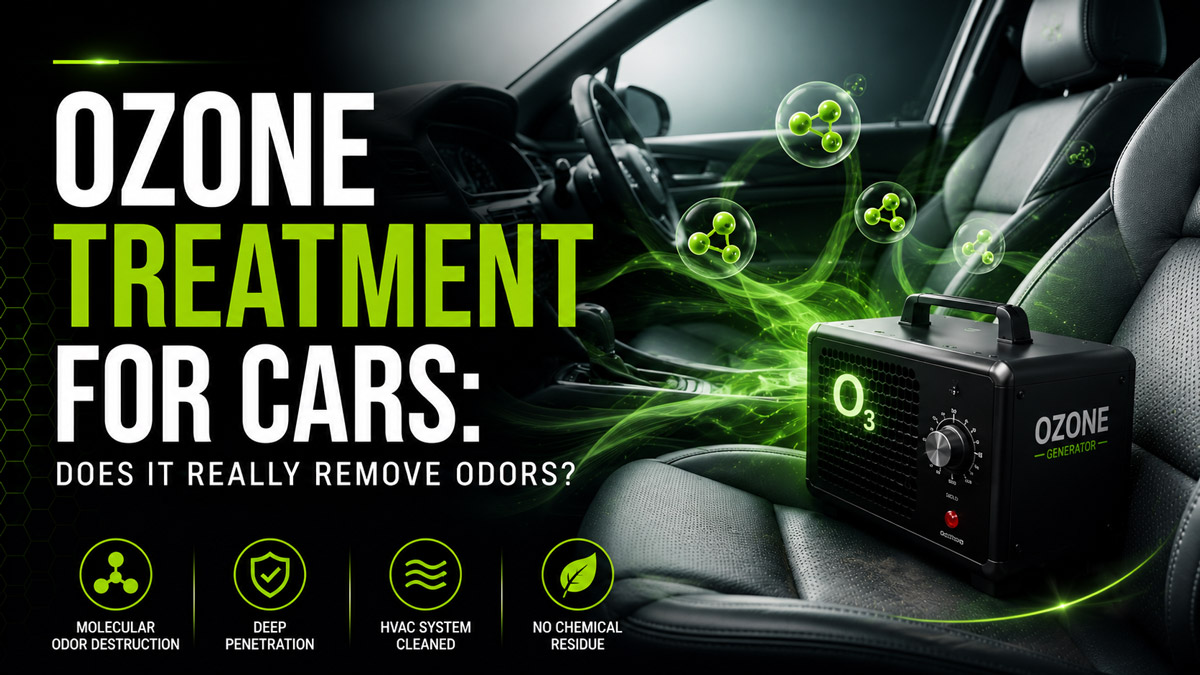
Unpleasant vehicle smells can turn every drive into an uncomfortable experience. Whether you recently purchased a used vehicle saturated with old cigarette smoke, spilled milk under a seat during a road trip, or noticed a musty damp smell blowing through your air conditioning vents, getting rid of embedded car odors is notoriously difficult. Standard air fresheners, hanging cardboard trees, and perfume sprays only mask foul scents temporarily. Once the fragrance wears off, the underlying bad smell returns just as strong as before.
This frustration leads many vehicle owners and professional detailers to consider automotive ozone treatment. Marketed as a heavy duty solution capable of destroying the toughest smells, ozone treatment is widely used across the auto detailing industry. But does ozone treatment for cars really remove odors permanently, or is it just another overhyped detailing trend?
The short answer is yes. Ozone treatment genuinely eliminates stubborn vehicle smells by chemically destroying odor causing molecules at a molecular level. However, ozone generators are not magic wands. If used incorrectly, ozone gas can fail to solve the problem, or worse, cause permanent chemical damage to your vehicle interior electronics, leather seats, and rubber dashboard seals.
This ultimate guide explores the exact science of ozone oxidation, what smells it can and cannot destroy, crucial safety rules, step by step application methods, potential material risks, and safer alternative odor removal treatments.
How Ozone Oxidation Eliminates Vehicle Odors
To understand why automotive ozone treatment works when traditional cleaners fail, you must understand the basic chemistry of scent elimination. Standard car deodorizer sprays rely on heavy synthetic fragrances that sit on top of bad odors. They attempt to overpower your olfactory senses rather than removing the smell source.
Ozone treatment operates on a completely different chemical principle called oxidation.
The Molecule Transformation: From Oxygen O2 to Ozone O3
The air we breathe is primarily composed of stable diatomic oxygen, which consists of two oxygen atoms bound together (O2). An automotive ozone generator uses high voltage electrical corona discharge or intense ultraviolet light to split these standard oxygen molecules into single oxygen atoms.
These single atoms quickly attach to surrounding O2 molecules, creating triatomic ozone (O3). Ozone is an extremely reactive, unstable gas. Because O3 naturally wants to return to its stable O2 state, it actively seeks out organic compounds, gas molecules, and airborne micro organisms in order to shed its third oxygen atom.
The Vehicle Odor Oxidation Process
When an ozone machine runs inside a closed car cabin, the gas fills every cubic inch of space. As ozone molecules collide with volatile organic compounds (VOCs) such as tobacco resin, pet dander proteins, mold spores, or volatile bacterial gases, the third oxygen atom breaks away and attaches itself to the odor molecule.
This chemical reaction alters the molecular structure of the odor compound entirely. For example:
- Tobacco smoke resins are converted into non volatile oxides and inert compounds.
- Bacterial cell membranes are oxidized and ruptured, killing the living bacteria instantly.
- Mold and mildew spores are destroyed on contact, stopping active organic off gassing.
Because the molecular structure of the scent compound is permanently changed, the odor is not covered up. It is completely neutralized and ceases to exist.
Deep Cabin and HVAC System Penetration
One major advantage of ozone gas over liquid cleaners is its physical state. Gas travels anywhere air can flow. When you run your car climate control system on recirculate mode during an ozone session, the gas penetrates deep into areas liquid sprays can never reach:
- High density seat cushions and polyurethane foam padding.
- Woven cloth carpet backing and thick floor mat fibers.
- The fabric vehicle headliner and pillar upholstery.
- Deep inside interior air conditioning ducts and the HVAC evaporator core.
Zero Persistent Chemical Residue
Unlike toxic chemical liquid sprays or harsh chemical foggers, ozone leaves no lingering chemical film on your steering wheel or glass. Because ozone is inherently unstable, any O3 gas that does not react with odor molecules will naturally decay back into pure, breathable diatomic oxygen (O2) within roughly 30 minutes to 2 hours after the machine turns off.
What Ozone Can and Cannot Remove: Key Limitations
While ozone generator car odor removal is highly effective, believing ozone solves every single odor problem is a costly mistake. Understanding the strict limitations of ozone treatment will save you time, money, and frustration.
Smells Ozone Eliminates Successfully
Ozone gas excels at destroying airborne, surface bound, and fabric embedded organic scents, including:
- Heavy tobacco and cigarette smoke residue
- Mildew and damp mold odors in carpet fibers
- Pet odors and animal d dander smells
- Vomit, urine, and biological body odors (after physical prep)
- Stale food odors, curry, grease, and fried food scents
- Spilled coffee, milk, or beverage odors (after physical cleaning)
Critical Limitation 1: Physical Debris Must Be Cleaned First
Ozone cannot evaporate or digest physical matter. If a puddle of spoiled milk remains beneath your passenger carpet padding, or if rotting food crumbs sit inside your seat rails, ozone treatment will fail.
The ozone gas will temporarily sanitize the top layer of air, making the car smell fresh for a day or two. However, as long as the physical source of decay remains in the cabin, it will continue generating new bacteria and foul off gassing. As soon as the ozone gas dissipates, the terrible smell will return at full strength.
Crucial Rule: Complete physical interior detailing, deep carpet vacuuming, hot water extraction, and hard surface wiping must always occur before running an ozone generator.
Critical Limitation 2: Unresolved Structural Water Leaks
Vehicle mold and mildew produce a pungent, wet sock odor inside car interiors. Ozone gas kills active airborne mold spores and surface mildew efficiently. However, ozone cannot fix a clogged sunroof drain, a leaking windshield seal, or a faulty heater core.
If water continues to saturate your car floorboards every time it rains, running an ozone machine is merely a temporary patch. You must repair the water leak and dry out the carpet padding completely before ozone treatment can provide permanent results.
Serious Safety Warnings and Potential Interior Material Damage
Ozone is a powerful industrial oxidant. While it works wonders on stubborn vehicle odors, it poses genuine health hazards and can cause severe physical damage to your car interior if handled carelessly.
Toxicity to Humans, Pets, and Plants
Ozone gas is highly toxic when inhaled. High concentrations of O3 irritate the mucous membranes, cause severe lung tissue inflammation, trigger asthma attacks, cause chest tightness, and lead to long term respiratory distress.
- Never remain inside a vehicle while an ozone generator is operating.
- Ensure no pets, children, or living plants are left inside the cabin during treatment.
- Always allow the vehicle to ventilate thoroughly before driving.
Ozone Generator Car Interior Damage: The Risks of Overexposure
Leaving a consumer ozone generator running inside a vehicle overnight for 8 to 12 hours is one of the most common detailing mistakes. Excessive exposure to high concentrations of ozone gas causes irreversible material degradation:
- Rotting Dashboard Seals: Ozone degrades synthetic and natural rubber. Prolonged exposure causes air conditioning duct seals and dashboard weather stripping to become dry, brittle, and crumble into black dust.
- Oxidized Electronics and Wiring: High concentration ozone accelerates the oxidation of exposed copper contacts, relays, and delicate circuit boards behind the instrument cluster.
- Bleached Dashboards and Plastics: Ozone can react with interior vinyl dyes, causing dark dashboards, armrests, and door panels to turn chalky white or discolored.
- Dried and Cracked Leather: Natural leather upholstery loses its essential moisture oils under heavy ozone exposure, leading to stiff, brittle, and cracked leather seats.
Shock Treatment vs Overnight Consumer Running
Professional detailers avoid leaving weak consumer machines running for hours on end. Instead, professionals utilize a shock treatment approach.
A shock treatment car ozone generator produces a high output of ozone (typically 5,000 to 10,000 mg/h or higher) over a short duration of 30 to 60 minutes. This high concentration shock destroys embedded scent molecules rapidly without allowing enough time for rubber seals, electrical wiring, or leather dyes to degrade.
Step by Step Professional Guide: How to Ozone Treatment a Car Safely
If you decide to perform an automotive ozone odor removal treatment, follow this precise step by step protocol to ensure complete odor elimination while protecting your vehicle interior and personal safety.
Step 1: Deep Physical Cleaning and Source Extraction
Before turning on any machine, perform a thorough interior detail:
- Remove all trash, personal items, floor mats, and trunk contents.
- Vacuum carpets, seats, headliner, and crevices thoroughly.
- Clean all hard surfaces using a dedicated interior detailer or mild cleaner.
- Shampoo carpets and fabric seats using a hot water extractor or steam cleaner to remove physical spills, tobacco tar, and dirt.
- Ensure the interior is completely dry. Excess moisture inside the cabin can react with ozone gas to form nitric acid, which creates a sharp chemical smell and damages metals.
Step 2: Vehicle Placement and Machine Setup
Park the vehicle in a well ventilated area, preferably outdoors or in an open garage (never in a closed living space).
- Position the ozone generator on a flat, stable, elevated surface inside the cabin, such as the center console or rear seat folded flat. Elevating the machine helps because ozone gas is heavier than air and sinks downward.
- Plug the machine into an extension cord routed through a partially rolled down window.
- Seal the window gap tightly around the power cord using a clean towel or painter tape to prevent ozone gas from leaking out into the environment.
Step 3: Climate Control Recirculation Configuration
To sanitize your HVAC ducts where mold and tobacco smoke settle:
- Turn the vehicle ignition on (or run on accessory mode if your battery supports it, or keep engine idling outdoors in a open space).
- Set the climate control system to Recirculate Air Mode.
- Set the fan speed to medium high and select vent airflow.
- Set temperature controls to cool or room temperature.
Step 4: Set Timer for Shock Treatment
- Set the ozone generator timer. For light odors, set for 20 to 30 minutes. For heavy smoke or severe mold, set for 45 to 60 minutes maximum.
- Turn the machine on, close the car door immediately, and step far away from the vehicle.
- Verify that nobody approaches or enters the car during operation.
Step 5: Post Treatment Purging and Safe Re Entry
Once the machine timer turns off automatically:
- Hold your breath, open all vehicle doors and the trunk wide open.
- Immediately unplug the machine power cord from the wall outlet.
- Do not sit inside the vehicle. Allow the cabin to air out completely with all doors wide open for at least 30 to 60 minutes.
- Wait an additional 1 to 2 hours before driving to ensure all residual O3 gas decays safely back into breathable oxygen O2.
Comprehensive Odor Removal Technology Comparison
To help you decide whether ozone treatment or an alternative solution is best suited for your car, review the detailed comparative table below.
Safer and Highly Effective Alternatives to Ozone Treatment
If you are concerned about potential material damage to luxury leather seats, sensitive infotainment electronics, or rubber dashboard seals, highly effective alternatives exist that match ozone in performance without the harsh oxidative risks.
1. Chlorine Dioxide ClO2 Odor Bombs
Chlorine dioxide (ClO2) gas is rapidly replacing ozone as the preferred choice among high end automotive restoration professionals. Often sold as portable single use vapor foggers or chlorine dioxide odor bomb car kits, ClO2 is a selective oxidizer.
Why Chlorine Dioxide is Superior for Vehicles:
- Selective Oxidation: ClO2 reacts specifically with organic odor compounds, sulfur molecules, and aromatic phenols found in tobacco smoke. Unlike ozone, it does not aggressively attack rubber seals, plastic dashboard trim, or electrical wiring.
- Deep Gas Vapor Action: Like ozone, chlorine dioxide is a fine gas that fills the entire cabin, penetrating headliners, seat foam, and air conditioning ducts.
- Rapid Dissipation: ClO2 breaks down quickly when exposed to ambient light, leaving behind no dangerous residue.
2. Bio Enzymatic Car Interior Cleaners
When dealing with localized organic spills like spilled milk, pet urine, coffee with cream, or vomit, gas treatments alone are insufficient. You need a targeted liquid treatment like a bio enzymatic car interior cleaner.
Enzymatic cleaners contain natural, non toxic bacterial spores and enzymes (such as proteases, lipases, and amylases). These enzymes act as biological catalysts:
- They consume and digest organic proteins, fats, starches, and uric acid crystals.
- They convert foul organic matter into odorless water and carbon dioxide.
- They continue working deep inside carpet padding for hours until the food source is completely consumed.
Frequently Asked Questions
How long does the ozone smell linger in a car after treatment?
Immediately following an ozone session, the car interior will have a distinct bleach like or metallic scent similar to the air after a thunderstorm. This residual ozone scent typically dissipates completely within 2 to 24 hours as the vehicle ventilates and residual O3 gas reverts back into pure oxygen O2.
Can an ozone machine ruin car electronics and touchscreens?
Yes, if used excessively. Running an ozone generator for multiple hours or performing frequent treatments over a short period can oxidize delicate copper wiring, rot rubber harness wraps, and fog touchscreens. However, brief shock treatments lasting 30 to 60 minutes rarely cause damage to modern automotive electronics.
Will ozone treatment remove cigarette smoke smell permanently?
Yes, provided you clean all physical surfaces first. You must wipe down hard surfaces, scrub sticky yellow nicotine film off glass windows, and shampoo fabric seats. Once physical tar is removed, a 45 to 60 minute shock treatment will permanently oxidize remaining smoke odor molecules trapped inside seat padding and HVAC ducts.
Should the car engine be running during ozone treatment?
It depends on your vehicle electrical setup. The main goal is running the climate control blower fan on recirculate mode to pull ozone through interior air ducts. If your car permits running the climate fan on battery accessory mode without draining the battery, the engine does not need to run. If keeping the engine running, park the vehicle outdoors in a open area to prevent dangerous carbon monoxide buildup.
Conclusion: Final Verdict on Car Ozone Treatment
Ozone treatment for cars is one of the most powerful tools in automotive detailing for permanently destroying stubborn interior odors. By utilizing chemical oxidation, ozone converts unstable O3 gas into a molecular destroyer of tobacco resins, mold spores, and bacterial odors, delivering results far beyond what hanging air fresheners can achieve.
However, success depends entirely on proper execution:
- Always clean physical debris first: Ozone cannot evaporate spilled liquids or physical dirt.
- Never overexpose your interior: Rely on 30 to 60 minute high output shock treatments rather than running consumer machines overnight.
- Respect safety protocols: Never remain inside the cabin during operation, and allow proper ventilation before driving.
- Consider alternatives when appropriate: For sensitive luxury interiors, chlorine dioxide gas bombs and bio enzymatic cleaners offer safer, highly targeted odor elimination without oxidation risks.
Take the Next Step: Eliminate Vehicle Odors Today
Ready to restore clean, fresh air to your vehicle cabin?
If you are dealing with a specific stubborn odor in your car, contact our expert auto detailing consultation team today or download our free Ultimate Vehicle Interior Odor Removal Checklist for step by step DIY restoration instructions tailored to your specific vehicle model.