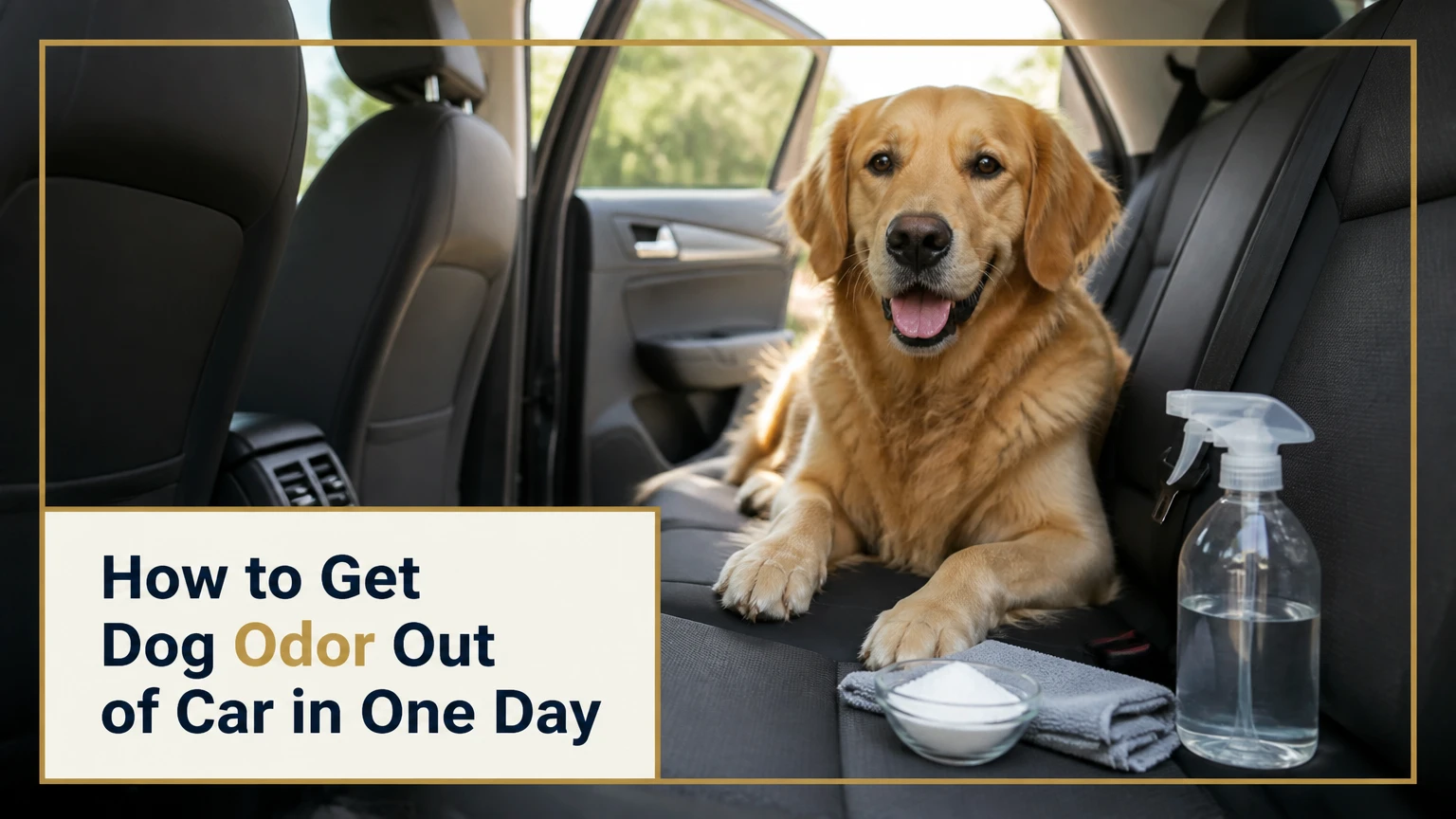
To get dog odor out of a car, remove hair and debris, clean every contaminated surface, treat organic residue with a fabric-safe enzyme cleaner, extract moisture, and replace the cabin air filter when needed. A typical cloth interior takes 3-6 hours of work plus 6-24 hours to dry, and source removal determines success more than fragrance.
Key Facts at a Glance
- Dog odor can remain in seat foam, carpet backing, floor mats, door panels, and HVAC components after visible hair is removed.
- Enzyme cleaners work on biological residue, but they require adequate contact time and cannot replace physical extraction.
- Baking soda, charcoal, and air fresheners absorb or mask some odor; they do not remove deeply embedded oils or urine.
- Over-wetting vehicle upholstery can trap moisture in foam and create mildew, especially when drying takes longer than 24 hours.
- Ozone can reduce persistent odor, but people, pets, and plants must remain outside the vehicle during treatment and ventilation.
- Typical DIY costs range from $15-$50; professional interior odor treatment commonly costs $100-$300.
Why Does Dog Odor Stay in a Car?
Dog odor stays in a car because organic material moves below the visible surface and remains in porous materials. Fur carries skin oils, dander, saliva, and outdoor moisture into cloth seats and carpets, while urine or vomit can penetrate padding and seams. Heat then increases the release of volatile odor compounds.
A clean-looking seat can still smell because upholstery is a layered system. The fabric surface covers foam, scrim, carpet backing, and sometimes a molded floor liner. A wet dog may create a temporary “wet-fur” smell from moisture and microorganisms, while repeated rides gradually build an oily odor that returns on warm days.
The strongest odor sources usually require different treatments:
- Hair and dander: remove mechanically with rubber tools and a vacuum.
- Skin oils and saliva: clean with a suitable interior detergent or enzyme product.
- Urine, feces, and vomit: use a biological cleaner followed by extraction.
- HVAC odor: inspect the cabin filter, cowl intake, evaporator area, and condensate drain.
- Moisture odor: dry the vehicle and investigate wet carpet or seat foam before adding deodorizer.
What Should You Do Before Cleaning?
Prepare 2-4 hours of work time, a dry sheltered location, and at least 6 hours for drying. The minimum kit is a shop vacuum, rubber pet-hair brush, microfiber towels, pH-neutral interior cleaner, fabric-safe enzyme cleaner, soft detailing brushes, disposable gloves, and an optional extractor.
Before-Start Checklist
| Requirement | Typical specification | Why it matters |
|---|---|---|
| DIY labor | 2-4 hours | Covers removal, vacuuming, wiping, and treatment |
| Drying time | 6-24 hours | Prevents damp foam and mildew odor |
| Basic cost | $15-$50 | Covers brushes, cleaner, towels, and filter |
| Enzyme cleaner | 16-32 fluid ounces | Usually enough for seats, mats, and carpet |
| Vacuum | 5-10 horsepower shop-vac equivalent | Lifts hair and extracted liquid |
| Extractor | 0.5-1.5 gallon tank | Useful for cloth, mats, and carpet |
| Ventilation | Four open doors or windows | Speeds evaporation without recirculating odor |
Read the vehicle owner’s manual before removing seats, disconnecting wiring, or applying liquid near airbags. Seat-mounted side airbags, occupancy sensors, belt pretensioners, and electrical connectors make seat removal a poor DIY task unless the vehicle manufacturer provides a safe procedure.
How to Get Dog Odor Out of Car Upholstery
The most reliable process has six stages: remove the dog and loose items, de-hair, vacuum, clean hard surfaces, treat biological residue, and extract or dry the upholstery. Work from the cleanest areas toward the dirtiest, and avoid sealing the car while fabric remains damp.
Step 1: Remove Mats, Covers, and Debris
Take out floor mats, cargo liners, blankets, toys, seat covers, and removable headrest covers. Shake or brush these items outdoors, then wash them according to their care labels. Keep dirty fabric away from the vehicle while the interior is being cleaned.
Inspect under the front seats, around seat rails, beneath the rear bench edge, inside door pockets, and in the cargo-area side wells. Dog hair often collects where carpet changes direction or where a seat cushion meets the backrest.
You’ll know it worked when: no loose food, hair clumps, or damp bedding remain inside the cabin.
Common mistake: leaving a washable blanket in the car, which reintroduces the odor after cleaning.
Step 2: De-Hair Every Textile Surface
Use a rubber squeegee, silicone brush, or slightly damp rubber glove to pull embedded hair into piles. A pumice stone can work on durable automotive carpet, but test it first because aggressive scraping can fuzz fibers or damage looped carpeting.
Vacuum slowly with a crevice tool. Make overlapping passes across seat seams, carpet edges, cargo trim, and the gap between the seatback and cushion. Empty the vacuum outdoors because a full canister of dog hair can make the work area smell again.
You’ll know it worked when: a fresh rubber brush pulls up little or no hair from the main seating area.
Common mistake: spraying cleaner before removing hair, which turns loose fur into wet clumps and makes extraction harder.
Step 3: Vacuum, Wipe, and Use Baking Soda Selectively
Vacuum the cabin a second time after brushing. Wipe dashboards, door panels, plastic trim, vinyl, and sealed leather with a damp microfiber towel and a manufacturer-approved interior cleaner. Organic residue on hard surfaces can produce odor even when textiles appear clean.
For cloth seats and carpet, apply a light layer of plain baking soda for 2-8 hours, then vacuum it completely. Baking soda can reduce surface odor, but it is a weak solution for urine, soaked foam, or heavy sebum because it does not digest or extract those contaminants.
Do not spread baking soda into seat mechanisms, air vents, speaker grilles, or perforated leather. Fine powder can remain in holes and become difficult to remove.
You’ll know it worked when: hard surfaces feel clean rather than oily, and no visible powder remains.
Common mistake: using baking soda as the main treatment for a urine accident that has reached the padding.
Step 4: Apply a Fabric-Safe Enzyme Cleaner
Choose an enzyme product labeled for upholstery or automotive fabric, and test it on a hidden area for colorfastness. Enzyme formulas vary: some target urine proteins, some target general pet residue, and some use odor-absorbing compounds rather than enzymes.
Apply enough product to dampen the affected cloth without flooding the cushion. Follow the label’s dwell time, which commonly ranges from 10 minutes to several hours. Enzymatic activity slows when a product dries immediately, but covering a seat with plastic can trap excessive moisture, so use the label’s instructions rather than improvising.
Enzymes break down selected organic residues; they do not literally dissolve all odor-causing bacteria or sterilize upholstery. Strong urine odor may need repeated treatment because urine salts can remain below the surface.
You’ll know it worked when: the odor is weaker after the treated area is fully dry, not merely while the cleaner’s fragrance is present.
Common mistake: combining enzyme cleaner with bleach, ammonia, disinfectant, or another chemical that can deactivate the formula or create hazardous vapors.
Step 5: Extract Cloth and Carpet, Then Dry Completely
Use an upholstery extractor with a low-moisture technique. Spray a controlled amount, agitate gently with a soft brush, and make several slow vacuum passes. The objective is to remove dissolved residue and water, not to soak the entire seat cushion.
For removable mats, clean both sides and inspect the underside. A mat can smell clean on top while its rubber backing retains urine or wet-dog residue. Hang mats vertically or place them on a rack with airflow.
Open doors and windows, use fans outside the vehicle, and park in a dry ventilated area. Avoid high heat on leather, glued headliners, delicate trim, or seat foam. If the carpet backing still feels cool or damp after 12-24 hours, continue drying before reinstalling mats.
You’ll know it worked when: upholstery feels dry at seams and no odor intensifies when the cabin warms.
Common mistake: closing the doors overnight while the seat foam remains damp, which can create a new mildew problem.
Step 6: Inspect the Cabin Air Filter and HVAC System
Replace a visibly dirty or odor-absorbing cabin air filter with the correct vehicle-specific part. A carbon-impregnated filter can reduce airborne odor, but it cannot clean an already contaminated evaporator or duct.
Run the fan with windows open after the interior is dry. Test fresh-air mode and recirculation separately. If odor appears only when the fan starts, inspect the cowl intake, filter housing, evaporator-cleaning access point, and condensate drain according to the vehicle service information.
Avoid spraying random disinfectant into exterior vents. Liquid can reach electrical components, and some aerosol products require a specific operating procedure. A professional HVAC cleaning is safer when the evaporator or drain is inaccessible.
You’ll know it worked when: the cabin smells neutral in both fresh-air and recirculation modes.
Common mistake: replacing the filter while leaving a wet or dirty floor mat directly beneath the passenger footwell.
Which Odor-Removal Method Works Best?
The best method depends on the odor source: mechanical cleaning handles hair, enzyme treatment handles biological residue, extraction removes dissolved contamination, and ozone or fogging may address residual airborne odor after source removal. No gas, powder, or fragrance reliably compensates for contaminated seat foam.
| Method | Best use | Typical time | Typical cost | Main limitation |
|---|---|---|---|---|
| Vacuum and rubber brushing | Hair, dander, loose debris | 45-90 minutes | $0-$25 | Does not remove oils in foam |
| Enzyme treatment | Saliva, urine, organic residue | 1-3 hours plus drying | $10-$30 | Needs correct dwell time and testing |
| Hot-water extraction | Cloth seats, carpet, washable mats | 2-4 hours plus drying | $30-$200 | Over-wetting can damage foam |
| Activated charcoal | Residual airborne smell | 3-14 days | $10-$30 | Absorbs slowly and does not clean |
| Ozone treatment | Professional post-cleaning deodorization | 1-3 hours plus airing | $50-$150 | Unsafe occupancy and material-oxidation risk |
| Thermal fogging | Specialist treatment of ducts and cavities | 1-2 hours | $70-$150 | Wrong chemical may only mask odor |
When Is Professional Detailing Worth the Cost?
Professional detailing is justified when odor reaches seat foam, the carpet backing, HVAC components, or multiple surfaces after two careful DIY treatments. Typical professional interior cleaning costs $100-$250, while severe odor remediation with extraction and a follow-up deodorization step may cost $150-$300.
Ask the detailer to identify the source before selling an ozone or fogging treatment. The requested service should specify vacuuming, fabric cleaning, extraction, drying, cabin-filter inspection, and the deodorization method. A fogging-only service can leave urine salts or oily residue behind.
Ozone requires particular caution. The U.S. Environmental Protection Agency describes ozone as “a toxic gas with no known useful medical application in preventive, maintenance, or supplemental therapy,” and ozone concentration is not a substitute for cleaning. Never remain inside during treatment, never transport a pet until the vehicle has been thoroughly aired out, and follow the equipment manufacturer’s exposure and re-entry instructions.
How Do Leather Seats, Wet Fur, and Urine Change the Process?
Leather seats need lower-moisture cleaning and product compatibility, wet-fur odor needs drying and surface cleaning, and urine requires biological treatment with source tracing. Treating all three problems with the same spray risks discoloration, residue, or deeper contamination.
Leather and Synthetic Leather
Vacuum seams first, then wipe coated leather or vinyl with a pH-balanced cleaner on a microfiber towel. Do not saturate perforations, stitching, seat controls, or ventilation holes. Apply a compatible conditioner only after the surface is clean and dry.
Harsh enzyme products, strong alkaline degreasers, household disinfectants, and steam can damage finishes or drive liquid into padding. For uncoated or heavily worn leather, consult a leather specialist because the material may absorb odor differently from modern coated automotive leather.
Wet-Dog Smell
Dry the dog blanket, cargo liner, and seat surface before deodorizing. Wet-fur odor often improves after thorough drying, but repeated wet rides deposit oils and dander that require detergent or enzyme treatment.
Ventilate the cabin and use fans rather than sealing in humidity. If the smell returns after a dry day, inspect the carpet edges and seat seams for an older residue source.
Urine, Feces, or Vomit
Use an ultraviolet flashlight only as a screening aid because cleaners, dyes, and fibers can create false positives. Trace the smell physically, including under mats, around seat tracks, and beneath removable cargo-floor panels.
Blot fresh liquid without rubbing. Apply a urine-appropriate enzyme product according to its label, allow the required dwell time, and extract the contaminated area. If urine reached dense foam, repeated surface spraying may fail; professional injection and extraction, or replacement of contaminated padding, may be necessary.
What Causes Odor to Return?
Returned odor usually means the original source remains, moisture has reactivated residue, or the HVAC system is carrying odor into the cabin. Heat-triggered odor points toward seat foam or carpet backing, while fan-triggered odor points toward the filter, evaporator, or air ducts.
| Symptom | Likely reservoir | First response | Escalation point |
|---|---|---|---|
| Smell returns on hot afternoons | Seat foam, carpet backing | Repeat targeted enzyme treatment and extract | Professional foam extraction after two failures |
| Smell appears when fan starts | Cabin filter, evaporator, cowl | Replace filter and inspect intake | HVAC cleaning if odor persists |
| Musty smell after cleaning | Damp foam or carpet | Continue forced-air drying | Moisture inspection after 24 hours |
| Sour smell near cargo area | Wet liner, blanket, spare-tire well | Remove and wash contents | Check hidden water intrusion |
| Ammonia-like smell | Urine salts | Locate and enzyme-treat source | Replace saturated padding if needed |
| Fragrance and dog odor combine | Masking product residue | Stop fragrance use and clean surfaces | Extraction for oily buildup |
A professional may use an inspection camera, moisture meter, or trim-removal procedure to locate hidden contamination. Do not remove seats casually, because wiring and restraint systems can create safety faults when disconnected incorrectly.
What Mistakes Make Dog Odor Worse?
The most damaging mistakes are masking the odor, mixing chemicals, soaking foam, and treating only the visible seating area. Each mistake either leaves the contaminant behind or creates a second problem that is harder to diagnose.
- Ammonia-based cleaner: ammonia can resemble urine odor and may leave an unsuitable residue. Use a vehicle-safe, labeled product instead.
- Bleach mixed with other cleaners: bleach can create toxic gas when mixed with acids or ammonia. Never combine cleaning chemicals.
- Heavy air freshener: fragrance adds volatile compounds without removing hair, oils, or urine salts.
- Steam on sensitive materials: heat and moisture can affect leather finishes, adhesives, electronics, and headliners.
- Over-saturated seats: trapped water can cause mildew, slow drying, and spread dissolved residue into clean foam.
- Ozone as the first step: ozone cannot remove hair, dirt, urine crystals, or oily deposits, and excessive exposure can oxidize rubber and some interior materials.
- Ignoring the dog’s equipment: a collar, harness, blanket, or crate can return odor after the car has been cleaned.
An experienced detailer rule is simple: if the smell is stronger after the car heats up, stop adding fragrance and inspect below the fabric surface. Thermal release is diagnostic evidence, not proof that the air needs a stronger deodorizer.
How Much Time and Money Should You Expect?
A light odor usually costs $15-$50 and can be reduced in one day, while embedded urine or repeated wet-dog contamination may require $150-$300 and multiple drying or treatment cycles. Drying time, not spraying time, is the main schedule variable.
| Situation | DIY labor | Drying or dwell | Typical DIY cost | Professional range |
|---|---|---|---|---|
| One wet-dog trip | 1-2 hours | 6-12 hours | $10-$25 | $75-$150 |
| Repeated dog odor, cloth interior | 2-4 hours | 12-24 hours | $20-$60 | $100-$250 |
| Urine in carpet or mat | 2-5 hours | 12-48 hours | $25-$75 | $150-$300 |
| Leather odor without visible spill | 1-2 hours | 2-6 hours | $15-$40 | $75-$175 |
| HVAC-related odor | 1-2 hours | 1-4 hours | $20-$70 | $100-$250 |
| Severe used-car odor | 3-6 hours | 24-48 hours | $50-$150 | $200-$400 |
Prices are typical U.S. ranges and vary with vehicle size, region, contamination depth, and whether trim or seat components must be removed. A compact hatchback generally requires less product and labor than a three-row SUV.
How Can You Prevent Dog Odor in the Car?
Prevent dog odor by blocking fabric contact, removing wet items immediately, and vacuuming hair before it becomes oily residue. Washable barriers reduce the amount of contamination that reaches seat seams, carpet backing, and foam.
Use a fitted waterproof hammock or cargo liner, but choose one with non-slip anchoring and side protection. Wash blankets weekly for frequent transport, wipe muddy paws before loading, and dry wet dogs and equipment outside the vehicle whenever possible.
After each trip, remove food, drool-soaked toys, and damp towels. Open the doors for several minutes, vacuum visible hair weekly, and clean washable covers before they develop a sour smell. Activated charcoal under a seat can reduce residual odor, but it is a maintenance aid rather than a substitute for cleaning.
Frequently Asked Questions
Can I use vinegar to remove dog smell from a car?
Vinegar may reduce some surface odors, but it is not a dependable treatment for urine, oily dander, or contaminated seat foam. Its acidic smell can also combine unpleasantly with existing odor. Use a fabric-safe automotive cleaner or enzyme product, test any solution on a hidden area, and never mix vinegar with bleach.
Does leaving coffee grounds in the car remove dog odor?
Coffee grounds mainly add a strong aroma and can spill into carpet or seat tracks. They do not extract urine salts, skin oils, or hair, and damp grounds may contribute additional organic residue. Activated charcoal is a cleaner, slower odor-absorption option, but source removal remains necessary.
Will baking soda remove wet-dog smell overnight?
Baking soda can reduce a light surface odor after several hours, but it will not reliably remove wet-dog smell from damp foam or carpet backing. Vacuum the powder completely, then clean and dry the contaminated textile. If odor returns in heat, inspect below the surface rather than applying more powder.
How often should I replace the cabin air filter after transporting a dog?
Follow the vehicle manufacturer’s interval, commonly 12,000-15,000 miles or once every 12 months, and replace the filter sooner if it is dirty or smells when the fan runs. A carbon filter may improve odor control, but it cannot correct contamination on the evaporator or inside the HVAC housing.
Can ozone treatment damage a car interior?
Ozone can oxidize some rubber, plastics, adhesives, and leather finishes when concentration or exposure is excessive. Professional operators should remove people, pets, and plants, follow equipment limits, and ventilate fully before re-entry. Ozone should follow cleaning, not replace removal of hair, urine, or wet organic residue.
Why does my car smell like dog only when the heater runs?
Heat can release odor compounds trapped in seat foam, carpet backing, or HVAC components. Run the fan in fresh-air and recirculation modes to compare symptoms, replace a dirty cabin filter, and inspect the cowl intake. Persistent heater-triggered odor may require professional evaporator or upholstery treatment.
The Bottom Line
To get dog odor out of a car, remove hair first, clean hard surfaces, apply a suitable enzyme product to biological residue, extract cloth upholstery without soaking the foam, and dry every layer completely. Replace or inspect the cabin air filter when the fan carries the smell. Fragrance, baking soda, charcoal, ozone, and fogging have supporting roles, but none reliably replaces source removal.