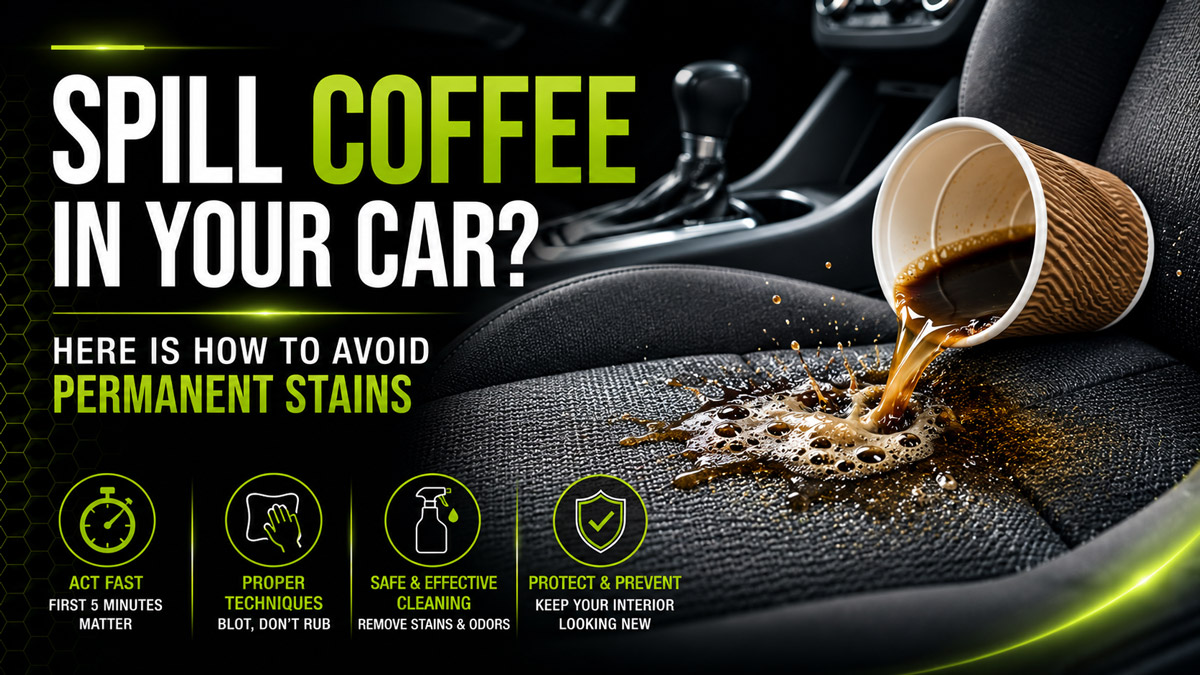
A sudden brake during your morning commute, a bumpy road, or an unstable cup holder can turn a routine coffee run into an interior nightmare. Watching dark roasted liquid spread across pristine car seats, floor mats, and center consoles creates instant panic. Beyond the immediate aesthetic mess, coffee contains natural organic compounds that rapidly penetrate upholstery fibers, leading to deep discoloration, unsightly watermarks, and lingering sour milk smells.
Knowing how to react when you spill coffee in your car is the key to avoiding permanent stains. The difference between a completely restored interior and a ruined seat cushion comes down to your response speed, chemical choices, and cleaning techniques. This comprehensive guide delivers a professional detailing blueprint designed to protect your vehicle upholstery, eliminate stubborn tannins, eradicate dairy odors, and safeguard your car interior value.
The Science of Coffee Stains: Why Tannins and Milk Proteins Bind to Car Interiors
To eliminate coffee discoloration effectively, it helps to understand what happens on a molecular level when coffee contacts vehicle upholstery. Coffee is far more than colored water; it is a complex mixture of organic polyphenols, lipids, natural acids, and added proteins.
Tannins and Organic Chromogens
Coffee owes its deep brown coloration to tannins and chromogens. Tannins are water soluble polyphenols that bind easily to natural materials like cotton and leather, as well as synthetic fibers such as polyester and nylon. Once coffee liquid penetrates fabric weaves, tannins form chemical bonds with textile fibers. As moisture evaporates, these organic dyes lock into place, leaving behind dark, set stains.
The Thermal Setting Factor
Temperature plays a critical role in stain permanence. Freshly brewed coffee is hot. Heat opens up synthetic fabric fibers and expands leather pores, allowing liquid to penetrate deeper into the material matrix. Applying hot water or a hot hairdryer during early cleanup efforts accelerates this process, effectively baking the tannins into the upholstery matrix.
Additives: Milk Proteins and Sweeteners
A black coffee spill presents a purely tannic challenge, whereas coffee containing milk, cream, or sugar introduces multiple layers of complexity:
- Milk Proteins and Lipids: Dairy creamer contains milk proteins such as casein and butterfat lipids. When spilled inside a warm vehicle interior, milk proteins decompose rapidly. Microorganisms digest casein, producing butyric acid, which creates that notorious sour milk smell that lingers for weeks inside seat cushion foam.
- Sugars and Syrups: Sweetened coffee leaves behind sticky carbohydrate residue. As sugar dries, it attracts dirt, dust, and lint, creating dark, tacky spots that reappear even after surface wiping.
Polyurethane Cushion Foam Permeability
Vehicle seats consist of surface upholstery layered over thick polyurethane foam padding. Liquids pass quickly through fabric seams and cushion perforations. While the top surface may appear clean after light wiping, liquid coffee stored in the underlying foam continuously wicks back to the surface during normal seating pressure, creating recurring ring stains.
Emergency First 5 Minutes Cleanup Protocol for Fresh Car Coffee Spills
When coffee spills inside your vehicle, the initial five minutes dictate whether you can achieve total stain removal or end up with permanent discoloration. Follow this emergency protocol immediately to halt stain progression.
1. Blot Outward to Inward
Press an absorbent microfiber towel, clean shop rag, or paper towel firmly against the spill. Always work from the outer boundaries of the liquid pool toward the center. This outward to inward motion prevents liquid from spreading across clean upholstery fibers.
2. Avoid Rubbing or Scrubbing
Resist the urge to scrub back and forth. Rubbing creates friction heat, pushes coffee tannins deep into fabric weaves, damages delicate surface fibers, and causes liquid to bleed into underlying foam layers. Firm vertical pressure is essential.
3. Cold Water Dilution Technique
Dab the affected spot with a clean towel dampened with cold water. Cold water dilutes the concentrated tannin solution without expanding fabric fibers or setting organic dyes. Continue blotting until the towel no longer absorbs brown liquid.
4. High Pressure Extraction
If you have access to a portable wet dry shop vacuum or carpet extractor, use it immediately to pull liquid from seat cushions. If a vacuum is unavailable, fold a dry microfiber towel into multiple layers, place it over the damp spot, and apply heavy body weight pressure to draw out deep moisture.
Surface Specific Coffee Stain Removal Protocols for All Car Interior Materials
Vehicle interiors feature diverse materials ranging from woven cloth and natural leather to synthetic vinyl and delicate suede. Each material demands a tailored cleaning approach to prevent surface damage.
Cleaning Cloth and Woven Fabric Car Seats with DIY Vinegar Solution
Woven polyester and nylon cloth seats absorb liquids rapidly, making them highly vulnerable to deep coffee saturation. A classic do it yourself cleaning solution breaks down coffee compounds effectively.
The DIY Vinegar Cleaning Formula
Mix the following ingredients in a clean spray bottle:
- 1 tablespoon liquid dish soap (solubilizes coffee oils and lipids)
- 1 tablespoon white distilled vinegar (mild acid that breaks down tannins)
- 2 cups warm water (dilutes and activates the mixture)
Step by Step Application Procedure
- Lightly mist the DIY vinegar solution over the coffee stain. Avoid oversaturating the seat.
- Allow the solution to sit for 3 to 5 minutes so the acetic acid can loosen bound tannins.
- Use a soft bristled interior detailing brush to agitate the area gently in small circular motions.
- Blot the area repeatedly with a dry microfiber towel to extract solubilized coffee residue.
- Rinse by dabbing with a cold water dampened cloth, then perform a final dry blot.
Natural Top Grain Leather Car Seat Coffee Spill Cleaning
Natural leather requires extreme care. Harsh acidic solutions like household vinegar can strip protective topcoat lacquers, dry out natural oils, and cause premature cracking or color fading.
Safe Leather Cleaning Protocol
- Blot away surface liquid immediately using a dry microfiber towel.
- Apply a dedicated pH balanced automotive leather cleaner onto a soft horsehair brush or microfiber applicator pad. Never spray liquid directly into leather seams or cushion perforations.
- Work the leather cleaner gently into the grain, creating a light foam that floats coffee oils out of pores.
- Wipe away dirty foam using a clean, dry microfiber towel.
- Apply a premium automotive leather conditioner after cleaning to restore hide moisture, preserve suppleness, and rebuild a protective UV barrier.
Synthetic Leather and Vinyl Car Seat Maintenance
Synthetic materials like MB Tex, Sensatec, and marine grade vinyl feature non porous polyurethane coatings that prevent liquids from soaking directly into synthetic hide.
Cleaning Protocol
- Wipe up liquid spills using a dry microfiber towel.
- Spray a mild interior cleaner or diluted dish soap solution onto a microfiber towel.
- Wipe down the vinyl surface thoroughly, paying close attention to stitching seams where coffee might pool.
- Dry the area completely with a clean towel to prevent water spots.
Alcantara and Microsuede Coffee Stain Removal Guide
Alcantara and Ultrasuede are synthetic microfibers designed to mimic suede. They feature a velvety surface nap that absorbs liquids quickly and matted easily if handled improperly.
Alcantara Care Guidelines
- Blot fresh liquid gently using a dry, lint free microfiber cloth. Do not rub.
- Use a specialized low moisture Alcantara cleaning foam or a dedicated suede cleaner.
- Apply foam to a soft nylon interior brush and work it lightly across the surface using straight strokes rather than harsh circular scrubbing.
- Extract moisture by pressing a dry microfiber towel firmly into the material.
- Once dry, brush the area gently with a clean suede brush to restore the soft, uniform directional nap.
Perforated Leather Seats with Heated and Ventilated Cushions
Perforated leather seats house complex heating elements and ventilation fans beneath the surface hide. Liquid pooling inside perforation holes risks electrical shorting, cushion foam mold, and unpleasant odors every time seat heaters are activated.
Perforated Seat Cleanup Steps
- Blot surface moisture immediately without pushing liquid down into perforation holes.
- Use a wet dry shop vacuum fitted with a narrow nozzle to extract liquid directly from individual perforation vents.
- Apply low moisture leather cleaner sparingly to a microfiber cloth, wipe surface hide gently, and vacuum again.
- Turn on your car interior air conditioning and directed seat ventilation fans to evaporate remaining moisture inside cushion channels.
How to Remove Dried Coffee Stains from Car Upholstery and Carpets
If you discovered an old coffee stain under a passenger seat or were unable to clean a spill immediately, dried coffee requires a specialized rehydration and chemical treatment strategy.
Rehydration and Pre Treatment
Dried coffee stains consist of hardened tannins locked into dry fabric fibers. Attempting to scrub dry coffee creates friction damage without releasing pigment.
- Lightly spray cold water mixed with a few drops of glycerine over the dried spot. Glycerine acts as a humectant, softening dried organic residue.
- Allow the rehydration solution to penetrate for 10 minutes.
Oxygenated Upholstery Cleaners for Stubborn Stains
Commercial oxygenated cleaners release sodium percarbonate, which breaks down into hydrogen peroxide and sodium carbonate upon contacting water. Active oxygen bubbles sever the chemical bonds of organic coffee dyes, lifting set discoloration without fading fabric dyes.
- Spray an oxygenated carpet cleaner lightly over the rehydrated stain.
- Agitate gently using a soft interior brush to work oxygen bubbles deep into fabric weaves.
- Let the cleaner dwell for 5 to 10 minutes.
- Extract using a shop vacuum or blot thoroughly with clean, dry microfiber towels.
Bio Enzymatic Cleaners for Dried Dairy Milk Residue
When dried coffee contains milk, organic proteins remain trapped inside cushion fibers long after water evaporates. Standard cleaners fail to digest protein deposits.
- Apply an active bio enzymatic carpet cleaner designed for organic pet or dairy stains.
- Enzymes break down casein proteins and milk lipids into odorless water and carbon dioxide.
- Cover the treated area with a damp towel to keep enzymes active for several hours.
Eliminating Sour Coffee Odors and Preventing Car Cushion Mold Growth
Removing visible discoloration is only half the battle. If liquid coffee seeps deep into polyurethane seat cushion foam, moisture and organic dairy proteins can cause bacterial growth, sour milk smells, and internal mold colonies.
Baking Soda Odor Adsorption Protocol
Baking soda (sodium bicarbonate) is a natural amphoteric compound that neutralizes both acidic and basic odor molecules.
- Ensure the seat surface is mostly dry to prevent baking soda from forming a paste.
- Sprinkle a generous, even layer of pure baking soda over the spill zone.
- Allow the powder to rest undisturbed for 6 to 12 hours or overnight. Baking soda draws out residual moisture and traps volatile odor compounds.
- Vacuum the powder thoroughly using a clean shop vacuum upholstery tool.
Active Bio Enzymatic Odor Digestion
If sour milk odors persist whenever your car sits in direct sunlight, apply a bio enzymatic interior odor eliminator spray. Enzymatic formulas digest lingering milk lipids and butyric acid molecules at a microscopic level, permanently destroying odor sources rather than masking them with artificial fragrance.
Vehicle Cushion Ventilation and Mold Prevention
Trapped moisture inside dark cushion foam creates an ideal breeding ground for mold and mildew within 24 to 48 hours.
- Crack vehicle windows open slightly in a secure, well ventilated area.
- Position an electric box fan or automotive detailing carpet dryer to blow air directly across the cleaned seat cushion for several hours.
- If moisture was severe, place a disposable interior dehumidifier container or silica gel moisture absorber inside the vehicle overnight with windows closed.
Critical Mistakes to Avoid When Cleaning Coffee Spills in Vehicles
Avoiding common cleaning pitfalls ensures your car restoration efforts yield clean results without causing irreversible material damage.
1. Using Hot Water or Heat Dryers
Hot water and high heat settings on hairdryers instantly set organic tannins into natural and synthetic upholstery fibers. Heat also cooks milk proteins, binding sour odor compounds permanently inside cushion padding. Always use cold or lukewarm water.
2. Aggressive Scrubbing with Stiff Brushes
Scrubbing fabric with stiff plastic or wire brushes causes fabric pilling, tears surface leather topcoats, and destroys Alcantara suede nap. Always select soft horsehair or gentle nylon detailing brushes.
3. Cushion Foam Oversaturation
Pouring large amounts of water or cleaning solution over a seat spill forces liquid deep into sub layer foam padding. Excess water creates watermarks, extends drying times, and triggers mold growth inside seat cushions.
4. Applying Harsh Household Chemicals
Household bleach, ammonia, undiluted hydrogen peroxide, or glass cleaners strip upholstery colors, dissolve leather coatings, and leave harsh chemical residue that irritates skin.
Preventive Strategies and Long Term Interior Stain Protection
The best way to manage coffee spills is to prevent liquids from bonding with vehicle surfaces in the first place.
Hydrophobic Fabric Protectants
Applying a fluoropolymer fabric protector spray creates an invisible hydrophobic shield around woven cloth fibers. Liquid coffee spills bead up on top of treated upholstery rather than soaking in, allowing you to wipe up liquid with a paper towel.
Interior Ceramic Coatings
Modern automotive ceramic coatings extend beyond paint protection. Specialized interior ceramic coatings for leather, vinyl, and plastic surfaces form a flexible, chemical resistant barrier that repels water, coffee, oils, and UV rays while preserving natural leather breathability.
Heavy Duty Spill Proof Accessories
Equip your vehicle with practical protective accessories:
- Heavy duty rubber floor mats with raised sidewalls to catch liquid spills.
- Leakproof travel mugs featuring vacuum sealed, lockable lids.
- Custom fit water resistant seat covers for high traffic commuter vehicles.
Conclusion
Spilling coffee in your car does not have to result in permanent stains or ruined interior upholstery. By understanding the chemistry of tannins and milk proteins, taking fast emergency action within the first five minutes, and applying surface specific cleaning protocols, you can completely restore cloth, leather, synthetic vinyl, and Alcantara surfaces. Avoid heat application, extract deep cushion moisture thoroughly, and protect your vehicle interior with modern hydrophobic coatings to keep your car looking and smelling fresh for years to come.
Next Step
Take control of your car interior care today. Assemble a dedicated vehicle spill emergency kit containing microfiber towels, a bottle of cold water, and a pH balanced interior cleaner, or explore professional grade hydrophobic interior ceramic coatings to safeguard your upholstery against future spills.