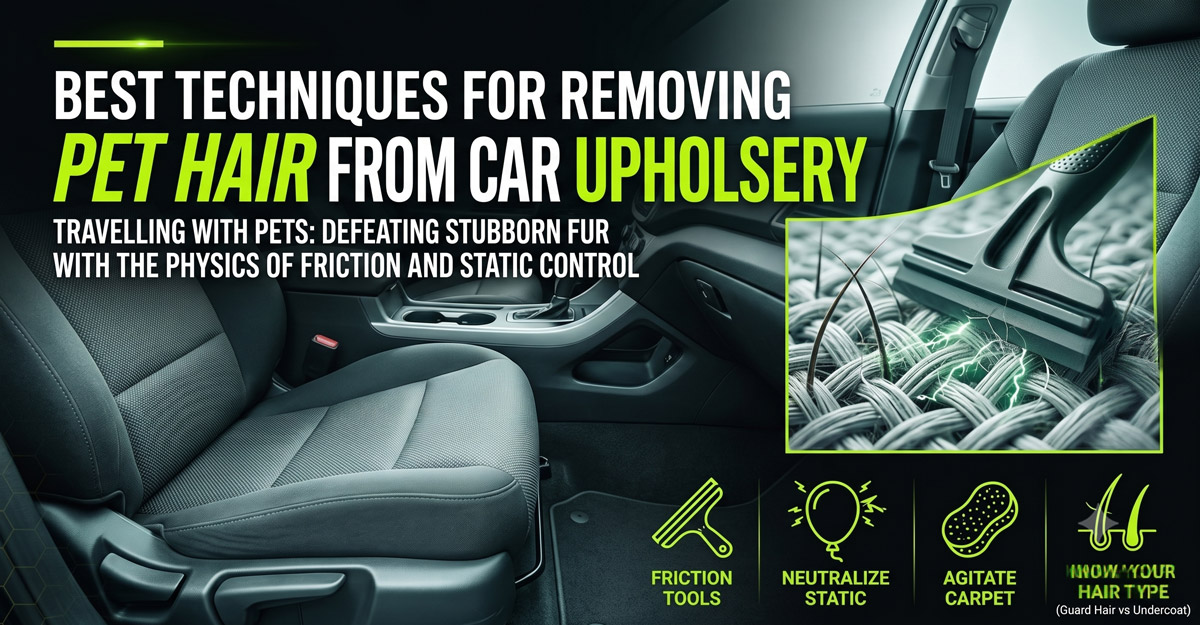
Travelling with your beloved dogs and cats is one of the true joys of pet ownership, but the aftermath inside your vehicle is often a frustrating reality. Pet fur seems to possess a magic ability to weave itself deep into fabric weaves, cling stubbornly to floor carpets, and resist even the strongest commercial shop vacuums. If you have ever spent hours at a self service car wash vacuum station only to leave with seats still covered in stubborn fur, you are not alone. Standard vacuum nozzles pull air across the surface, but they fail to break the mechanical bond or electrical static cling that locks pet hair into car upholstery.
To achieve a spotless interior, you need specialised techniques that target the root cause of pet hair retention. Removing pet hair from car upholstery requires methods that either disrupt static charge, mechanical weaving, or use high friction rubber edges to roll fur into manageable bundles. In this comprehensive guide, we will break down the science of fur entrapment, evaluate every popular DIY household hack, showcase professional grade detailing tools, and provide tailor made step by step instructions for cloth, carpet, and leather surfaces.
The Physics of Pet Hair Cling: Why Vacuums Fail on Car Upholstery
Understanding why pet hair is so difficult to clean from car seats begins with simple physics and textile mechanics. Vehicle upholstery fabrics and carpets are designed to be durable, stain resistant, and wear tolerant. However, these exact design characteristics create the ultimate trap for animal fur.
Pet hair retention is driven by three distinct mechanisms:
- Mechanical Weaving: Animal hair strands, especially short coarse dog hair from breeds like Labradors, Pugs, or Boxers, feature microscopic barbed cuticle scales. As passengers move on the seats, these barbed hairs are driven needle first between the woven threads of cloth upholstery. Once embedded inside the fabric weave, suction alone cannot pull them loose.
- Static Electricity Charge: Synthetic car upholstery materials such as polyester, nylon, and acrylic build up a strong static charge when rubbed against pet fur. This electrostatic bond acts like a miniature magnet, pulling fine cat fur and fluffy undercoats flat against the fabric surface.
- Fiber Entanglement in Carpet Pile: Car carpeting typically utilizes a non woven needle punch pile or low loop carpet construction. Fine undercoat fur wraps tightly around these looped synthetic fibers, creating thousands of tiny knots that withstand basic vacuuming.
Guard Hair vs Undercoat Fur Mechanics
Different types of pet hair require completely different removal strategies. Coarse guard hairs are rigid and puncture deep into seat cushion foam and woven fabrics. Fine undercoat hair is soft and light, forming dense felted sheets across carpets and trunk liners due to static build up.
Efficiency Comparison: Friction vs Static Methods by Hair Type
Top Friction and Rubber Tools for Instant Fur Removal
Friction is your primary weapon against stubborn pet hair. Rubber tools create immense traction when dragged across synthetic cloth and carpet fibers. As the rubber grips the hair, it creates friction that rolls loose and embedded strands into visible rolls that can be picked up by hand or vacuumed effortlessly.
1. Rubber Window Squeegee
A standard household window squeegee with a flexible rubber blade is one of the most effective budget tools for cleaning flat seat surfaces and trunk liners.
- Application Method: Hold the squeegee firmly and pull it toward you in short, firm, overlapping strokes across the cloth seat.
- How It Works: The sharp rubber edge grips hair strands sticking out of the fabric weave and drags them into neat, concentrated piles.
- Best Used On: Flat cloth seats, bench cushions, and large carpeted cargo areas.
2. Damp Rubber Household Gloves
Dampened rubber dishwashing gloves provide exceptional tactile control, allowing you to clean rounded bolsters, headrests, and tight seams.
- Application Method: Put on a pair of textured rubber gloves, lightly wet the palms with water, and wipe your hands firmly across the upholstery in one continuous direction.
- How It Works: The combination of rubber friction and water moisture creates high surface tension that gathers fine hair into tight rolls on your palms.
- Best Used On: Curved seat contours, headrests, door panel fabrics, and seat belts.
3. Rubber Pet Hair Rakes and Detail Brushes
Professional detailing rubber brushes feature thick rubber bristles on one side and a squeegee blade on the other.
- Application Method: Sweep the rubber bristles in quick circular motions to agitate embedded hair, then use the squeegee blade to gather the loosened pile.
- How It Works: Rubber bristles flex under pressure, entering carpet loops to pop out deeply trapped hair without fraying delicate fabric.
- Best Used On: High pile vehicle carpets, floor mats, and heavy fabric seats.
4. Pumice Stones and Volcanic Glass Rocks
Pumice rocks, such as detailing stones, scrape away needle like dog hair embedded deep inside durable automotive carpets.
- Application Method: Lightly drag the flat edge of a pumice stone across carpeted floors using gentle, steady pressure in a single direction.
- How It Works: The micro porous abrasive texture of volcanic glass catches hair tips and shears them out of needle punch carpet loops.
- Caution Note: Never use pumice stones on delicate cloth seats, leather, or plastic trim, as the abrasive surface will scratch or snag fabric threads.
Static Electricity and Chemical Solutions for Delicate Surfaces
When friction tools alone are not enough or when dealing with fragile upholstery, combining static electricity manipulation with chemical softening yields outstanding results.
Fabric Softener Spray Formula
Liquid fabric softener contains cationic surfactants designed to coat fibers, relax fabric tension, and eliminate static charge instantly.
- DIY Solution Recipe: Mix one tablespoon of liquid fabric softener with two cups of warm water inside a spray bottle. Shake thoroughly to blend.
- Application Technique: Lightly mist the solution over the pet hair covered upholstery. Allow it to sit for two to three minutes.
- Action Mechanism: The mist breaks the electrostatic bond holding fine hair to the seat while softening stiff guard hairs, making them easy to lift with a microfiber cloth or vacuum.
Static Electricity Balloon Technique
An entertaining yet effective home remedy for light, fine cat hair and thin dog undercoats involves a simple latex balloon.
- Application Technique: Inflate a latex balloon, rub it vigorously against a wool sweater or your hair to generate a high static charge, then hover and gently rub it over seat upholstery.
- Action Mechanism: The strong static charge created on the latex surface pulls loose, lightweight fur straight off the fabric onto the balloon surface.
- Best Used On: Light surface fur on velvet, plush cloth, and headliners where heavy rubbing could cause damage.
Velvet Fabric Lint Brushes and Adhesive Wraps
Directional velvet lint brushes feature micro hooks angled in a single direction to snag hair effortlessly.
- Velvet Brush Method: Sweep the brush against the grain of the velvet material to catch hair, then reverse sweep across a wet towel to clear the brush head.
- Duct Tape Palm Wrap Method: Wrap heavy duty duct tape around your hand with the sticky side facing outward. Press firmly onto the seats to lift stubborn surface hair. Avoid leaving adhesive residue by choosing clean removal tape.
Professional Auto Detailing Tools for Extreme Hair Infestations
When dealing with years of accumulated pet hair or severe shedding from multiple pets, commercial auto detailers rely on specialized heavy duty tools.
Dual Blade Rubber Detailers (Lily Brush and Analan Tools)
Specially engineered pet hair tools like the Lily Brush and Analan Pet Hair Remover feature multi sided rubber blades with different edge densities.
- Purpose Built Geometry: These tools feature fine teeth for small corners, coarse teeth for wide seat backs, and smooth rubber edges for delicate stitching.
- Superior Ergonomics: Designed to fit comfortably in your palm, reducing hand fatigue during long detailing sessions while pulling even short weave needle hairs out of cloth.
Compressed Air Blowouts and Pneumatic Cleaning Guns
High pressure air blowouts using a air compressor and a Tornador cleaning gun blast compressed air into fabric weaves at high rotational speed.
- How It Works: The spinning air vortex dislodges deeply embedded pet hair from deep inside cushion seams, under seat rails, and out of carpet fibers where hands and vacuum nozzles cannot reach.
- Pro Tip: Always perform compressed air blowouts with all car doors open in a well ventilated space while wearing a protective dust mask.
Rotary Drill Brush Attachments
Soft nylon drill brushes attached to a cordless power drill spin at high speeds to vibrate and lift embedded hair out of carpet fibers.
- Detailing Workflow: Spray fabric softener solution onto the carpet, spin the drill brush across the floor mat in overlapping passes, and watch hair lift to the surface instantly for easy vacuuming.
Step by Step Workflow to Deep Clean Pet Hair from Car Cloth Upholstery
Follow this master step by step process used by top automotive detailers to achieve a 100% hair free vehicle interior.
Step 1: Preliminary Inspection and Dry Vacuuming
Start by removing floor mats, child safety seats, and personal belongings from the cabin. Use a high suction shop vacuum fitted with a wide utility nozzle to clear loose dirt, food crumbs, and surface fur. Do not press hard on the vacuum nozzle yet, as this can push loose hairs deeper into fabric weaves.
Step 2: Apply Anti Static Fabric Softener Mist
Lightly spray your water and fabric softener mixture over seat cushions, backrests, and carpeted floors. Ensure the fabric is lightly damp to the touch, not soaked. Allow the solution to neutralize static cling for two minutes.
Step 3: Mechanical Friction Agitation
Select your preferred friction tool based on surface geometry:
- For cloth seat backs and cushions, hold a Lily brush or rubber squeegee at a 45 degree angle and pull in short, firm strokes toward the center of the seat.
- For rounded seat bolsters, wear a damp rubber glove and wipe downward in sweeping motions.
- For heavy floor carpeting, use a pumice stone or rubber bristle rake, working from the pedals back toward the seat frame.
Gather the accumulated hair into compact piles on the seat center.
Step 4: Crevice Vacuuming with Rubber Attachment
Switch your vacuum head to a narrow crevice tool fitted with a rubberized nozzle tip. Vacuum up the concentrated piles of pet hair. Run the crevice tool deep into seat seams, between seat backs and bottoms, and along door sill carpet edges.
Step 5: Microfiber Wipe and Fabric Protection
Perform a final wipe down using a damp microfiber towel to pick up stray single hairs. Once the upholstery is completely dry, apply a fabric protector spray to coat fibers and reduce future hair adhesion.
Safe Hair Removal Methods for Leather and Synthetic Vinyl Seats
Leather, leatherette, and synthetic vinyl upholstery require a completely different approach compared to cloth fabric. While smooth leather does not allow hair to weave into fibers, it presents unique challenges such as scratch risks and hair trapped inside ventilation perforations.
Preventing Leather Scratches
Never use abrasive pumice stones, wire brushes, or hard plastic scrapers on natural or synthetic leather. Scratching protective topcoats on leather leads to permanent damage and costly repairs.
- Safe Method: Spray a leather safe interior cleaner onto a soft microfiber towel and wipe seats in smooth, sweeping motions. Leather cleaner breaks down oil residues from pet paws while picking up loose hair safely.
Cleaning Perforated Leather Ventilation Holes
Modern luxury vehicle seats often feature perforated leather for heated and cooled seat systems. Short dog hairs easily drop inside these tiny perforation holes, becoming trapped underneath the leather surface.
- High Suction Vacuum Seal: Place a soft horsehair vacuum brush attachment over the perforated area, press down gently to form a seal, and allow suction to lift hair straight up out of the holes.
- Fine Detail Toothpick Extraction: For stubborn single hairs lodged tightly inside a perforation hole, use a wooden toothpick or soft plastic detail pick to carefully lift the hair tip until suction catches it. Never use sharp metal picks that can tear leather pores.
Preventive Strategies: Stop Pet Hair Before It Sticks
The most efficient way to manage pet hair in your vehicle is to prevent fur from reaching your upholstery in the first place.
Installing Fitted Pet Seat Covers and Cargo Hammocks
Investing in heavy duty, waterproof pet seat covers or rear seat hammocks provides an impenetrable barrier against fur, mud, and claw scratches.
- Look for covers made from heavy 600D Oxford polyester fabric with non slip rubber backing and seat anchor inserts.
- Seat hammocks bridge the gap between front and rear seats, keeping hair off floor carpets and preventing pets from stepping onto front center consoles.
Pre Ride Grooming Routine
A quick five minute grooming session before loading your pet into the car drastically cuts down on airborne fur.
- Use a de shedding tool or slicker brush to remove loose undercoat fur in your yard before your journey.
- Wipe your dog down with a damp towel or pet wipe to catch surface dander and loose hairs prior to entry.
Regular Maintenance Schedules
Establish a simple weekly maintenance routine to prevent hair accumulation from reaching critical levels. A quick three minute pass with a rubber glove or squeegee once a week keeps pet hair from embedding into fabric weaves, saving you hours of intense detailing work later.
Conclusion: Achieve a Flawless Hair Free Vehicle Interior
Removing pet hair from car upholstery does not require expensive specialized machinery or endless hours of frustrating labor. By applying the physics of friction, neutralizing static electricity with fabric softener solutions, and selecting the right tool for your specific seat material, you can restore your car interior to factory clean condition. Whether you choose a simple rubber squeegee, a damp dishwashing glove, or professional detailing tools like the Lily brush, these proven techniques guarantee top results every single time.
Next Step: Download Your Free Car Interior Detailing Checklist
Ready to transform your car interior and keep it looking showroom new? Click below to download our free master interior detailing checklist, complete with step by step cleaning schedules, recommended tool buyer guides, and pro detailer secret recipes. If you prefer a professional touch, contact our expert auto detailing team today for a complete interior pet hair restoration service!