Few vehicle problems are as frustrating as sitting down in a car that smells like an old ashtray. Whether you recently purchased a pre owned automobile from a smoker, inherited a family vehicle, or want to eliminate lingering cannabis or wildfire smoke, confronting an persistent odor can feel like an uphill battle. Many vehicle owners hang cardboard air fresheners or spray aerosol masking scents, only to discover that the foul smell returns within hours.
The reason temporary cover ups fail comes down to basic organic chemistry. Smoke is not just an airborne scent. Smoke consists of microscopic, airborne liquid tar droplets, sticky nicotine resin, volatile organic compounds, and microscopic carbon ash particles. When someone smokes inside a vehicle, these hot particles circulate rapidly, embedding themselves deep within carpet fibers, seat cushions, nylon seatbelts, porous leather, foam padding, and interior glass. Even worse, the heating, ventilation, and air conditioning system pulls these sticky particles into the evaporator core and air ducts, creating a continuous loop of contaminated air every time you start the engine.
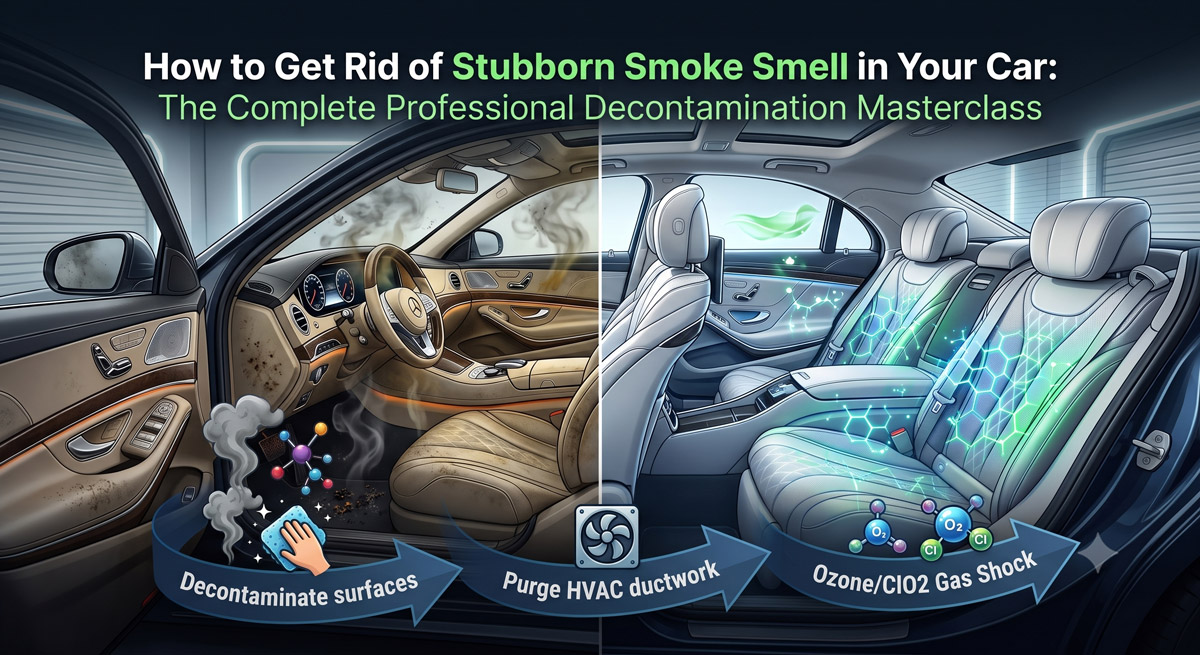
To eliminate smoke odor permanently, you must chemically neutralize the embedded tar residues and purge every interior surface. In this comprehensive masterclass, you will learn the exact multi step decontamination protocol used by high end automotive detailers to eliminate stubborn smoke odors forever.
Understanding the Chemistry of Smoke Odor Residue in Vehicles
To eliminate smoke odor permanently, it is vital to understand what happens inside a car cabin during smoking. Cigarette, cigar, and cannabis smoke release thousands of chemical compounds. As the smoke cools, two primary culprits settle onto your interior surfaces:
- Nicotine Resinous Film: Nicotine forms a sticky, yellowish oily film that coats hard plastics, vinyl, glass, and metal trim. This film acts as an adhesive binder, trapping atmospheric dust and carbon soot.
- Tobacco Tar Oils: Tar contains dense organic compounds that penetrate deep into porous materials like upholstery foam, headliner fabric, and floor mats.
These residues continuously undergo off gassing. Off gassing occurs when embedded organic compounds release volatile gases back into the air. This phenomenon explains why a car might smell mild on a cool morning, yet emit an overpowering stench when parked under direct sunlight. Heat accelerates the off gassing process, driving trapped tar oils out of seat cushion padding and into the cabin air.
Furthermore, medical science classifies this persistent residue as third hand smoke. Third hand smoke consists of residual nicotine and toxic chemicals remaining on surfaces long after the active smoke clears. Eliminating this residue is not merely an aesthetic preference. Removing third hand smoke protects your passengers and family from ongoing chemical exposure.
| Odor Component | Chemical Nature | Primary Target Location | Removal Mechanism |
|---|---|---|---|
| Nicotine Residue | Oily alkaloid resin film | Glass, plastic dash, door panels | Heavy duty alkaline degreasing cleaner |
| Tobacco Tar Oils | Complex heavy hydrocarbon oils | Seat cushions, carpet padding, seatbelts | Enzyme extraction and hot water rinse |
| Microscopic Ash Soot | Particulate carbon solid | Carpet backing, seat seams, floor vents | High power HEPA vacuuming and agitation |
| Recirculated VOCs | Volatile organic gaseous compounds | HVAC evaporator core and air ducts | Activated carbon filter and ClO2 vapor |
Essential Tools and Supplies for Complete Odor Removal
Before beginning your vehicle restoration, assemble the proper equipment. Attempting to eliminate severe smoke odors with household dish soap or paper towels will lead to incomplete results. The following tools form the backbone of professional interior decontamination:
- Commercial HEPA Vacuum Cleaner: A vacuum equipped with crevice tools and stiff agitation brushes to pull embedded ash from deep carpet fibers.
- Hot Water Extractor or Carpet Cleaner: A specialized machine that injects hot water and cleaning solution into fabrics while simultaneously extracting liquefied tar.
- Enzyme Based Fabric Cleaner: Biological enzyme formulas break down organic smoke proteins and tar compounds rather than masking them.
- Heavy Duty Ammonia Free Glass Cleaner: Removes yellow nicotine film without damaging aftermarket window tint.
- Steam Cleaner with Microfiber Attachment: Superheated steam dissolves stubborn tar bonds on vinyl, plastic, leather seams, and vent louvers.
- Activated Carbon Cabin Air Filter: Essential for catching lingering airborne particles in the HVAC system.
- Industrial Ozone Generator or Chlorine Dioxide Vapor Kit: Gaseous oxidizers that penetrate areas physical cleaning tools cannot reach.
- Soft Microfiber Towels and Interior Brushes: Soft horsehair brushes for leather and stiff nylon brushes for durable floor carpets.
| Tool or Chemical | Primary Application | DIY Accessibility | Odour Elimination Impact |
|---|---|---|---|
| Hot Water Extractor | Carpet and cloth seat flushing | Rental available at hardware stores | Very High (Removes deep physical tar) |
| Enzyme Digester Cleaner | Pretreatment for soft surfaces | Widely available online and retail | High (Breaks down organic bonds) |
| Chlorine Dioxide Gas Kit | Cabin gas fogging treatment | Easy DIY application kit | Very High (Oxidizes deep hidden crevices) |
| Industrial Ozone Generator | Final gas shock treatment | Affordable purchase or rental | Maximum (Destroys airborne molecules) |
Step 1: Replace the Cabin Air Filter and Clean the Air Intake
The first step in removing smoke smell from your vehicle starts in the heating and air conditioning system. The cabin air filter acts as the lung of your car. When a driver smokes inside the vehicle, the ventilation system draws in contaminated cabin air, trapping high concentrations of tar soot inside the filter media.
If you clean every interior fabric surface but leave the old cabin air filter in place, starting your air conditioner will immediately blast trapped smoke particles back into your clean interior.
- Locate the Filter Housing: Most cabin air filters are located behind the glove compartment or under the windshield cowl area inside the engine bay. Consult your owner manual for precise access instructions.
- Remove and Discard the Contaminated Filter: Pull out the old filter immediately. Inspect the filter media. In smoker vehicles, the filter media often appears dark gray or yellowed and smells intensely of stale tobacco. Dispose of it in an outdoor trash bin.
- Clean the Filter Housing Box: Vacuum out any loose leaf debris, ash, or dust inside the filter housing. Wipe the housing interior using an antibacterial interior cleaner misted onto a microfiber cloth.
- Install an Activated Carbon Replacement Filter: Do not buy a standard paper filter. Purchase an upgraded cabin air filter containing activated charcoal or carbon layers. Activated carbon possesses millions of microscopic pores that trap volatile organic compounds and neutralize gaseous smoke odors.
Step 2: Decontaminate Hard Surfaces, Dashboards, and Interior Glass
Nicotine creates an invisible, sticky film over every hard interior surface. Glass and plastic surfaces act as magnetic collection zones for smoke soot.
Scrubbing the Windows and Mirrors
Interior glass is notorious for holding nicotine film. This film creates a hazardous glare when driving at night against oncoming headlights and constantly releases stale smoke scent.
- Use an Ammonia Free Formula: Avoid ammonia based cleaners if your car has tinted windows, as ammonia degrades window film adhesives over time.
- The Two Towel Method: Spray heavy duty glass cleaner onto the window. Use a waffle weave microfiber towel to scrub away the yellow haze. Immediately follow up with a dry microfiber towel to polish the glass clean.
- Do Not Forget the Top Edges: Roll down the windows two inches to clean the top exposed glass edges, which accumulate heavy smoke soot.
Cleaning Vinyl, Plastics, and Trim
- Dashboard and Steering Wheel: The steering wheel, center console, and dashboard receive direct smoke exposure. Spray a dedicated interior multi surface degreaser onto a soft horsehair brush. Work the cleaner into leatherette textures, buttons, and seams to lift trapped oils.
- Door Panels and Cup Holders: Remove rubber cup holder inserts and wash them in warm soapy water. Scrub door panel armrests thoroughly, as smokers frequently rest their arm and cigarette near the window ledge.
- Vinegar and Water Solution Alternative: If you prefer a natural cleaning solution, mix equal parts distilled white vinegar and distilled water. White vinegar contains acetic acid, which neutralizes alkaline tobacco residues. Wipe surfaces thoroughly and allow the mild vinegar scent to dissipate over several hours.
Step 3: Deep Clean Fabrics, Carpets, and Soft Interiors
Soft textiles absorb up to eighty percent of the smoke smell in a car cabin. Cleaning these surfaces requires customized approaches based on whether your vehicle features cloth seats, genuine leather, or specialized material combinations.
Cleaning Cloth Seats and Carpet Fibers
Cloth upholstery and carpet padding act like sponges for smoke particles. To remove the smell completely, perform a deep extraction:
- Vacuum Agitation: Vacuum all floor mats, carpets, and seat cushions using a crevice tool. Beat the seats with your hand while vacuuming to force embedded ash out of deep foam layers.
- Baking Soda Pretreat: For mild smoke cases, sprinkle pure baking soda liberally over all carpets and cloth seats. Baking soda sodium bicarbonate naturally absorbs surface level acidic oils. Allow the baking soda to sit undisturbed for four to six hours before vacuuming thoroughly.
- Enzyme Chemical Scrub: For heavy smoke cases, spray a high quality enzyme fabric cleaner over the upholstery. Allow the enzymes to dwell for ten minutes to digest tar proteins. Scrub the fabric in overlapping circular motions with a stiff nylon carpet brush.
- Hot Water Extraction Rinse: Use a hot water extractor to inject hot water into the fabric while pulling out the dirty, brown liquid residue. Repeat extraction passes until the extracted water runs crystal clear.
Cleaning Leather and Vinyl Upholstery
Leather requires a gentle touch. Unlike cloth seats, leather features natural pores that absorb smoke oils without deep foam saturation. However, aggressive chemical cleaners can strip protective leather coatings and cause cracking.
- Use a pH Neutral Leather Cleanser: Apply a specialized pH neutral leather cleaner onto a soft horsehair brush. Agitate the cleanser into a mild foam over the seat bolsters, seat backs, and perforated leather holes.
- Clean Perforations Carefully: Perforated leather seats often house foam padding underneath. Avoid oversaturating perforated holes with liquid cleaner, which can trap moisture inside the seat foam.
- Apply a Premium Leather Conditioner: After cleaning, wipe the leather dry. Apply a nourishing leather conditioner containing UV inhibitors and fresh leather aromas. Conditioning seals the leather pores, preventing future odor absorption and keeping the material soft.
Restoring Seatbelts Safely
Detailers often overlook seatbelts, yet nylon seatbelt webbing traps massive amounts of smoke residue. Because seatbelts rest directly against a smoker chest and neck, they absorb dense smoke clouds.
- Fully Extend the Belts: Pull the driver and passenger seatbelts all the way out until they reach full extension. Secure the belt at the top anchor using a plastic clamp.
- Scrub with Enzyme Solution: Mist the nylon webbing with an enzyme cleaner solution. Scrub both sides of the webbing using a soft microfiber towel or soft brush. Avoid using harsh bleaching agents or high heat steam, which can weaken the structural integrity of the seatbelt safety webbing.
- Dry Completely: Allow the seatbelts to air dry completely while extended before unclamping them. Retracting damp seatbelts will create mildew odors inside the tensioner housing.
Delicate Headliner Decontamination
The headliner represents the most delicate area inside a car interior. The fabric roof lining consists of a thin layer of cloth glued to a soft foam backing. Applying excess liquid cleaner or using a hot steam cleaner will dissolve the adhesive bond, causing the headliner fabric to sag permanently.
- Light Spray Application: Spray a smoke neutralizing mist onto a clean microfiber towel rather than spraying the headliner directly.
- Gentle Wiping Motion: Lightly wipe the headliner fabric in one direction. Do not scrub aggressively or press hard into the foam core.
- Clean Sun Visors: Flip down the sun visors and clean both sides, including the vanity mirrors and vanity light housings.
| Surface Area | Recommended Cleaning Agent | Agitation Tool | Critical Warning |
|---|---|---|---|
| Cloth Seats | Enzyme Fabric Shampoo | Stiff Nylon Brush | Avoid overwetting seat foam core |
| Leather Seats | pH Neutral Leather Cleaner | Soft Horsehair Brush | Do not scrub perforated holes harshly |
| Fabric Headliner | Misted Odour Neutralizer | Damp Microfiber Towel | Never use steam or heavy soaking liquid |
| Nylon Seatbelts | Mild Enzyme Cleaner | Microfiber Cloth Wipe | Never use bleach or acidic solvents |
Step 4: Purge and Sanitize the Vehicle HVAC Ventilation System
Once the physical interior surfaces are clean, turn your attention to the hidden ventilation ductwork. When a vehicle owner smokes with the air conditioner running, nicotine tar coat the interior duct walls and the damp AC evaporator core.
- Park in a Well Ventilated Area: Position your car outdoors away from enclosed spaces.
- Set Engine and Climate Controls: Start the engine. Set your air conditioner to the lowest temperature setting, turn the fan speed to maximum velocity, and switch the air control selector to internal recirculation mode.
- Locate the Recirculation Intake: The internal recirculation intake vent is located inside the passenger footwell beneath the glove box area.
- Spray HVAC Disinfectant Flush: Take a specialized aerosol HVAC disinfectant or specialized odor eliminator. Spray the aerosol directly into the passenger footwell intake area continuously for sixty seconds while the fan is running at high speed.
- Cycle the Ventilation Settings: Allow the system to run on recirculation mode for ten minutes with all doors and windows closed. Next, switch the climate control settings to maximum heat and change the airflow mode to floor vents for five additional minutes. High heat bakes residual moisture out of the evaporator housing and sterilizes duct surfaces.
Step 5: Advanced Chemical Neutralization (Ozone vs Chlorine Dioxide Shock)
Physical cleaning removes ninety percent of visible tar and soot. However, for stubborn smoke odors that linger deep within foam padding or hidden structural pillars, you must employ gaseous chemical shock treatments. Gases diffuse into every microscopic space where smoke originally traveled.
Option A: Industrial Ozone Generator Protocol
Ozone machines convert ambient oxygen O2 into triatomic oxygen O3. Ozone acts as a powerful oxidizer. When ozone molecules encounter organic smoke compounds, they split apart and bind to the odor molecules, permanently altering their chemical structure into odorless carbon dioxide and water vapor.
- Machine Setup: Place a commercial ozone generator rated between 5000 mg/h and 10000 mg/h on a flat surface inside the vehicle or elevate it on the center console.
- Run Time: Connect the machine power cord through a cracked window, sealing the remaining window gap with painter tape or a towel. Set the machine timer for thirty to sixty minutes depending on severity.
- Climate Control Setup: Turn the car ignition on, set the AC fan to medium speed, and engage recirculation mode so ozone gas circulates through the ductwork.
- Safety Warning: Ozone gas is highly toxic to humans, pets, and plants. Never sit inside a vehicle while an ozone generator is running. Prolonged ozone exposure over two hours can also degrade rubber seals and dashboard plastic. Keep treatment times within thirty to sixty minutes.
Option B: Chlorine Dioxide ClO2 Vapor Shock Treatment
If you do not own an ozone generator, chlorine dioxide gas tablet kits offer an effective professional alternative. Chlorine dioxide is a potent selective oxidizer widely used in municipal water purification and medical sterilization.
- Easy Deployment: A ClO2 kit typically consists of a gas generating tablet that activates when placed in a cup of warm water inside the vehicle cabin.
- Penetrating Gas Action: Chlorine dioxide gas expands quickly, filling the vehicle interior and oxidizing organic odor molecules over four to eight hours. Unlike ozone, ClO2 gas does not degrade interior plastic or rubber compounds.
Post Treatment Ventilation and Airing Out
Regardless of whether you utilize ozone gas or chlorine dioxide vapor, proper ventilation following treatment is critical:
- Open All Doors: After the treatment timer finishes, open all four car doors and the trunk lid immediately.
- Air Out the Interior: Allow the car to air out thoroughly for at least one to two hours before driving.
- Allow Residual Gas to Dissipate: The vehicle interior may retain a mild clean pool scent or fresh bleach aroma for twenty four hours. This temporary smell harmlessly dissipates as fresh air circulates.
| Treatment Method | Chemical Action | Execution Duration | Safety Airing Period | Permanence Score |
|---|---|---|---|---|
| Ozone Generation (O3) | Rapid molecular oxidation | 30 to 60 Minutes | 1 to 2 Hours minimum | 98 Percent Permanent Removal |
| Chlorine Dioxide (ClO2) | Selective gaseous oxidation | 4 to 8 Hours (Overnight) | 1 Hour minimum | 95 Percent Permanent Removal |
| Thermal Fogging | Solvent fog encapsulation | 20 to 30 Minutes | 30 Minutes | 85 Percent Permanent Removal |
Vehicle Odor Restoration Cost and Time Breakdown
When deciding whether to tackle smoke odor removal yourself or hire a professional automotive detailing shop, consider the following breakdown of costs, time investment, and equipment needs:
Cost vs Time Comparison Matrix
Cost vs Time Comparison Matrix
| Approach Type | Estimated Cost Range | Time Required | Equipment Needed |
|---|---|---|---|
| DIY Basic Clean | $30 to $60 | 2 to 3 Hours | Baking soda, filter, glass cleaner, microfibers |
| DIY Advanced Masterclass | $110 to $220 | 4 to 6 Hours | Extractor rental, ClO2 kit, enzyme shampoo, carbon filter |
| Professional Detailing Service | $300 to $700+ | 1 to 2 Days drop off | Commercial steam extraction and industrial ozone system |
Preventive Maintenance: Keep Your Car Cabin Fresh Permanently
After investing time and effort into decontaminating your vehicle interior, follow these preventive maintenance habits to ensure your car cabin remains fresh permanently:
- Replace Cabin Air Filters Annually: Swap out your activated carbon cabin air filter every 12000 to 15000 miles or once per year to maintain optimal air quality.
- Keep Interior Humidity Low: High humidity inside a car accelerates off gassing and encourages mold growth inside HVAC evaporators. Use moisture absorbing bags containing activated bamboo charcoal under your seats.
- Wipe Down Hard Surfaces Monthly: Perform monthly wipe downs of interior glass and dashboard plastics with an interior detailer spray to catch environmental pollutants before they accumulate.
- Treat Leather Seats Biannually: Maintain protective leather coatings with regular conditioning to prevent leather pores from absorbing atmospheric odors.
Frequently Asked Questions About Eliminating Car Smoke Odors
Can white vinegar alone remove deep smoke odor from a car interior?
White vinegar is an effective natural surface cleaner that helps dissolve sticky nicotine film on glass, vinyl, and hard plastics due to its mild acidity. However, white vinegar alone cannot eliminate deep seated smoke odors trapped inside upholstery foam padding, carpet backing, or climate control ductwork. Vinegar should be used as a preliminary surface wipe down alongside enzyme extraction and gaseous oxidation.
How long does ozone treatment take to work on stubborn car smoke smell?
For standard smoke odors, running a 5000 mg/h to 10000 mg/h ozone generator for 30 to 60 minutes with the AC ventilation system on recirculation mode is sufficient. Severe smoke odors resulting from years of heavy chain smoking may require two separate 60 minute treatments. Always allow the vehicle interior to air out completely for at least one to two hours before entering the car.
Will persistent smoke smell ruin a vehicle resale value?
Yes. Automotive industry appraisals show that severe smoke odor can reduce a vehicle trade in or resale value by ten to twenty five percent. Used car buyers actively avoid vehicles that smell like tobacco, as restoring the interior requires extensive labor and chemical decontamination. Performing a professional grade smoke remediation process pays for itself by restoring full market value to your automobile.
Is third hand smoke inside a pre owned car dangerous for children and pets?
Yes. Medical studies confirm that third hand smoke consists of toxic chemical compounds, heavy metals, and carcinogenic nitrosamines that cling to interior upholstery and plastic surfaces. Children and pets are particularly vulnerable because they touch seat cushions, floor mats, and door trim directly and often place their hands near their mouths. Completely decontaminating soft fabrics and hard surfaces eliminates these toxic residues.
Conclusion
Getting rid of a stubborn smoke smell in your car requires moving beyond temporary air fresheners and addressing the root chemical cause. By following this professional decontamination masterclass, you eliminate oily nicotine resins, extract embedded tobacco tar from deep upholstery fibers, purge contaminated HVAC ductwork, and oxidize lingering odor molecules with advanced gas shock treatments.
Taking a systematic, multi step approach restores your car cabin to a clean, healthy, and fresh environment while protecting your vehicle resale value. Assemble your supplies, follow each step carefully, and enjoy driving in a completely odor free automobile.
Next Step: Ready to Restore Your Vehicle Interior to Factory Clean Condition?
If you are preparing to sell your vehicle or want expert advice on choosing the best auto detailing chemicals, browse our comprehensive vehicle care library or consult with an authorized detailing specialist today. Share this guide with fellow car owners to help them permanently eliminate stubborn car odors for good.