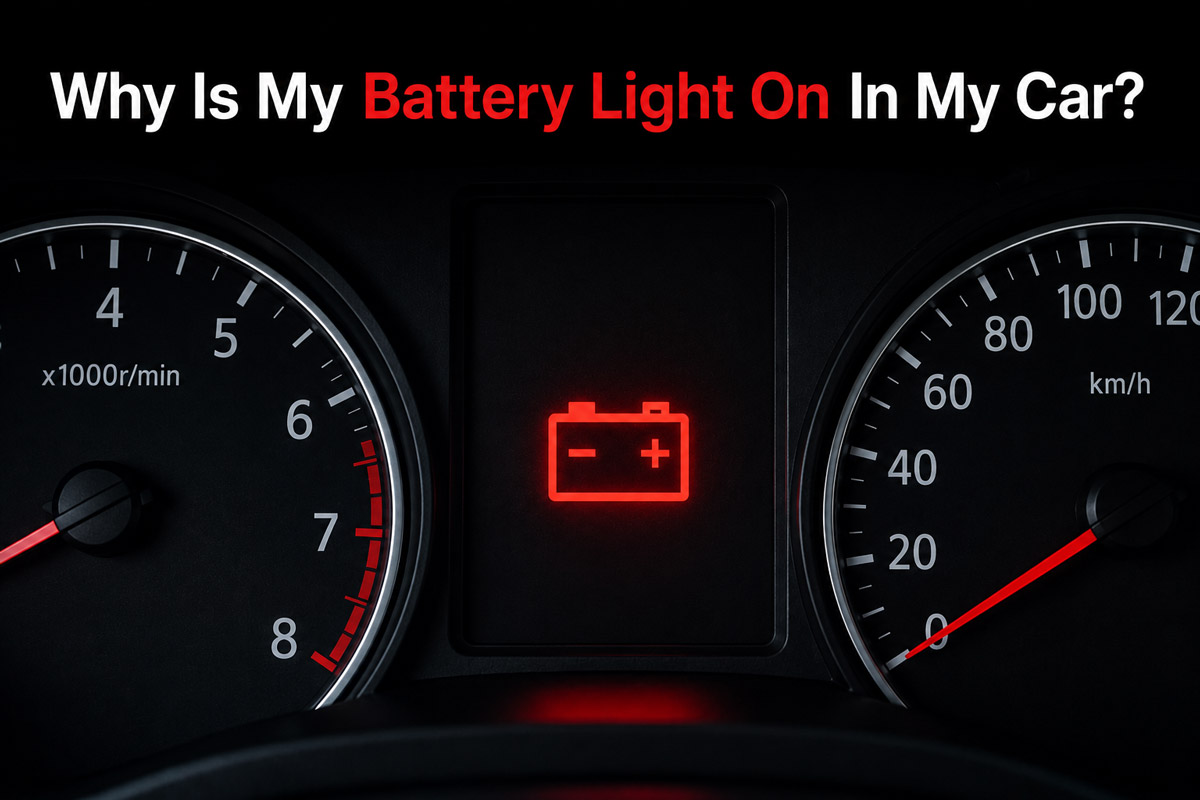
The red battery light on your dashboard indicates a severe charging system failure, meaning the alternator is no longer generating sufficient electricity. Consequently, your vehicle is running entirely on stored battery power. Once this limited reserve is depleted, the engine will stall, power steering will fail, and the car will shut down completely.
Key Facts / At a Glance:
- Trigger Threshold: The Powertrain Control Module (PCM) illuminates the battery light when system voltage drops below 12.5 volts.
- Normal Voltage: A healthy charging system operates between 13.5 and 14.5 volts while the engine is running.
- Time Limit: You typically have 20 to 30 minutes of driving time once the light turns on before the vehicle stalls.
- Top Culprit: Alternator failure is the most common cause, despite drivers frequently misdiagnosing it as a dead battery.
- Safety Warning: Never disconnect a battery terminal while the engine is running to “test” the alternator; this can fry modern vehicle computers instantly.
What Triggers the Battery Light to Turn On?
The battery light is triggered by the Powertrain Control Module (PCM) constantly monitoring the electrical output of the vehicle’s charging system. The charging system relies on a serpentine belt to spin the alternator, which generates alternating current (AC). Internal alternator diodes convert this AC into direct current (DC), and a voltage regulator caps the output to prevent frying electrical components.
When functioning correctly, this system produces 13.5 to 14.5 volts to power the vehicle’s ignition, fuel pumps, and accessories while simultaneously recharging the battery. If the PCM detects that the system voltage has dropped below 12.5 volts—indicating the battery is draining rather than charging—it instantly activates the red dashboard light to warn the driver of an impending stall.
What Are the Top Causes of an Active Battery Light?
1. Failing Alternator
A failing alternator is the most frequent reason the battery light illuminates. Inside the alternator, worn carbon brushes fail to make contact with the slip rings, or internal rectifying diodes burn out, halting the conversion of AC to DC. When the alternator dies, the electrical burden shifts entirely to the battery. You will often hear a high-pitched whining noise from worn alternator bearings just before failure.
2. Bad or Degraded Battery
A severely degraded battery can trigger the warning light if internal cell sulfation prevents it from accepting or holding a charge from the alternator. While the alternator might be pushing out 14 volts, a dead cell creates immense electrical resistance, causing the system voltage to destabilize.
3. Loose or Snapped Serpentine Belt
The serpentine drive belt physically connects the engine’s crankshaft to the alternator pulley. If this belt snaps, the alternator stops spinning instantly, generating zero electricity. If the belt is loose due to a weak automatic belt tensioner, it will slip under heavy electrical loads. Belt slip is usually accompanied by a sharp squealing noise upon engine startup or hard acceleration.
4. Corroded Terminals or Damaged Ground Straps
Heavy green or white oxidation on battery terminals creates high electrical resistance, physically blocking the flow of current between the alternator and the battery. Similarly, broken fusible links or rusted engine ground straps interrupt the circuit. In these cases, the primary components are healthy, but the electricity cannot complete its path.
How Long Can You Drive With the Battery Light On?
You can typically drive a standard gasoline vehicle for 20 to 30 minutes with the battery light on before the engine stalls. The exact timeframe depends entirely on the reserve capacity (RC) rating of your battery and the electrical load you place on it.
If the light comes on while driving, you must immediately reduce electrical consumption to buy time to reach a safe shoulder or repair shop. Turn off the air conditioning (which disengages the blower motor and compressor clutch), shut down the radio, unplug phone chargers, and turn off heated seats. If driving at night, you must leave your headlights on, which will reduce your driving window to less than 15 minutes.
How Do You Diagnose a Charging System Failure?
To isolate the root cause of the battery light, follow this exact sequence using a digital multimeter set to the 20V DC scale.
Step 1: Perform a Visual Inspection
With the engine off, open the hood and inspect the physical connections. Verify that the serpentine belt is intact and under tight tension. Inspect the battery terminals for heavy green corrosion and ensure the clamps cannot be twisted by hand.
- Success Checkpoint: You’ll know it’s safe to proceed to electrical testing when the belt is secure and the terminals are bare metal.
- Common Mistake: Proceeding to voltage testing without cleaning severely corroded terminals, which will yield falsely low readings.
Step 2: Measure Static Battery Voltage
Connect the red multimeter probe to the positive battery terminal and the black probe to the negative terminal with the engine completely turned off.
- Success Checkpoint: A healthy, fully charged battery will read 12.6 volts or slightly higher. A reading below 12.2 volts indicates a depleted or failing battery.
Step 3: Execute the Running Charging Test
Leave the multimeter connected, ensure all accessories are off, and start the engine. Observe the voltage reading on the multimeter screen.
- Success Checkpoint: The voltage must immediately jump to between 13.5 and 14.5 volts. If the voltage stays at 12.6V or steadily drops while the engine is running, the alternator is failing to generate a charge.
Step 4: Perform a Voltage Drop Test
If the running voltage is low, move the black probe to the metal casing of the alternator (chassis ground) while keeping the red probe on the positive battery terminal.
- Success Checkpoint: If the voltage suddenly jumps into the healthy 13.5V+ range, your alternator is fine, but you have a bad ground wire connection blocking the circuit.
How Much Will It Cost to Fix?
Repair costs vary drastically based on which component triggered the battery light. Always diagnose accurately before purchasing parts.
Note: Alternator costs lean toward the higher end ($500+) for modern luxury vehicles or if utilizing OEM (Original Equipment Manufacturer) parts rather than remanufactured aftermarket units.
Which Diagnostic Approach Should You Choose?
The DIY Multimeter Route
Using a cheap $15 digital multimeter is the preferred approach for budget-conscious drivers.
- Pros: Isolates the exact component failure quickly for minimal cost.
- Cons: Requires manual labor, getting dirty, and navigating safety risks around moving engine belts.
Auto Parts Store Testing
Most major auto parts retailers offer completely free digital load testing in their parking lots.
- Pros: Free service utilizing expensive, advanced diagnostic load testers that can pinpoint internal diode failure.
- Cons: Requires driving a compromised, stalling vehicle in traffic to reach the store. You will also face sales pressure to buy parts on-site.
Professional Shop Diagnostic
For tech-heavy modern drivers or those with complex European vehicles, professional diagnosis is the safest route.
- Pros: Pinpoints hidden wiring issues, communicates directly with the PCM, and guarantees repairs with nationwide warranties.
- Cons: Carries the highest upfront cost ($100-$150 just for the diagnosis) and requires a tow truck if the vehicle cannot be driven safely.
What Are the Most Common Diagnostic Mistakes?
Professional automotive technicians frequently see drivers waste hundreds of dollars by making these three diagnostic errors:
- Replacing the Battery Blindly: Drivers instinctively buy a new $200 battery when the car dies. The new battery starts the car, making them think it’s fixed, only for the car to stall again an hour later because a dead alternator drained the new battery.
- Overlooking Belt Tension: A driver installs a new alternator, but the battery light stays on. The true culprit was a weak automatic belt tensioner that allowed the belt to slip off the alternator pulley under load.
- Ignoring Damaged Ground Straps: Spending $500 on a new alternator and battery when a rusty $15 ground wire was creating too much electrical resistance to allow current to flow.
Frequently Asked Questions
Can a blown fuse cause the battery light to come on?
Yes. Many modern vehicles route the alternator’s exciter wire or the PCM’s sensing circuit through a dedicated fuse (often labeled “ALT” or “CHG”). If this fuse blows due to a power surge, the alternator will not know it needs to turn on, triggering the battery light.
Does revving the engine make the battery light go away?
If revving the engine causes the battery light to turn off or flicker, you almost certainly have worn carbon brushes inside the alternator or a slipping serpentine belt. The increased RPM forces the alternator to spin faster, temporarily bridging the mechanical gap and pushing voltage back above the 12.5V threshold.
Can I jumpstart a car with a bad alternator?
You can jumpstart the car to get the engine running, but the moment you disconnect the jumper cables from the donor vehicle, your car will stall again within minutes. A jumpstart only provides surface charge to a dead battery; it cannot replace the continuous power generation of a functioning alternator.
Why did my battery light come on after driving through a deep puddle?
Water splashing onto the engine bay can temporarily lubricate the serpentine belt, causing it to slip on the alternator pulley. The light will typically turn off on its own after a few minutes once the friction heat evaporates the water and the belt regains traction.