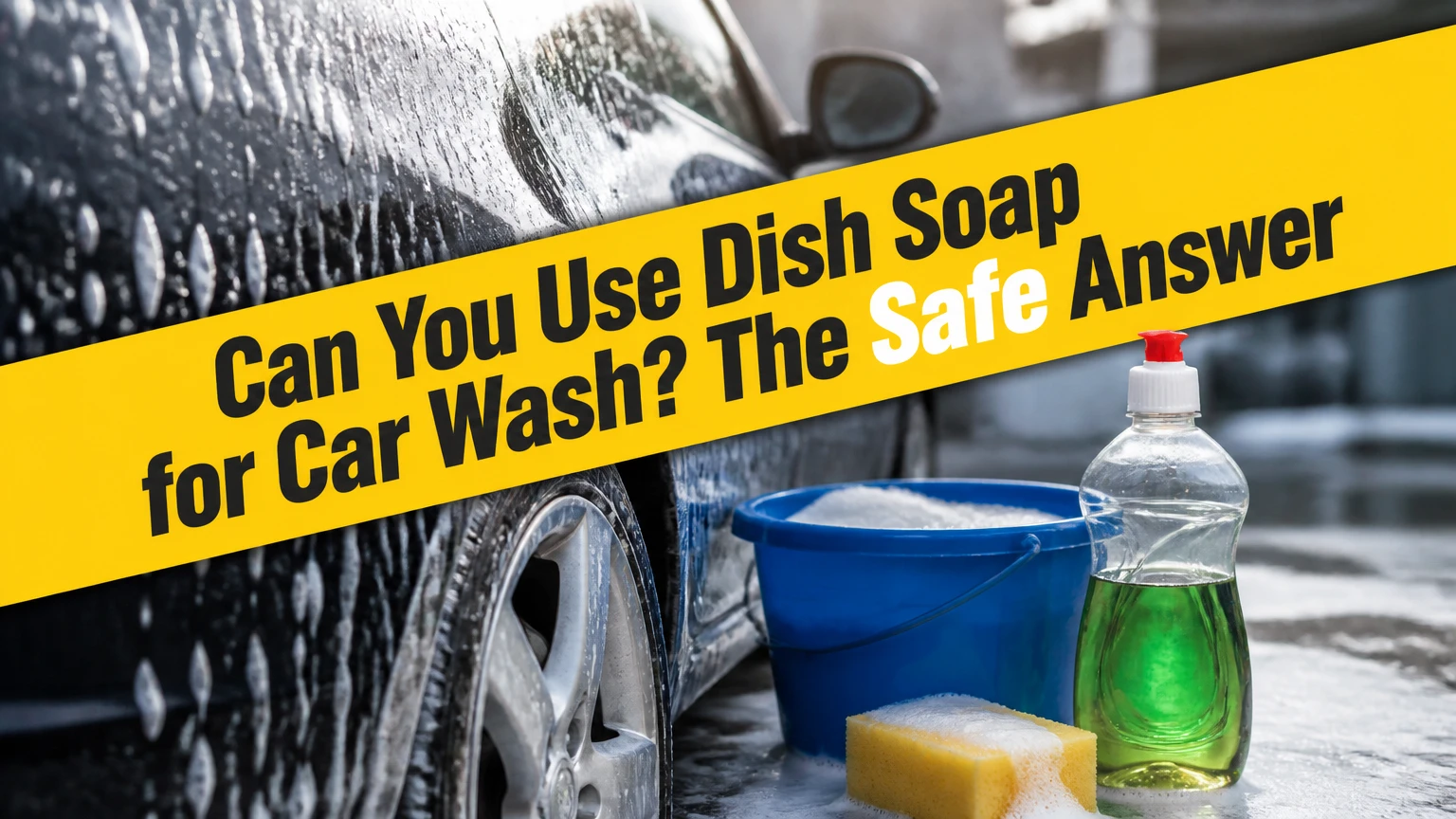
Yes, you can use dish soap for a car wash in an emergency, but dedicated car shampoo is the safer choice for routine cleaning. Dish soap is designed to remove cooking grease, so it can reduce wax or sealant protection and provide less wash lubrication. A single careful wash usually will not ruin modern automotive paint.
Key Facts
Dish soap can remove or weaken wax and some paint sealants, but it does not automatically destroy a vehicle’s clear coat after one wash.
Dedicated car shampoo contains cleaning surfactants and lubricants selected for painted automotive surfaces.
Swirl marks usually result from trapped grit, excessive pressure, or dirty wash media, not from dish soap alone.
Dish soap is a poor routine choice for ceramic coatings, waxed paint, matte finishes, and delicate exterior trim.
If dish soap is the only available option, use a small amount in cool water, rinse thoroughly, and protect the paint afterward.
A typical home wash takes 30-60 minutes and costs about $1-$4 with car shampoo, excluding equipment.
Can You Use Dish Soap for Car Wash?
Dish soap is acceptable for an occasional emergency wash when no automotive shampoo is available, provided the vehicle is rinsed and washed gently. Dish soap is not the best routine cleaner because its grease-cutting formula can remove protective waxes and its lubrication is usually less suited to moving gritty dirt across clear coat.
The important distinction is between cleaning ability and surface compatibility. Dish detergent cleans effectively because its surfactants surround oily material and suspend it in water. Automotive shampoo also uses surfactants, but its formulation normally gives greater lubricity, controlled foaming, easier rinsing, and less interference with waxes or sealants.
A single wash on a sound, factory-painted vehicle is unlikely to cause visible clear-coat failure. Claims that one wash strips 80-100% of every wax or sealant, or that ordinary dish soap immediately removes essential oils from rubber, are too absolute. Results vary with the product, concentration, water temperature, protection type, age of the trim, and washing technique.
Is dish soap safe for one emergency wash?
One diluted emergency wash is generally low risk for intact automotive paint, especially when the car is cool, shaded, and pre-rinsed. The main immediate hazards are soap drying on the surface, rubbing loose grit into the paint, and leaving detergent residue in seams or trim.
Dish soap becomes a poor choice when used weekly, mixed at high concentration, applied in direct sun, or combined with a stiff brush. The vehicle may look clean while losing its water-repellent protection. That loss increases the work required from the clear coat and makes later contamination more difficult to remove.
What Does Dish Soap Do to Automotive Surfaces?
Dish soap removes oily contamination and can reduce surface protection, while the washing technique determines whether the process creates scratches. Automotive paint, plastic trim, rubber seals, glass, wheels, and coatings do not all respond to detergent in the same way.
How does dish detergent clean grease?
Dish detergent contains surfactants with a water-attracting end and an oil-attracting end. The molecules surround hydrophobic grease, break it into smaller droplets, and help water carry those droplets away. Many formulas also contain solvents, builders, fragrances, preservatives, or enzymes.
That chemistry is useful on plates because food oils need aggressive removal. Car paint needs a different balance: enough cleaning power to release road film, plus enough lubrication to let a mitt glide over particles that remain on the panel.
Dish soap does not usually dissolve the clear coat during a normal wash. Clear coat is a cured automotive coating, not a layer of kitchen grease. The more realistic concern is the removal of waxes, spray sealants, dressing residues, and some weak surface treatments.
Will dish soap remove wax?
Dish soap can remove some wax and sealant protection, but the percentage depends on the product and the protection layer. A fresh synthetic sealant or ceramic coating may resist several washes, while an old carnauba wax layer may lose water behavior sooner.
| Surface protection | Likely effect of one dish-soap wash | Better follow-up |
|---|---|---|
| Carnauba wax, 2-8 weeks old | Reduced beading, partial removal | Apply fresh wax or spray sealant |
| Synthetic sealant, 1-6 months old | Possible weakening, variable removal | Inspect water behavior before recoating |
| Ceramic coating, 1-5 years old | Usually not removed, surface oils may be stripped | Use coating-safe shampoo and topper |
| Paint protection film, 1-10 years old | Film normally remains intact | Use film-safe shampoo and avoid abrasive tools |
| Unprotected clear coat | No protection to remove | Add a sealant after drying |
Water beading is not a complete measurement of protection. Hydrophobic behavior can decline because of road film, mineral deposits, or oils even when a coating remains bonded. Conversely, a highly beading surface may still have contamination that needs removal.
Does Dish Soap Damage Automotive Paint?
Dish soap normally does not chemically destroy a healthy clear coat during one properly rinsed wash. Repeated stripping, prolonged drying, abrasive contact, ultraviolet exposure, acidic contamination, and neglected maintenance create the conditions associated with dullness, oxidation, and premature coating failure.
Modern vehicles generally have a basecoat protected by a clear coat. The clear coat provides gloss and some resistance to ultraviolet radiation and chemicals, but it is not the vehicle’s only protection from the environment. Wax and sealants add sacrificial or barrier properties, while regular washing removes bird droppings, salt, pollen, and road film before those contaminants remain on the surface.
The strongest paint risk from dish soap is indirect. If detergent removes a wax layer and the owner does not replace it, the exposed finish receives more contamination and ultraviolet exposure. Dish soap also may leave a surface with less lubrication during the wash, which raises the chance of friction-related marring.
Why do swirl marks appear after washing?
Swirl marks appear when abrasive particles move between a wash tool and the painted surface. Dish soap can contribute indirectly if its lower-lubricity formula allows dirt to drag, but a dirty mitt, insufficient pre-rinse, hard pressure, or circular hand motion usually matters more.
Larry Kosilla of AMMO NYC summarizes the detailing rule as, “The best way to avoid swirls is to avoid touching the paint.” The practical interpretation is not to avoid washing. It is to remove loose grit with water first, use a clean lubricated mitt, and reduce contact with contaminated areas.
Dark colors reveal fine marring sooner than silver or white paint. A black vehicle can show damage after one careless wash, while a white vehicle may hide the same defects until strong sunlight or a detailing light exposes them.
Why Is Car Shampoo Safer Than Dish Soap?
Car shampoo is safer because it combines controlled cleaning with higher surface lubrication and a formulation intended for automotive finishes. The safer product is not necessarily the one that creates the most foam; lubricity, dilution accuracy, rinsing behavior, and compatibility with existing protection matter more.
| Attribute | Dish soap, typical household formula | Dedicated car shampoo, typical formula |
|---|---|---|
| Primary target | Food grease and oils | Road film, dust, and traffic grime |
| Typical dilution | About 5-15 mL per 19 L water, product-dependent | About 30-90 mL per 19 L water, label-dependent |
| Surface lubrication | Low to moderate | Moderate to high |
| Wax compatibility | May reduce wax performance | Usually designed to preserve wax |
| Rinsing behavior | Variable, residue possible | Usually controlled for automotive rinsing |
| Routine frequency | Occasional emergency use | Weekly or condition-based use |
| Typical retail price | $2-$5 per bottle | $8-$25 per bottle |
| Typical cost per wash | About $0.10-$0.40 | About $0.40-$1.50 |
pH alone does not determine whether a soap is safe. Dish products vary by brand and country, and a pH reading near neutral does not guarantee high lubricity or wax compatibility. A pH-neutral car shampoo can still scratch paint if the wash mitt contains grit or the user applies heavy pressure.
Which cleaning product should each driver choose?
| Driver or vehicle condition | Recommended product | Reason |
|---|---|---|
| Weekly commuter car | pH-neutral car shampoo | Preserves protection during repeated washes |
| Unprotected older vehicle | Shampoo plus spray sealant | Cleans gently and restores short-term protection |
| Ceramic-coated vehicle | Coating-safe shampoo | Avoids unnecessary residue and harsh additives |
| Matte or satin paint | Matte-finish shampoo | Prevents gloss-enhancing ingredients |
| Emergency with no shampoo | Highly diluted dish soap | Acceptable once with careful technique |
| Heavy grease on an engine bay | Automotive degreaser | More controlled than using dish soap on paint |
What Is the Safest Way to Use Dish Soap on a Car?
The safest emergency method uses shade, a thorough pre-rinse, approximately 5 mL of dish soap in 19 L of water, a clean microfiber mitt, and immediate rinsing. The wash should take about 30-45 minutes, and the vehicle should receive fresh protection after drying.
Before starting
| Requirement | Typical specification |
|---|---|
| Water | 19 L, or 5 US gallons, for the wash bucket |
| Dish soap | About 5 mL, approximately 1 teaspoon |
| Wash media | One clean microfiber or lambswool mitt |
| Rinse system | Second 19 L bucket, or a strong hose rinse |
| Drying towel | Two to four plush microfiber towels |
| Working conditions | Shade, cool panels, 10-30°C surface temperature |
| Total time | 30-45 minutes |
| Typical consumable cost | $0.25-$2, excluding buckets and towels |
Product concentration differs widely, so the label should take priority over a generic measurement. More detergent does not make the wash safer. Extra soap can increase residue and make thorough rinsing harder.
Step 1: Move the car into shade
Park on a cool surface away from direct sunlight and allow hot panels to cool. Hot paint accelerates evaporation, which can leave detergent spots before the wash is complete.
You will know the condition is suitable when the panel feels close to ambient temperature. The common mistake is starting immediately after driving, especially on a dark vehicle.
Step 2: Remove loose grit with water
Rinse the roof, glass, hood, trunk, upper doors, lower doors, wheels, and wheel wells from top to bottom. Spend extra time on rocker panels and rear bumpers because those areas collect abrasive road grit.
You will know the pre-rinse worked when loose dust and mud have visibly left the surface. The common mistake is using the wash mitt before removing sand and dried dirt.
Step 3: Mix a weak solution
Add about 5 mL of dish soap to 19 L of clean water, then mix gently. Do not pour concentrated detergent directly onto paint, rubber seals, plastic trim, or a dry panel.
You will know the solution is adequate when the water has light, stable foam rather than a thick layer of bubbles. The common mistake is treating foam volume as a measure of cleaning power.
Step 4: Wash one small section at a time
Start at the roof and glass, then move to the hood, upper sides, trunk, lower sides, and bumpers. Use straight passes with almost no downward pressure, and rinse the mitt after each panel or after each heavily soiled section.
You will know the technique is working when the mitt glides without dragging and the panel releases dirt without scrubbing. The common mistake is washing the wheels and lower rocker panels first, then carrying their grit onto cleaner paint.
Step 5: Rinse before the solution dries
Rinse each completed section, then perform a final rinse over the whole vehicle. Open doors, trunk, and hood briefly to remove soap trapped around seals and jambs.
You will know the rinse is complete when no slippery detergent film remains on glass or trim. The common mistake is allowing suds to dry in direct sun, where mineral-rich water can leave spots.
Step 6: Dry without grinding in residue
Use a clean plush microfiber drying towel and blot or glide lightly across the surface. Replace the towel when it becomes saturated or visibly dirty.
You will know the vehicle is dry when seams, mirrors, emblems, and panel gaps no longer release water. The common mistake is using an old bath towel, which can contain hard fibers and embedded grit.
Step 7: Replace lost protection
Apply a compatible spray wax, synthetic sealant, or ceramic coating topper after the surface is clean and dry. Follow the product’s cure time, which commonly ranges from 15 minutes to 24 hours.
You will know the protection has spread correctly when the product wipes clear without oily smears. The common mistake is applying wax over remaining detergent residue or mineral deposits.
When Should You Avoid Dish Soap Completely?
Dish soap should be avoided on matte paint, fresh paint, convertible fabric, delicate trim, and vehicles with a manufacturer-specified coating-care program. Owners of ceramic coatings and paint protection film should use the shampoo recommended by the coating or film manufacturer when possible.
Freshly painted panels may need several weeks to cure according to the body shop’s instructions. Dish detergent is not a substitute for a coating-safe cleaner during that period. Convertible fabric also requires a fabric-specific cleaner because household dish detergent can affect water-repellent treatments.
| Situation | Why dish soap is unsuitable | Correct alternative |
|---|---|---|
| Matte or satin finish | Can alter apparent sheen through residue or uneven cleaning | Matte-safe automotive shampoo |
| Fresh body-shop paint | Cure requirements vary by paint system | Follow the repair facility’s written instructions |
| Ceramic coating | Stripping oils can change slickness and appearance | Coating-safe shampoo |
| PPF or vinyl wrap | Strong rubbing can damage exposed edges | Film-safe shampoo and soft mitt |
| Fabric convertible roof | Not formulated for woven automotive textiles | Convertible-top cleaner |
| Heavily salted vehicle | Soap alone does not neutralize all contamination | Thorough rinse, then automotive shampoo |
A coated vehicle that suddenly stops beading does not necessarily need a new coating. Road film, iron particles, tree sap, and hard-water minerals can mask hydrophobic behavior. A coating-safe decontamination process may restore the apparent performance without polishing or recoating.
Can Dish Soap Clean Wheels, Tires, and Trim?
Dish soap can clean lightly dirty tires and some hard exterior plastics, but dedicated wheel, tire, rubber, and trim products provide better control. Never assume a household detergent is safe for bare aluminum, anodized wheels, polished metal, brake components, or rubber that already shows cracking.
For wheels, first identify the finish and whether the wheel is hot. Painted and clear-coated wheels generally tolerate mild shampoo, while acid-sensitive, polished, or damaged finishes need a product chosen for that material. Dish soap also lacks the targeted chemistry used by iron removers and wheel cleaners.
For tires, a small amount of diluted dish detergent can remove old dressing, but repeated use may leave rubber looking dry. Rinse the sidewall thoroughly and use a water-based tire dressing if the manufacturer permits it.
For exterior rubber, the safest routine is a mild automotive cleaner followed by a product labeled for rubber or plastic. Gray trim may indicate oxidation, not simply missing oil, so a dressing can improve appearance without reversing material aging.
How Should You Remove Bugs, Sap, and Bird Droppings?
Bugs, tree sap, and bird droppings should be softened before washing rather than scrubbed with dish soap. Soak the contamination with water or a paint-safe pre-cleaner for 2-10 minutes, then lift it with a lubricated microfiber towel.
Bird droppings can contain grit and acidic compounds, while tree sap bonds more strongly as it dries. Place a wet microfiber towel over the spot, keep it damp, and wipe only after the material softens. Use a dedicated tar or sap remover for hardened residue, testing first in an inconspicuous area.
| Contamination | Softening time, typical | Suitable method |
|---|---|---|
| Fresh bird dropping | 2-5 minutes | Wet microfiber towel, light lift |
| Dried bird dropping | 5-10 minutes | Repeated soaking, no scraping |
| Fresh bug residue | 3-8 minutes | Pre-wash foam or paint-safe cleaner |
| Tree sap | 5-15 minutes | Sap remover and microfiber towel |
| Road tar | 5-20 minutes | Tar remover, then shampoo wash |
| Water spots | 1-5 minutes | Mineral-spot remover, then rinse |
A plastic razor, kitchen sponge, melamine foam pad, or dry paper towel can mark clear coat. If contamination has etched the finish, cleaning will not restore the gloss; polishing may be necessary.
What If You Already Used Dish Soap?
If dish soap has already been used, rinse the vehicle thoroughly, inspect the paint and trim, dry it safely, and restore protection if the finish looks clean. A single wash usually requires no paint correction unless improper rubbing created visible marring.
Use a bright inspection light or direct, indirect daylight to check for streaks and scratches. If residue remains, wash again with pH-neutral car shampoo rather than applying a strong solvent immediately. For water spots, use a paint-safe mineral deposit remover according to its label.
| Observed problem | Likely cause | Recovery |
|---|---|---|
| Flat water behavior | Wax or sealant weakened | Apply compatible spray sealant |
| White detergent film | Soap dried or was under-rinsed | Rewash in shade with car shampoo |
| Fine circular marks | Grit and pressure during washing | Light machine polish if necessary |
| Gray rubber trim | Existing oxidation or detergent residue | Clean, dry, and apply trim protectant |
| Sticky sap remains | Contamination was not softened | Use a dedicated sap remover |
| No visible change | Protection may still be present | Continue routine washing with car shampoo |
Do not use household bleach, abrasive powder, or undiluted rubbing alcohol on painted panels to correct a detergent problem. Those products can create a larger defect than the original residue.
What Are the Best Alternatives to Dish Soap?
The best alternative is a pH-neutral automotive shampoo matched to the vehicle’s finish and protection. Waterless wash products, rinseless wash solutions, foam pre-washes, and professional car washes each fit different water, weather, and contamination conditions.
| Alternative | Best condition | Typical water or product need | Main limitation |
|---|---|---|---|
| pH-neutral car shampoo | Normal weekly washing | 30-90 mL per 19 L water | Requires buckets and rinse water |
| Rinseless wash | Moderate dirt, water restrictions | About 30-60 mL per 7.5 L water | Unsafe for heavy mud without pre-rinse |
| Waterless wash | Light dust on protected paint | 500-750 mL spray product | High towel demand and technique sensitivity |
| Snow foam pre-wash | Heavy road film before contact wash | About 100-200 mL concentrate, product-dependent | Usually needs a pressure washer |
| Touchless automatic wash | Winter salt or quick cleaning | $10-$25 per visit, typical | May leave bonded contamination |
| Professional hand wash | Valuable or delicate vehicle | $30-$100, location-dependent | Cost and product quality vary |
A rinseless wash is not a magic substitute for lubrication. It works when the solution is mixed correctly and the vehicle is only lightly to moderately dirty. A pressure rinse should precede any contact method when mud, sand, or salt is substantial.
How Much Does a Safe Car Wash Cost?
A typical home wash with dedicated shampoo costs about $1-$4 in consumables, while a basic automatic wash commonly costs $10-$25 and a professional hand wash often costs $30-$100. Dish soap may cost less at the shelf, but the savings are small because one bottle supports many washes.
| Approach | Typical consumable or service cost | Typical duration | Suitable frequency |
|---|---|---|---|
| Dish soap emergency wash | $0.10-$0.40 per wash | 30-45 minutes | Rare emergency |
| Dedicated shampoo at home | $0.40-$1.50 per wash | 30-60 minutes | Weekly or biweekly |
| Rinseless wash at home | $0.75-$2.50 per wash | 25-45 minutes | Light dirt, regular use |
| Automatic wash | $10-$25 per visit | 5-15 minutes | Convenience or winter rinse |
| Professional hand wash | $30-$100 per visit | 45-120 minutes | Delicate or high-value vehicles |
| Paint correction | $300-$1,500, typical | 4-20 hours | Defect repair, not routine care |
Actual paint correction and trim replacement prices vary by region, vehicle size, defect depth, and finish. Dish soap is not a direct cause of every repair bill, but repeated poor washing can add protection loss and marring to an already neglected vehicle.
What Do Experienced Detailers Get Wrong About Dish Soap?
The common mistake is treating dish soap as either completely harmless or instantly destructive. The accurate position is narrower: dish soap is an effective cleaner with the wrong optimization target for frequent paint care.
Three practitioner rules matter most:
- Technique outweighs product branding for scratch prevention. A premium shampoo cannot prevent marring when a dirty mitt is pressed into gritty paint.
- Beading does not prove coating survival. Water behavior changes with contamination, oils, and surface temperature, so inspect and clean before concluding that protection has failed.
- Protection removal is not clear-coat removal. Dish soap can reduce a sacrificial wax layer without dissolving the cured clear coat beneath it.
Another counterintuitive point is that excessive car shampoo can also create problems. Overdosing may leave residue, make rinsing difficult, and encourage the user to scrub harder. Accurate dilution and clean wash media are more valuable than maximum foam.
The Bottom Line: Can You Use Dish Soap for Car Wash?
You can use dish soap for car wash cleaning once in an emergency, but dedicated car shampoo is the correct routine choice. Dish soap may weaken wax or sealant protection, while poor washing technique creates the more immediate risk of swirl marks. Use a diluted solution only on cool paint, pre-rinse thoroughly, avoid scrubbing, rinse completely, and reapply protection afterward.
A $10-$25 bottle of automotive shampoo typically costs less than correcting avoidable marring or replacing neglected trim. Choose the product according to the finish: pH-neutral shampoo for standard paint, coating-safe shampoo for ceramic coatings, and matte-safe shampoo for non-gloss finishes.
Frequently Asked Questions
Can I use Dawn dish soap on a black car?
You can use diluted Dawn once on a black car, but the dark finish will reveal wash-induced marring more readily than a light color. Pre-rinse thoroughly, use a clean microfiber mitt, apply almost no pressure, and dry with plush towels. Replace wax or sealant afterward if the paint was previously protected.
How often can I wash my car with dish soap?
There is no useful routine interval for dish soap because it is not designed as regular automotive shampoo. If an emergency requires it, use it once and return to car shampoo for subsequent washes. Weekly or biweekly detergent washing increases the chance of losing wax protection and leaving trim dry or streaked.
Can I wash my car with hand soap instead?
Hand soap is not a reliable substitute for car shampoo because formulas vary and may contain moisturizers, fragrances, dyes, or antibacterial additives that leave residue. If no car soap is available, a small amount of mild dish soap is generally more predictable for one emergency wash than an unknown bar or liquid hand soap.
Can I wash a car with laundry detergent?
Laundry detergent should not be used on automotive paint because it may contain builders, brighteners, enzymes, fragrances, and stronger alkalinity than a car shampoo. Those ingredients can leave residue or interfere with wax and sealants. Use a dedicated automotive shampoo, or postpone the wash until one is available.
Is a pressure washer safer than dish soap?
A pressure washer can reduce contact and remove loose grit, but excessive pressure or a close nozzle can damage trim, emblems, decals, and loose paint. Use a wide fan pattern, keep the nozzle several inches away, and follow with a lubricated contact wash when the contamination requires it.