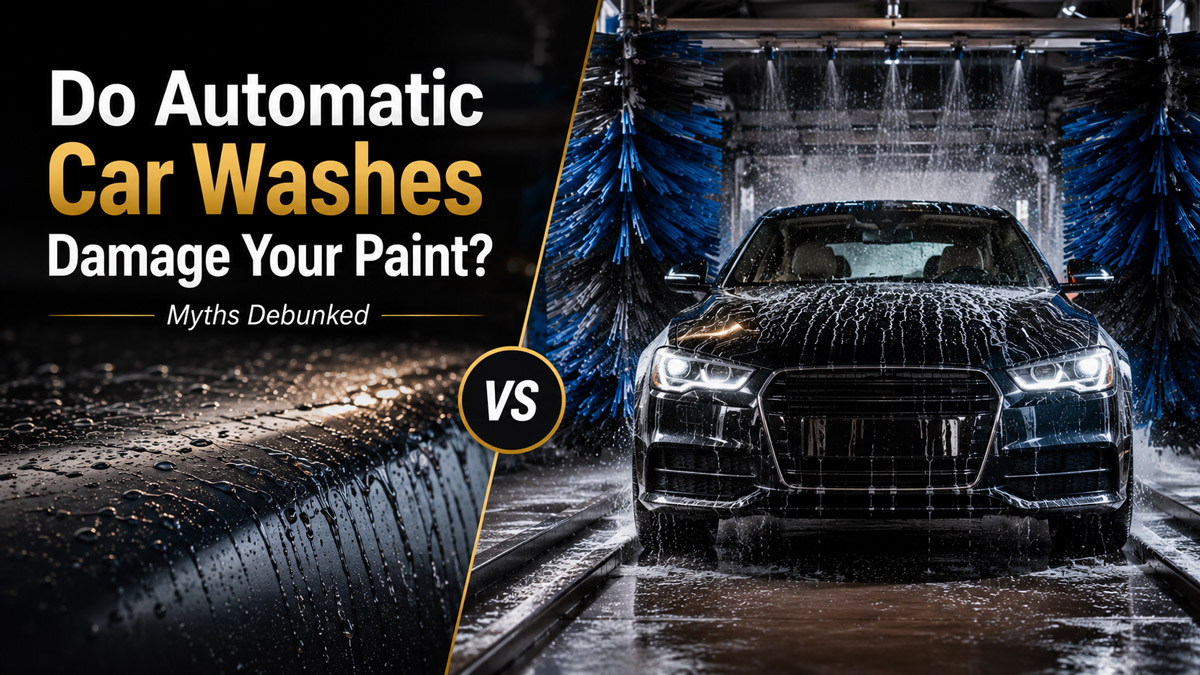
Yes, automatic car washes can damage your vehicle’s paint, but the severity depends entirely on the wash type and facility maintenance. Traditional friction washes often inflict micro-scratches that dull clear coats, while touchless systems use aggressive chemicals that strip protective waxes. However, skipping washes causes far worse permanent environmental etching.
Key Facts / At a Glance
- Friction washes (Soft-Touch): Use closed-cell foam that can trap abrasive grit from previous vehicles, acting like fine sandpaper on clear coat.
- Touchless washes: Rely on high-pH (alkaline) and low-pH (acidic) chemicals heated to 100°F–120°F, which can strip natural carnauba waxes.
- Self-serve bays: The shared foaming brush is the single highest-risk tool for introducing deep scratches to automotive paint.
- Paint correction: Fixing automated car wash swirl marks requires machine polishing, typically costing between $250 and $900.
- The lesser evil: Bird droppings and road salt will permanently oxidize and pit bare metal; frequent automated washing is vastly preferable to no washing.
How Does an Automatic Car Wash Work?
An automatic car wash is a fully mechanical facility engineered to clean a vehicle’s exterior using a structured sequence of chemical applications, high-pressure water, and mechanical or touchless agitation. Modern express tunnels utilize advanced computer sensors to map the vehicle’s profile, adjusting water pressure and chemical dosing accordingly.
The 5-Step Tunnel Process
Express tunnel car washes follow a strict chemical and mechanical sequence to break the ionic bonds of road film:
- Pre-Wash & Emulsification: The vehicle enters the bay, where a low-pressure arch sprays specialized surfactants to loosen surface grime.
- High-Pressure Blasting: Focused water jets operating at 1,000 to 1,200 PSI target the wheels, rocker panels, and undercarriage to clear heavy mud and road salt.
- Agitation / Chemical Bath: Depending on the wash type, the vehicle is either scrubbed by mechanical foam curtains or soaked in high-pH and low-pH chemical solutions to break down organic and petroleum-based soils.
- Spot-Free Rinse: The vehicle passes under a final arch supplying Reverse Osmosis (RO) filtered water to ensure mineral-free drying.
- Drying: High-velocity heated air blowers blast moisture off the surface to prevent water spotting.
What Are the Main Types of Car Washes?
Different car wash facilities utilize entirely different mechanisms for dirt removal. Understanding these mechanisms reveals exactly how each system interacts with automotive clear coat.
Car Wash Types & Specification Comparison
| Car Wash Type | Cleaning Mechanism | Typical Price | Timeframe |
|---|---|---|---|
| Soft-Touch / Friction | Closed-cell foam or microfiber wraps | $10 – $25 | 3–5 mins |
| Touchless / Touch-Free | High-pressure jets & harsh soaps | $12 – $30 | 4–6 mins |
| Self-Serve Bay | User-operated wand & foam brush | $5 – $15 | 5–10 mins |
| Professional Hand Wash | pH-neutral shampoo & microfiber mitts | $50 – $150 | 45–90 mins |
(Note: Monthly unlimited wash memberships at automated tunnels typically range from $30 to $55 per month.)
Why Do Soft-Touch Washes Cause Swirl Marks?
Soft-touch automatic washes employ computer-controlled, rotating microfiber cloths or closed-cell foam curtains. The cleaning material itself is engineered to be gentle, replacing the stiff, scratch-prone nylon brushes used in older decades.
However, soft-touch washes cause paint damage because the foam curtains physically slap the vehicle to remove dirt, and these curtains rarely remain perfectly clean. If the facility lacks strict maintenance, the brushes trap abrasive grit, sand, and rock chips from preceding vehicles. When these contaminated brushes spin against your car at high speeds, they effectively “sandblast” the paint. This abrasive action introduces microscopic scratches.
Automotive clear coat is incredibly thin—often measuring only 1.5 to 2.0 mils (thousandths of an inch) thick. Repeated exposure to friction washes creates web-like abrasions called swirl marks. Over time, these dense clusters of micro-scratches scatter light rather than reflecting it cleanly, leaving the clear coat looking dull, faded, and heavily oxidized.
Are Touchless Car Washes Safe for Clear Coat?
Touchless car washes make absolutely zero physical contact with the vehicle, eliminating the risk of mechanical scratching or swirl marks. This makes touchless systems visually safer for delicate trim, mirrors, and soft paint finishes.
To remove heavy road film without friction, touchless washes rely exclusively on dual-stage chemical engineering and water pressure. Touchless bays apply strongly alkaline pre-soaks (typically pH 10.0 to 12.0) designed to melt away organic matter and petroleum-based soils.
While properly calibrated touchless chemicals will not instantly burn clear coat, the aggressive detergents cause invisible damage to protective layers. These heavy-duty cleaners strip away natural carnauba waxes, degrade synthetic polymer sealants, and dry out rubber window seals. Furthermore, touchless washes often fail to completely remove “traffic film”—a thin, statically bonded layer of baked-on exhaust soot and oil that only physical agitation can safely lift.
What Are Common Car Wash Mistakes to Avoid?
Vehicle owners frequently introduce severe paint damage by making avoidable errors at commercial car wash facilities. Avoiding these specific actions preserves the integrity of the clear coat.
- Using the Self-Serve Foam Brush Directly: Never scrape a self-serve bay’s shared foaming brush over automotive paint. The brush acts like coarse sandpaper because it traps heavy dirt, gravel, and brake dust left behind by the previous customer’s muddy truck bed or wheels.
- Washing a Freshly Painted Vehicle: Do not take a vehicle to an automatic car wash for at least 30 to 90 days after receiving bodywork or a repaint. Fresh clear coat is actively outgassing solvents; it remains incredibly soft and highly vulnerable to pressure chips and micro-marring during this curing window.
- Allowing Attendants to Hand-Dry Your Vehicle: If an express tunnel employs attendants to dry cars with microfiber towels at the exit, decline the service. Express wash attendants often use the exact same towel on dozens of vehicles, forcefully rubbing trapped dirt and grit straight back into your freshly cleaned clear coat.
How Can You Fix Car Wash Paint Damage?
Automated car washes typically leave behind two distinct types of surface defects. Correcting these defects requires specific chemical or mechanical interventions.
Fixing Swirl Marks and Micro-Scratches
Web-like scratches visible under direct sunlight require professional paint correction. Paint correction involves machine polishing the vehicle using an abrasive chemical compound and a dual-action polisher to physically level the clear coat, removing the damaged microscopic top layer. Because clear coat is finite, heavy compounding cannot be done indefinitely. Professional correction costs typically range from $250 to $900 depending on the vehicle’s size and the severity of the marring.
Fixing Hard Water Spots
Dull, white chalky spots left on the paint after drying are hard water spots, typically caused by a facility’s poorly calibrated water reclamation or reverse osmosis filtration systems. To fix this, use a dedicated automotive water spot remover or a diluted 1:1 white vinegar and distilled water solution. The mild acid chemically dissolves the mineral bonds without requiring heavy scrubbing, preventing further scratching.
Which Car Wash Method Should You Choose?
Selecting the correct car wash method depends entirely on how the vehicle is used, stored, and protected.
The Daily Driver / Commuter
Goal: Maximum convenience and rust prevention.
Strategy: Use modern touchless automatic washes every 1 to 2 weeks to keep corrosive salt and grime off the undercarriage without introducing heavy brush swirls. Because the alkaline touchless soaps strip wax, pair this routine with a highly durable DIY synthetic sealant or spray ceramic applied twice a year to shield the clear coat.
The Car Enthusiast / Luxury Vehicle Owner
Goal: Flawless paint perfection.
Strategy: Avoid all automatic friction washes entirely. Rely strictly on hand washing using the two-bucket method, pH-neutral car shampoo, and grit guards. If hand washing at home is impossible, use self-serve bays strictly for the high-pressure rinse wand to blast away loose dirt, but never touch the paint with the shared foaming brush.
Vehicles with Ceramic Coatings or PPF
Goal: Preserving expensive aftermarket protection.
Strategy: Ceramic coatings and Paint Protection Film (PPF) are highly chemical-resistant (easily withstanding high pH levels) but can still be marred by the heavy mechanical friction of spinning brushes. Stick exclusively to touchless automatic systems. The high-pressure wash easily slides dirt off the hydrophobic coated surface, and the touchless format completely preserves the physical integrity of the film and coating.
Frequently Asked Questions
Does a touchless car wash ruin ceramic coating?
No, a touchless car wash will not ruin a true, professionally applied ceramic coating. Ceramic coatings are highly chemical-resistant and easily withstand the pH 10–12 alkaline soaps used in touchless bays. However, the harsh soaps may temporarily mask the coating’s hydrophobic properties until the vehicle is properly decontaminated.
Are soft-touch car washes better than touchless?
Soft-touch washes are better at removing stubborn, statically bonded traffic film and heavy mud because they use physical friction. However, they are worse for the long-term health of your paint, as the foam brushes inevitably cause swirl marks.
How often should you take your car through an automatic wash?
During winter months or in coastal areas, taking a daily driver through a touchless automatic wash every one to two weeks is ideal for preventing rust and salt buildup. In milder climates, washing every two to three weeks is sufficient to prevent environmental contaminants like bird droppings from etching the clear coat.
Can automatic car washes damage windshield wipers or antennas?
Yes, the mechanical force of spinning brushes and heavy foam curtains in a friction wash can easily bend fixed antennas, rip off rear windshield wipers, and misalign side mirrors. Most express tunnels require customers to remove or retract antennas and turn off automatic rain-sensing wipers before entering the bay.