When Do Brake Pads Need to Be Replaced?
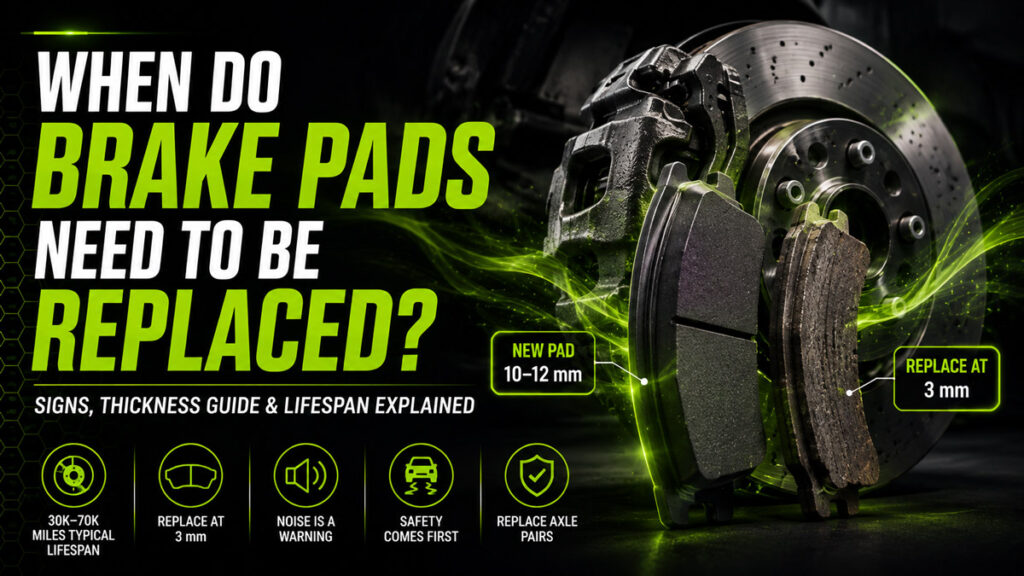
Brake pads need to be replaced when their friction material reaches approximately 3 millimeters, when a wear indicator activates, or when braking symptoms show that safe stopping performance is deteriorating. Most brake pads last 30,000 to 70,000 miles, but thickness and condition are more reliable replacement measures than mileage alone. Key Facts at a Glance […]
How to Inspect Brake Pads and Rotors
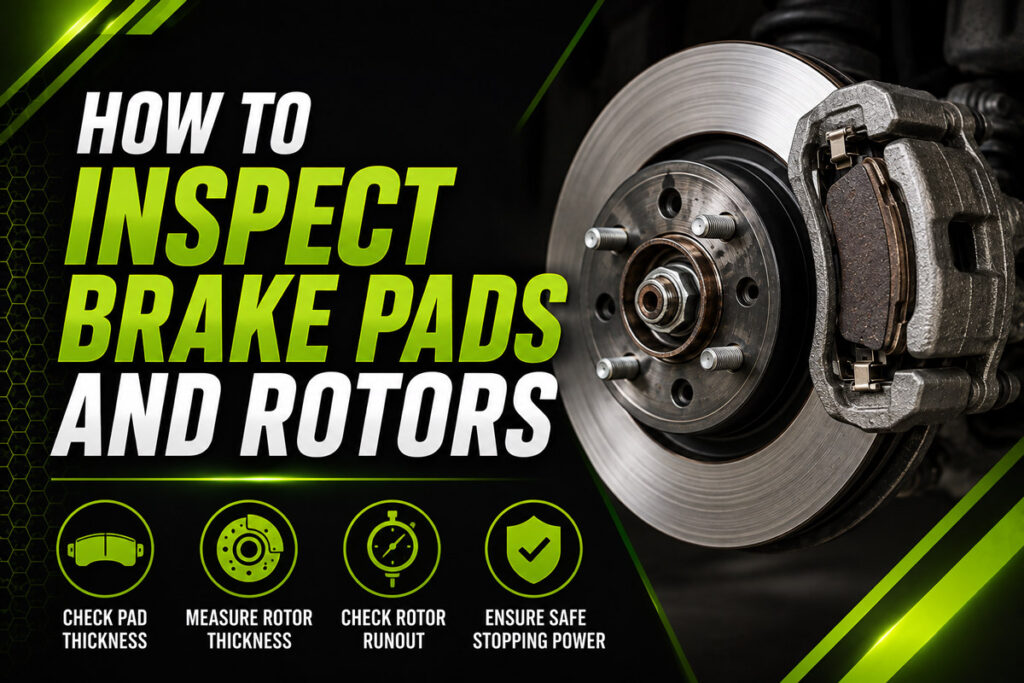
Learning how to inspect brake pads and rotors guarantees your vehicle stops safely while preventing costly metal-on-metal damage. This 7-step process takes under two hours per axle, requiring only basic lifting tools and precision gauges. The single biggest factor for success is physically measuring both the inner and outer pads, as uneven wear hides dangerous […]
What Is a Group Size Battery?

A group size battery is a battery classified by an industry-standard code describing its physical dimensions, terminal position, and mounting configuration. The group number helps ensure the battery fits the vehicle tray, remains securely clamped, clears surrounding components, and connects to the positive and negative cables without stretching or crossing them. What Does a Battery […]
Is It Safe to Drive With the Airbag Light On?
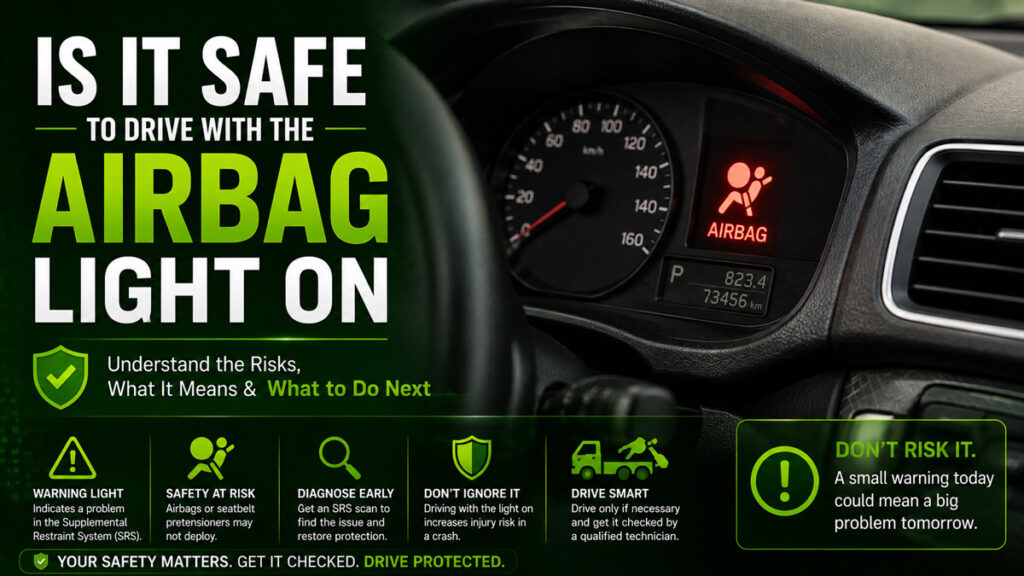
No, it is not considered safe to drive with the airbag light on. The warning means the Supplemental Restraint System has detected a fault, so one or more airbags, crash sensors, or seat-belt pretensioners may not operate correctly in a collision. Limit driving to a direct trip to a qualified repair facility unless other symptoms […]
Should Airbags Deploy in a Rear-End Collision?
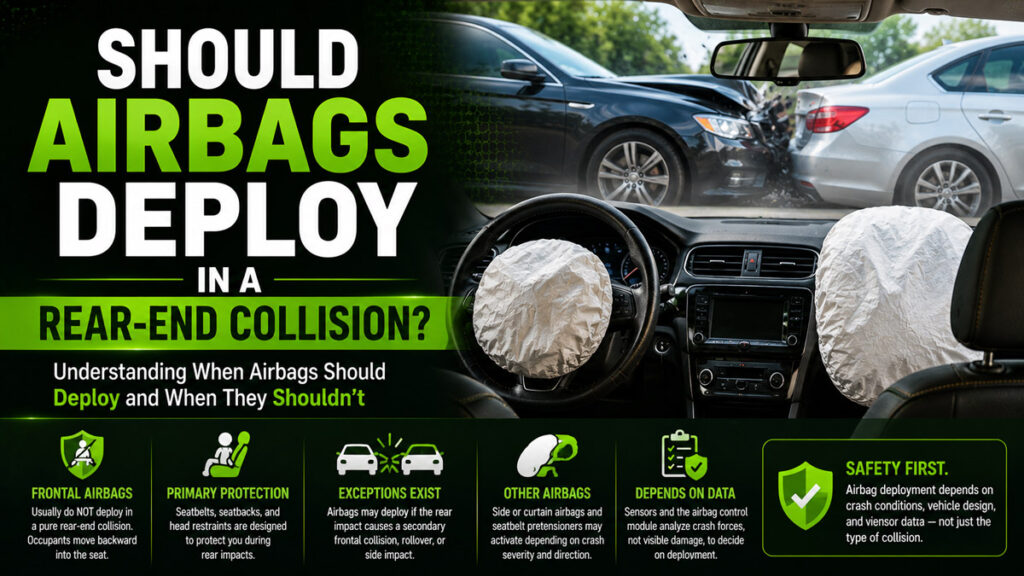
Frontal airbags should not normally deploy in a pure rear-end collision because occupants initially move backward into their seats rather than forward toward the steering wheel or dashboard. However, side, curtain or frontal airbags may deploy when the crash includes substantial sideways movement, a rollover or a secondary frontal impact. Should Frontal Airbags Deploy in […]
How to Start a Car After Airbags Deploy Safely
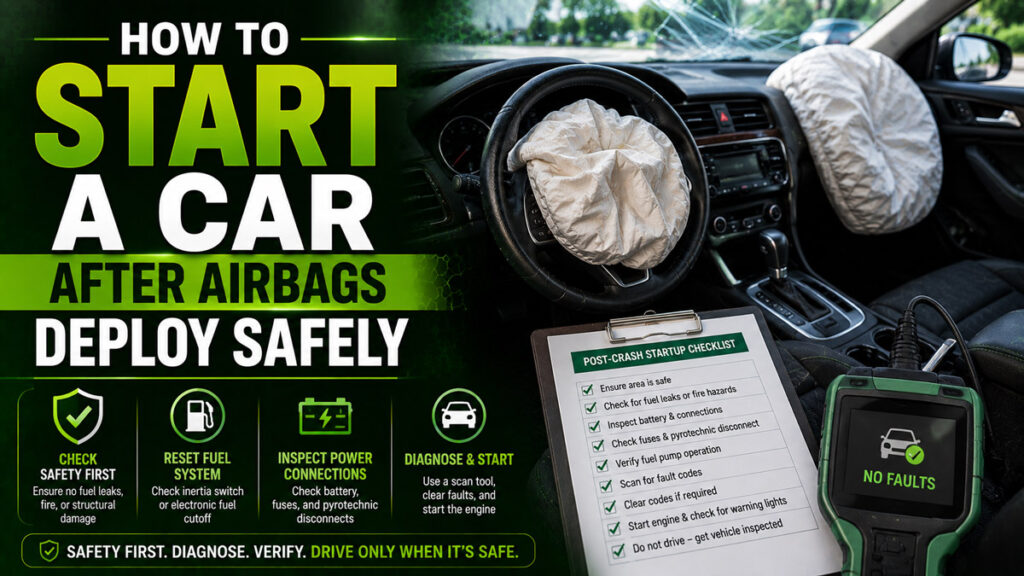
To start a car after airbags deploy, first confirm that the vehicle has no fuel leak, electrical damage, fluid loss, fire risk, or structural damage. A restart may then require resetting a manufacturer-installed fuel cutoff, replacing a pyrotechnic battery safety terminal, repairing collision damage, or clearing an electronic crash shutdown with a capable diagnostic tool. […]
How to Reset an Airbag Module Safely
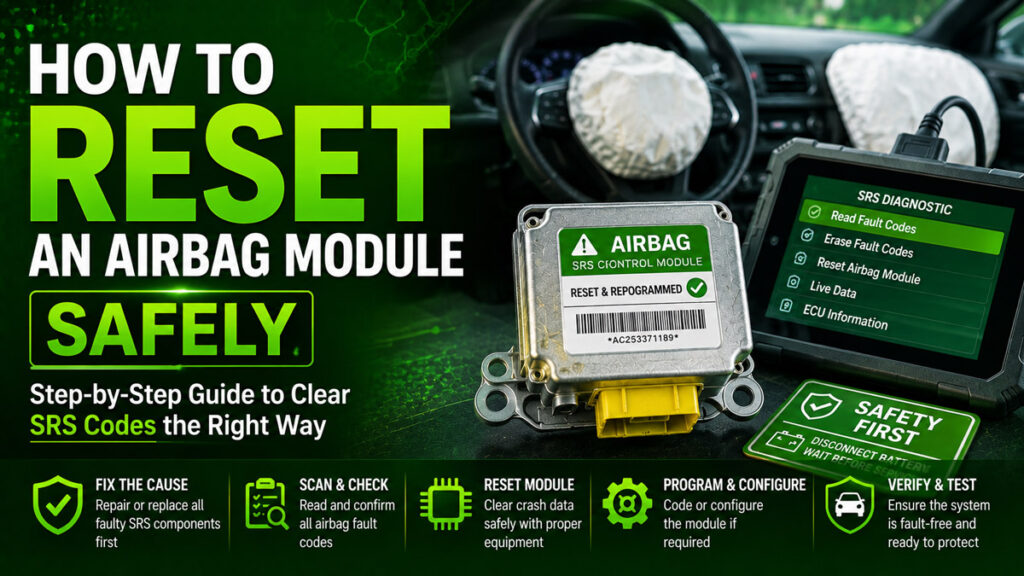
To reset an airbag module, first repair or replace every deployed or damaged Supplemental Restraint System component, then have the original module’s stored crash data cleared by a qualified SRS specialist. Reinstalling a reset module without fixing airbags, pretensioners, sensors, wiring, or power faults will leave the warning light on and may keep the restraint […]
How Much Does It Cost to Repair Airbags?
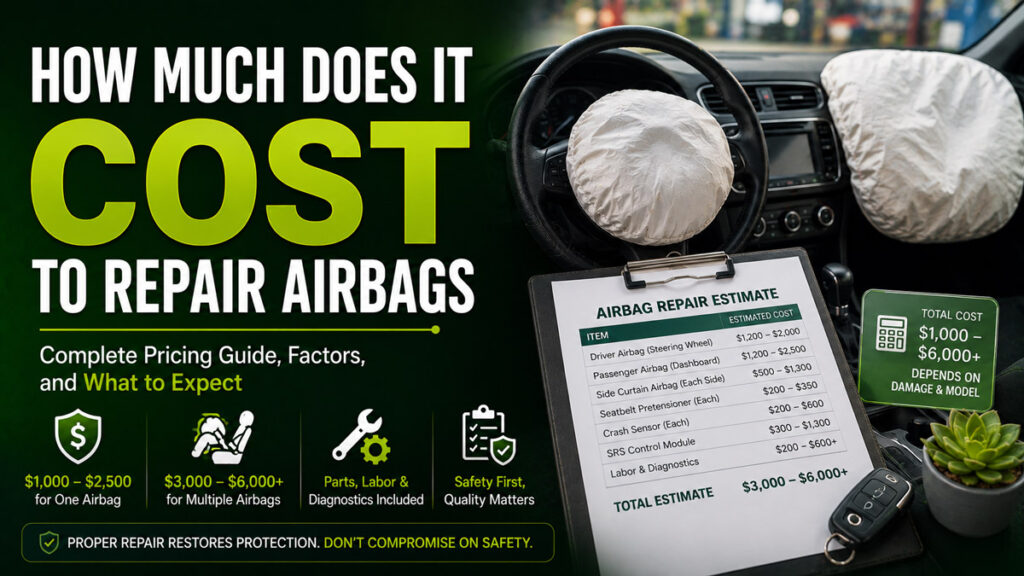
It typically costs $1,000 to $2,500 to replace one deployed airbag, while repairing a vehicle with several deployed airbags can cost $3,000 to more than $6,000. A deployed airbag cannot be patched, refilled, folded back into place, or repaired; the complete airbag module and any activated supporting components must be replaced. Key Facts at a […]
How Much Is Labor for Brake Pads?
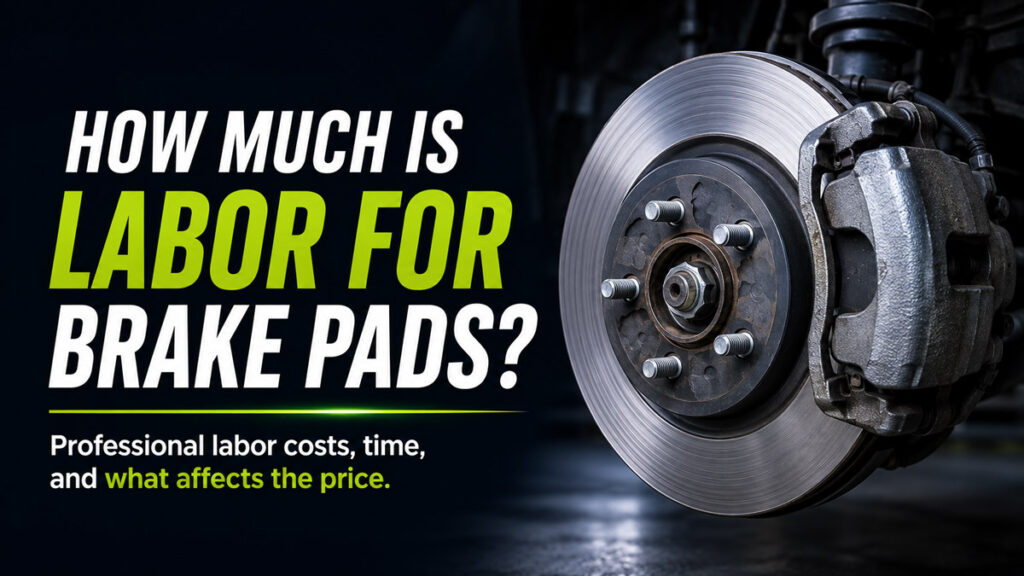
Professional labor costs for replacing brake pads average $80 to $200 per axle, depending on the vehicle type and repair facility. Certified mechanics generally bill between 1.0 and 1.5 flat-rate hours for a standard pad swap, with modern shop rates ranging from $120 to $220 per hour. Key Facts / At a Glance How Are […]
Why Won’t My Car Jump Start?
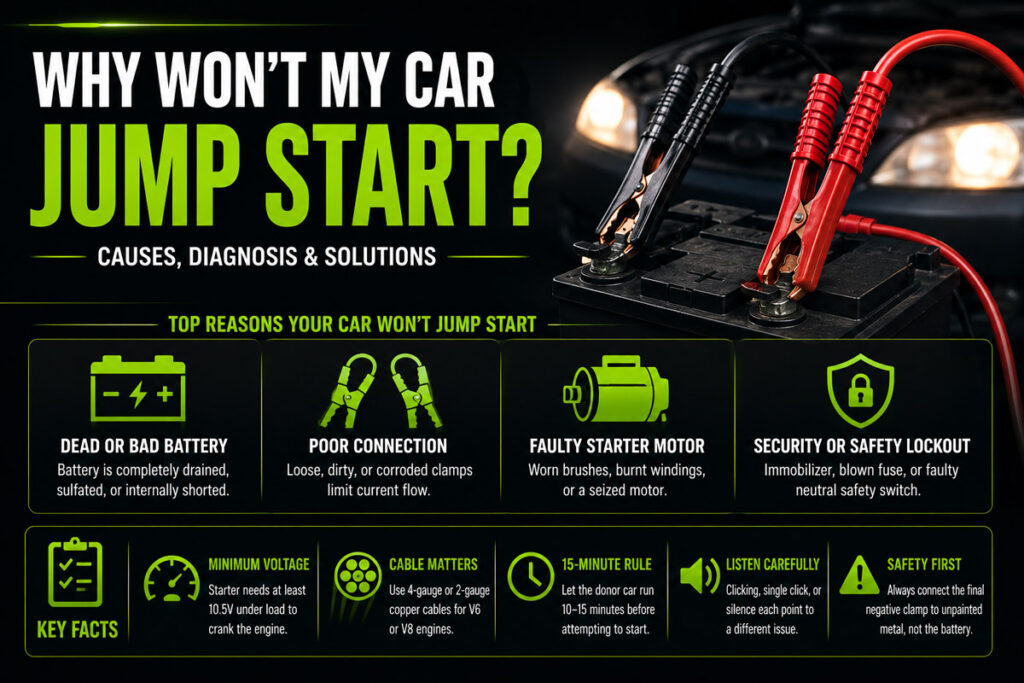
If you find yourself asking, “why won’t my car jump start,” the engine is failing to receive the 150 to 600 Cold Cranking Amps (CCA) required for ignition. This failure stems from excessive circuit resistance, a defective starter motor, a completely shorted battery absorbing the current, or an active security immobilizer. While a jump start […]