How Many Airbags Are in a Car?
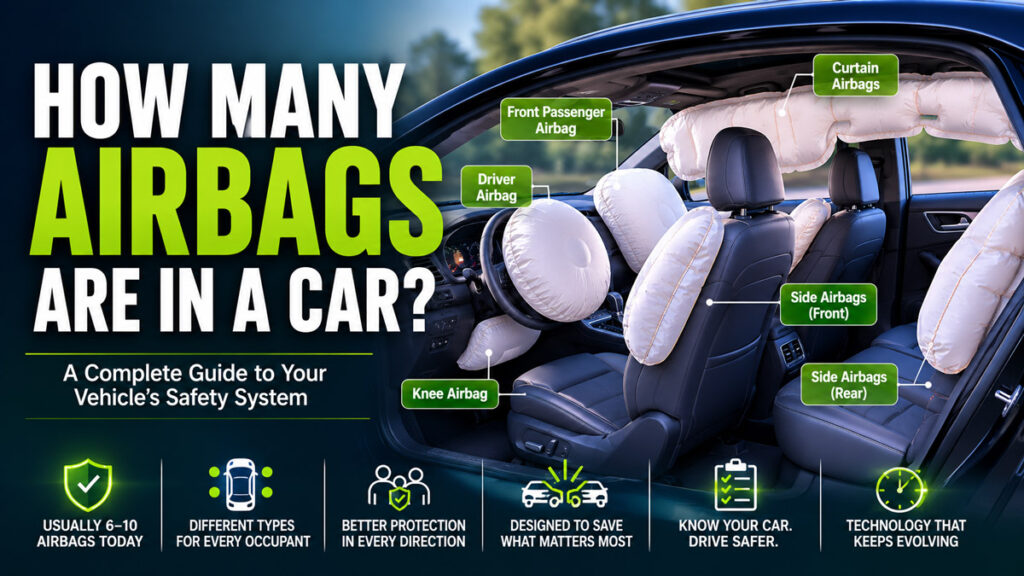
Most modern cars contain six to ten airbags, although the exact number varies by model, body style, trim level, market, and model year. Basic vehicles may have only two to six airbags, while some luxury vehicles and highly equipped family models use ten, twelve, or even sixteen separate airbag units. Key Facts at a Glance […]
How Do You Put Airbags Back In After a Crash?
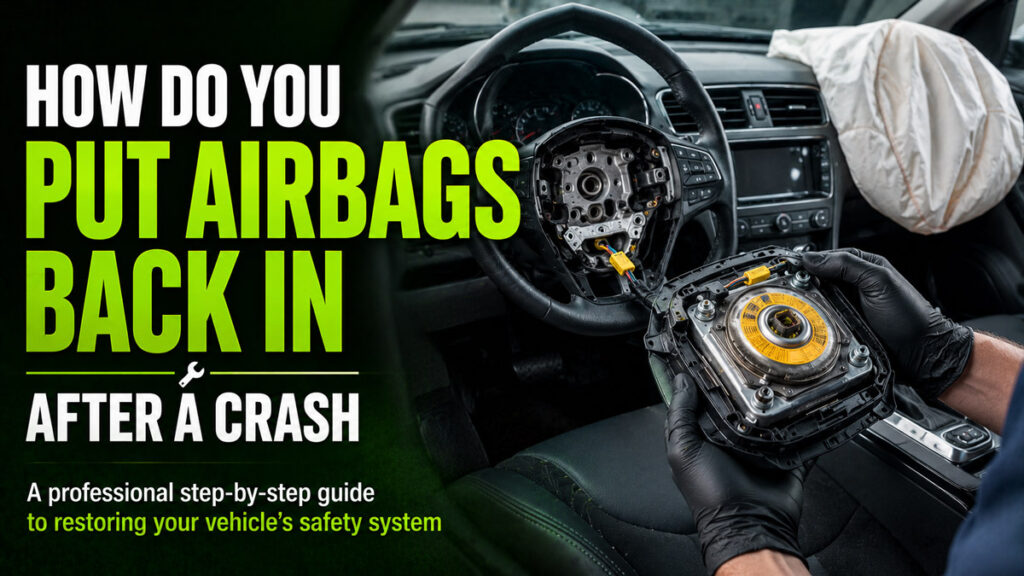
You do not fold, refill or put a deployed airbag back into its original module. A deployed airbag is a single-use safety device that must be replaced with the correct undeployed assembly. A complete repair may also require new seat-belt pretensioners, sensors, trim, wiring and an SRS control module, depending on the manufacturer’s instructions. Safety […]
How Do Air Bags Work? The Complete Step-by-Step Process
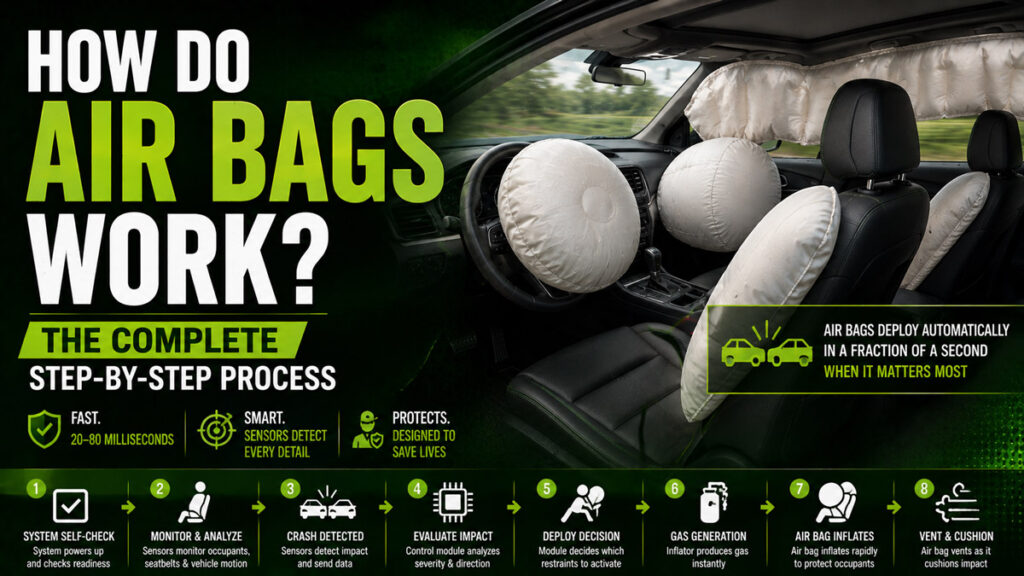
Air bags work through an eight-step process: the system checks itself, monitors occupants and vehicle motion, detects a crash, evaluates its severity, activates selected restraints, generates gas, inflates the cushions, and vents them during occupant contact. The sequence takes roughly 20–80 milliseconds, is fully automatic, and depends most on an accurately measured crash pulse. Important: […]
What Causes Airbags to Deploy?
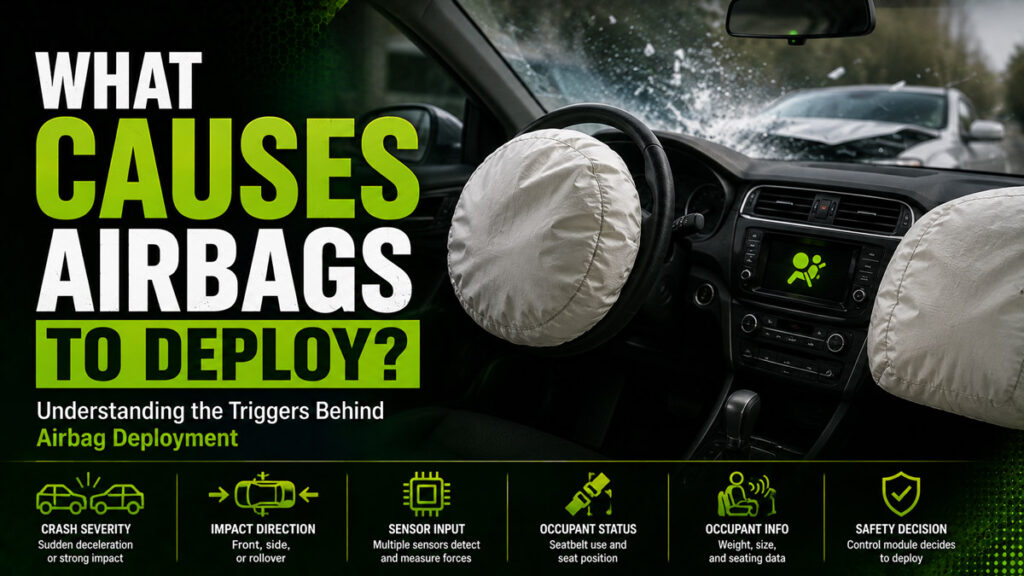
Airbags deploy when a vehicle’s restraint control system detects a crash severe enough to threaten an occupant. The decision is based mainly on rapid deceleration, impact direction, sensor readings, seatbelt status, and occupant information—not simply how fast the vehicle was traveling before the collision. Key Facts at a Glance How Does an Airbag System Decide […]
What Do Bad Brake Pads Look Like?
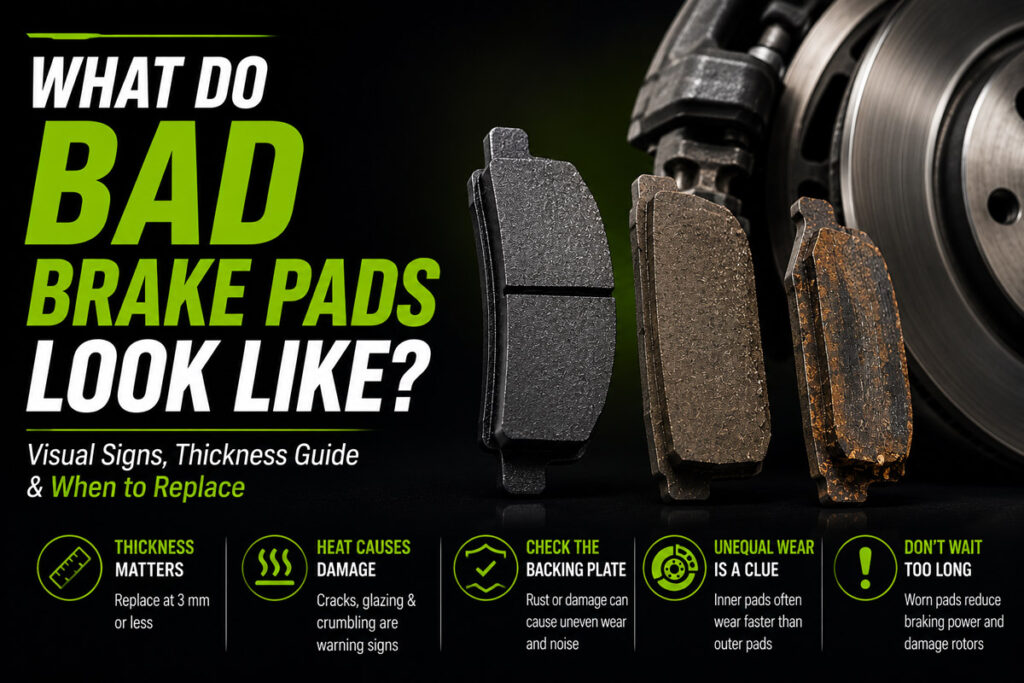
Bad brake pads look visibly deteriorated, featuring less than 4 millimeters of remaining friction material, deep heat-induced surface cracks, shiny crystallized glazing, or wedge-shaped tapered wear. In severe cases, the friction block crumbles at the edges, delaminates from rust jacking, or wears completely flat, exposing bare steel backing plates to the brake rotor. At a […]
What Causes the Airbag Light to Come On?
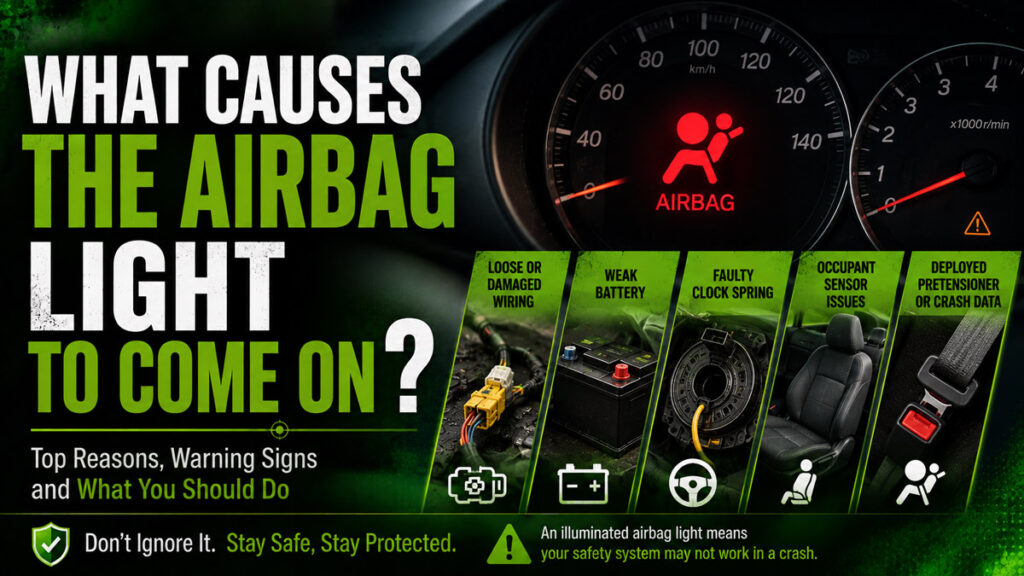
The airbag light comes on when the Supplemental Restraint System detects an electrical, sensor, communication, voltage, or crash-related fault. Common causes include damaged wiring under a seat, a weak battery, a failed clock spring, a faulty occupant sensor, deployed seatbelt pretensioners, stored crash data, or corrosion inside the SRS control module. At a Glance What […]
How Long Do Airbags Last?

Modern airbags generally last for the lifetime of the vehicle and do not have a fixed expiration date. However, an airbag may require inspection or replacement after deployment, water damage, electrical faults, physical damage, improper repairs, or a manufacturer safety recall. Key Facts at a Glance Do Airbags Expire? Most modern airbags do not expire […]
How to Reset Airbag Light Without Scanner
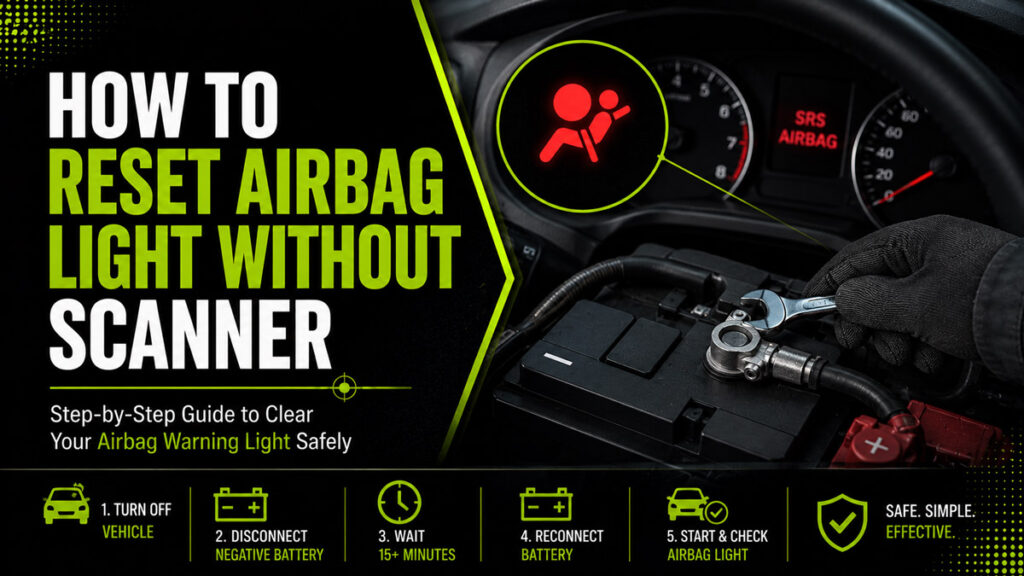
You may be able to reset an airbag light without a scanner by switching off the vehicle, disconnecting the negative battery terminal, draining residual electrical power, reconnecting the battery, and checking the SRS self-test. The process takes about 20–25 minutes and is relatively easy, but it only works when the warning was caused by a […]
Can Warped Rotors Cause Vibration While Driving?
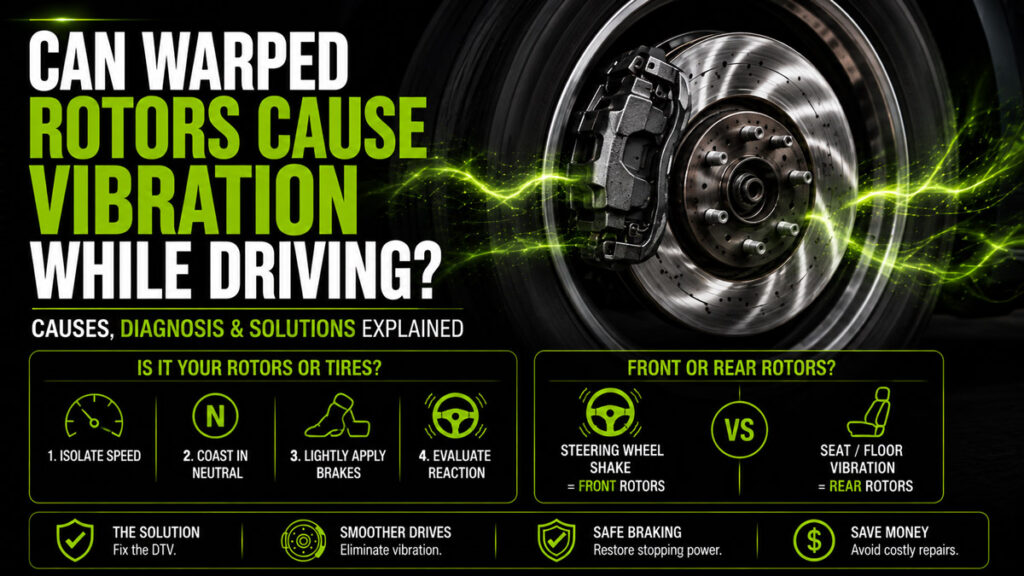
Yes, warped brake rotors can cause continuous vibration while driving, even when you are not actively pressing the brake pedal. Severe rotor unevenness—known as Disc Thickness Variation (DTV)—creates high spots that continuously graze the brake pads at highway speeds. This constant, high-speed friction transfers kinetic pulses through the steering rack, resulting in a persistent steering […]
How to Fix an Airbag Warning Light Safely
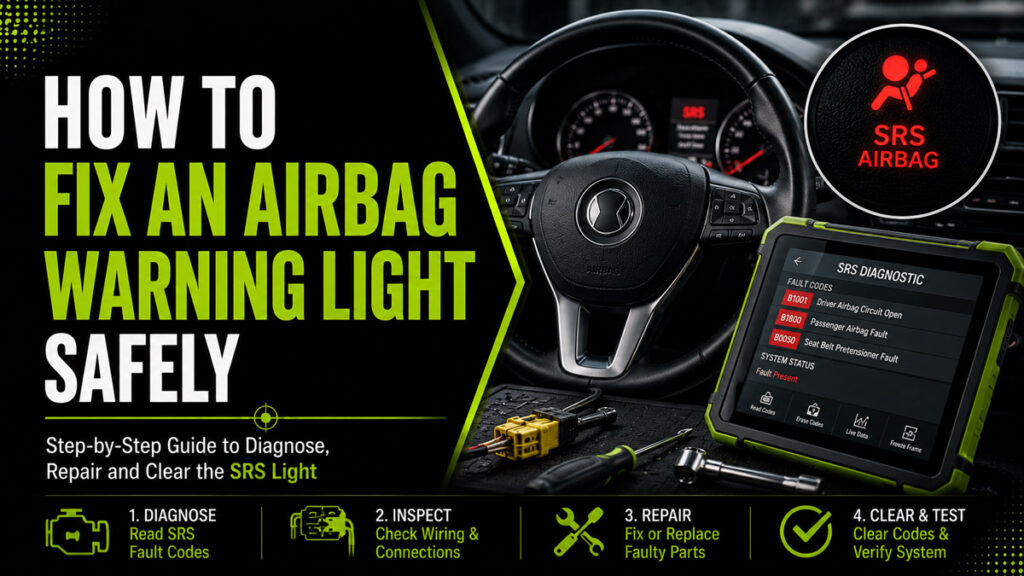
To fix an airbag warning light, verify the warning, check battery voltage, read the SRS fault code, disconnect the battery, inspect the indicated wiring or component, repair the underlying problem, clear the code, and complete a final self-test. Most diagnosis takes 30–60 minutes, but component replacement may take several hours. Accurate SRS code diagnosis determines […]